
Ten days in France is the sweet spot. It is long enough to move beyond Paris and short enough to avoid burnout. This itinerary takes you from the capital through Normandy, the Loire Valley, Bordeaux, and Provence — covering the highlights without rushing. Every recommendation below is based on practical logistics: real train times, actual driving distances, and costs you can verify before you book.
Join 7,000+ readers on our free Love France newsletter → lovetovisitfrance.substack.com
This guide assumes you are flying into Paris Charles de Gaulle (CDG). The route works as a loop if you fly out of Marseille Provence Airport (MRS), or you can return to Paris by TGV from Avignon in under three hours. Both options are covered below.
Before You Go: Practical Basics
A 10 day France itinerary requires some advance planning, particularly around transport and accommodation. Here is what to sort before you leave.
Transport: TGV vs Hiring a Car
France’s TGV high-speed rail network is excellent for city-to-city travel. Paris to Bordeaux takes just over two hours; Paris to Avignon roughly the same. However, once you leave the main cities — particularly in the Dordogne, rural Normandy, and inland Provence — a car becomes essential.
Our recommendation: Use trains for Paris and the Paris-to-Normandy leg. Pick up a hire car in Bayeux or Caen on Day 4 and keep it through to the end. Return it at Marseille Provence Airport or at Avignon TGV station. Budget roughly €40–60 per day for a mid-size car through AutoEurope or Rentalcars. Book TGV tickets on SNCF Connect at least 3–4 weeks ahead — advance fares start at €19 compared to €80+ on the day.
Budget Overview
A realistic mid-range daily budget for two people is €180–250 per day, covering accommodation (€80–120 for a decent double room or Airbnb), meals (€40–60 for lunch and dinner), transport (€20–40), and entrance fees. Paris will be the most expensive portion. Provincial France is noticeably cheaper, particularly for food and accommodation.
When to Go
May, June, and September are the best months. July and August bring crowds and heat — particularly in Provence, where temperatures regularly exceed 35°C. Shoulder season means lower prices, fewer queues at major sights, and far more pleasant driving.
For more trip-planning resources, visit our Planning Hub: Start Here for Your Trip to France.
Days 1–3: Paris
Three full days in Paris strikes the right balance. You will cover the essentials without trying to cram in every arrondissement.
Day 1: Arrival and the Left Bank
If your flight lands in the morning, take the RER B from CDG to central Paris (approximately 50 minutes, €11.45). Drop your bags at your hotel or apartment and head out on foot.
Start with the Latin Quarter. Walk along Boulevard Saint-Michel, stop at the Jardin du Luxembourg, and work your way to the Panthéon. In the afternoon, cross to Île de la Cité for Notre-Dame (exterior visits and the surrounding area are open; check the latest on interior access). End the day at a bistro in Saint-Germain-des-Prés. Café de Flore and Les Deux Magots are the famous ones, but you will eat better and pay less at any of the side-street restaurants between Rue de Buci and Rue de Seine.
Day 2: The Louvre, Tuileries, and the Eiffel Tower
Book Louvre tickets online in advance — the queue without them can exceed two hours. Allow three to four hours inside. The Mona Lisa will be crowded regardless of when you go; the Winged Victory of Samothrace and the Egyptian antiquities collection are often quieter and equally impressive.
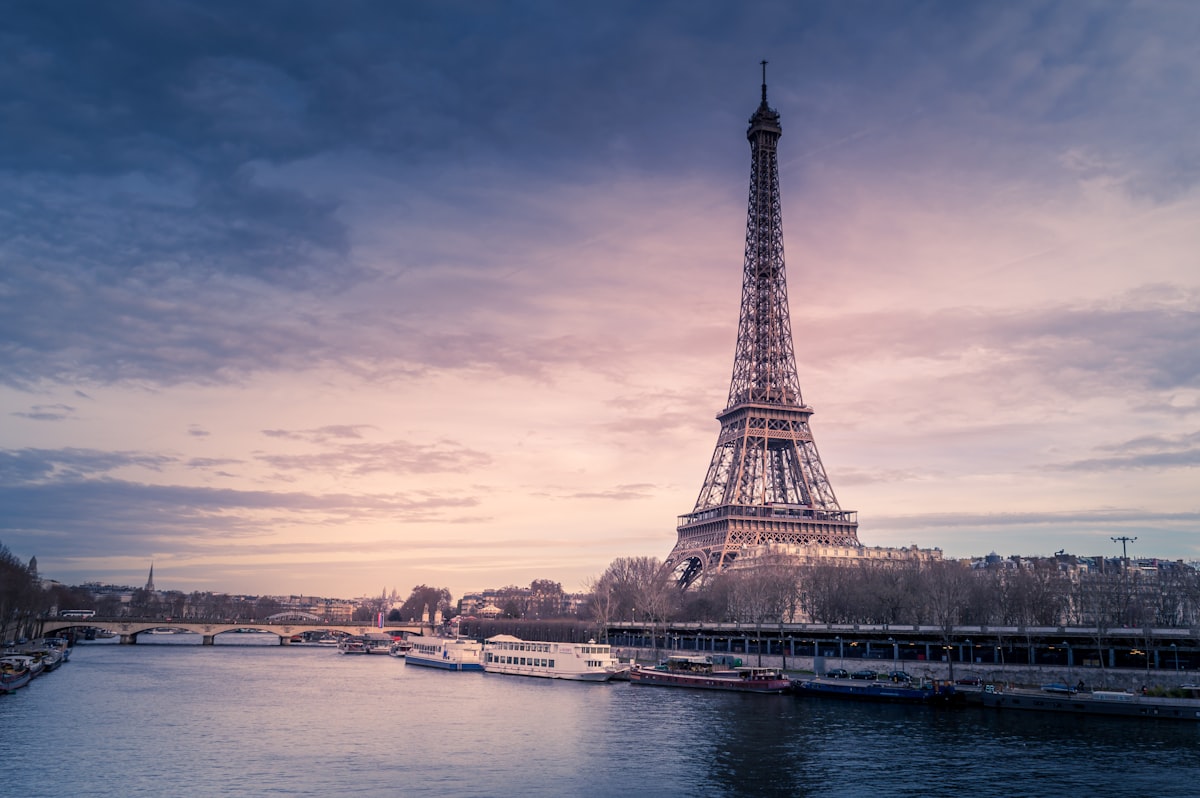
After the Louvre, walk through the Tuileries Garden to Place de la Concorde. From there, it is a straight line down to the Eiffel Tower via the Champs-Élysées and across the Pont d’Iéna. Visit the tower in the late afternoon for daylight views, then stay for sunset. Summit tickets cost €26.80 for adults; second floor only is €17.10. Again, book online.
Day 3: Montmartre, Sacré-Cœur, and Orsay
Take the Métro to Abbesses and climb up to Sacré-Cœur for the best panoramic view of Paris (free entry). Wander through the streets around Place du Tertre — touristy but worth seeing once. Have lunch in the area, then head to the Musée d’Orsay in the afternoon. If you prefer one art museum per trip, the Orsay’s Impressionist collection is more accessible than the Louvre’s encyclopaedic scope.
Paris accommodation tip: Stay in the 5th, 6th, or 7th arrondissements for walkability. Budget €120–180 per night for a comfortable hotel. Apartments through Booking.com or Airbnb can bring this down to €90–130.
Days 4–5: Normandy and Mont Saint-Michel
From Paris, take the train to Bayeux (2 hours 20 minutes, around €25–40 with advance booking). Bayeux makes the ideal base for Normandy — it is small, beautiful, and perfectly placed for both the D-Day beaches and Mont Saint-Michel.
Day 4: The D-Day Beaches
Start at the Bayeux Tapestry museum (€12, allow 90 minutes). In the afternoon, drive or take a guided tour to the D-Day landing beaches. Omaha Beach, the American Cemetery at Colleville-sur-Mer, and Pointe du Hoc are the three essential stops. The American Cemetery is free to enter and deeply moving — allow at least an hour.
If you do not have a car, several operators run half-day tours from Bayeux for €50–70 per person. Normandy Battle Tours and D-Day Historian are both well-regarded.
Day 5: Mont Saint-Michel
Mont Saint-Michel is roughly 90 minutes’ drive from Bayeux. Arrive early — by 9am if possible — to beat the tour buses. The abbey sits at the summit of the island and costs €11 to enter. The climb through the medieval streets is half the experience.
Park at the official car park (€14.90 for the day) and take the free shuttle or walk the 2.5 km causeway. The walk is pleasant and gives you the best approach views. Budget a full morning here; you will be back in Bayeux or heading south by early afternoon.
Normandy accommodation tip: Bayeux has excellent small hotels and chambres d’hôtes. Expect to pay €80–110 per night. Book well in advance for June — the D-Day anniversary period is extremely busy.
Enjoying this guide? Join 7,000+ France travel planners on our free newsletter → lovetovisitfrance.substack.com
Day 6: Loire Valley
Drive from Bayeux to the Loire Valley (approximately 3.5 hours via the A28/A10 motorways). Alternatively, return to Paris by train and pick up a TGV to Tours (1 hour 15 minutes, €19–35). The Loire Valley is France’s château country, and one full day lets you see the best of it.
The Must-See Châteaux
Château de Chambord — the largest and most architecturally dramatic. The double-helix staircase attributed to Leonardo da Vinci is worth the visit alone. Entry is €16. Allow 2 hours.
Château de Chenonceau — built spanning the River Cher, this is the most photographed château in the Loire. Entry is €17 with the audio guide. Allow 1.5 to 2 hours. The gardens are beautiful in spring and summer.
If you have time for a third, Château de Cheverny sits between the two and is less crowded. Its interiors are among the best-preserved in the valley.
Loire accommodation tip: Stay in or near Amboise for the best base. It is a lovely small town with good restaurants and easy access to both Chambord and Chenonceau. Budget €75–100 per night.
Days 7–8: Bordeaux and the Dordogne
From the Loire, drive south to Bordeaux (approximately 3.5 hours). If you prefer rail, Tours to Bordeaux Saint-Jean takes around 2.5 hours by TGV (€25–50).
Day 7: Bordeaux City
Bordeaux has transformed over the past two decades. The UNESCO-listed centre is immaculate and very walkable. Start at the Place de la Bourse and the Miroir d’Eau (the world’s largest reflecting pool), walk along the riverside quays, and explore the Saint-Pierre quarter for lunch.
In the afternoon, visit the Cité du Vin (€22, allow 2–3 hours), Bordeaux’s wine museum. Even if you are not a wine enthusiast, the architecture and interactive exhibits are impressive. It includes a tasting with a panoramic view at the top.
For dinner, Bordeaux’s restaurant scene punches well above its weight. The area around Rue du Parlement and Rue Saint-Rémi has the highest concentration of good options. A three-course meal with wine will cost €30–45 per person at a solid neighbourhood restaurant.
Day 8: The Dordogne
Drive east from Bordeaux into the Dordogne (approximately 2 hours to Sarlat-la-Canéda). This is one of the most beautiful and under-visited regions in France — at least by overseas visitors. The landscape is all honey-stone villages, walnut groves, and river valleys.
Sarlat-la-Canéda is the natural hub. Its medieval centre is remarkably preserved — wander the Saturday morning market if your dates align (it is one of the finest in France). In the afternoon, drive the Dordogne river road between Domme and La Roque-Gageac. Stop at the riverside village of Beynac-et-Cazenac and climb to the castle for valley views.
If prehistoric art interests you, the Lascaux IV replica cave (€22) near Montignac is a 40-minute drive from Sarlat and genuinely extraordinary. Book ahead — time slots fill quickly.
Dordogne accommodation tip: Sarlat has good hotels and guesthouses from €70–100 per night. Rural chambres d’hôtes (B&Bs) offer even better value and a more authentic experience.
Days 9–10: Provence
Drive from the Dordogne to Provence (approximately 4.5 hours to Avignon via the A89 and A7 motorways). Alternatively, drive back to Bordeaux and take the TGV to Avignon (approximately 4 hours city-centre to city-centre, €40–70).
Day 9: Avignon and the Pont du Gard
Avignon’s Palais des Papes is the largest Gothic palace in the world and costs €14 to visit. The famous Pont d’Avignon (officially Pont Saint-Bénézet) is adjacent — it is small but photogenic. Allow a morning for both, plus a walk through the old town.
In the afternoon, drive 25 minutes to the Pont du Gard — the best-preserved Roman aqueduct in the world. Parking is €8 and gives access to the site. You can walk across the top level of the aqueduct. The river below is swimmable in summer, which makes for a memorable end to the afternoon.
Day 10: The Luberon Villages
Your final day is best spent in the Luberon, the landscape of Peter Mayle’s A Year in Provence. Drive the circuit of hilltop villages: Gordes (the most photogenic), Roussillon (famous for its red ochre cliffs), Ménerbes, and Bonnieux. This is a gentle driving day — the villages are 15–20 minutes apart, and the pleasure is in stopping, walking, and having a long lunch with a glass of rosé.
The Sénanque Abbey near Gordes, with its lavender fields, is one of the most iconic images of Provence. Lavender season runs from mid-June to mid-August; outside this window it is still beautiful, just without the purple.
Provence accommodation tip: Stay in or near Avignon for easy access to both the city and the Luberon. Budget €90–130 per night. If you prefer a village base, Gordes and Bonnieux have lovely (but pricier) options — expect €150+ per night.
Getting Home
You have two clean options from Provence:
- Fly from Marseille Provence Airport (MRS): 1 hour from Avignon. Drop the hire car at the airport. Multiple daily flights to Paris CDG, London, and other European hubs.
- TGV back to Paris: Avignon TGV to Paris Gare de Lyon takes 2 hours 40 minutes (€30–70). From there, RER B to CDG for your flight home.
If you are flying out of Paris, book the earliest reasonable TGV on your departure day to give yourself a buffer. French trains are punctual but not immune to delays.
Summary: 10 Day France Itinerary at a Glance
Here is the complete route in brief:
- Days 1–3: Paris — Left Bank, Louvre, Eiffel Tower, Montmartre, Orsay
- Day 4: Train to Bayeux. Bayeux Tapestry, D-Day beaches
- Day 5: Mont Saint-Michel day trip
- Day 6: Drive to Loire Valley. Chambord and Chenonceau
- Days 7–8: Bordeaux city, then Dordogne (Sarlat, river villages)
- Days 9–10: Avignon, Pont du Gard, Luberon villages
Total estimated cost for two people (mid-range): €1,800–2,500 excluding flights. This covers accommodation, food, transport, and major entrance fees.
For more detailed planning resources, return to our Planning Hub: Start Here for Your Trip to France.
Planning your 10 days in France? Join 7,000+ readers who get weekly France travel tips, itinerary ideas, and destination guides delivered free → lovetovisitfrance.substack.com
Leave a Reply