
In August 1786, a doctor and a crystal hunter from a small French valley stood on top of the highest mountain in the Alps. Nobody had ever done it before. Most people thought it was impossible. When they came back down, everything changed — not just for them, but for the entire world.
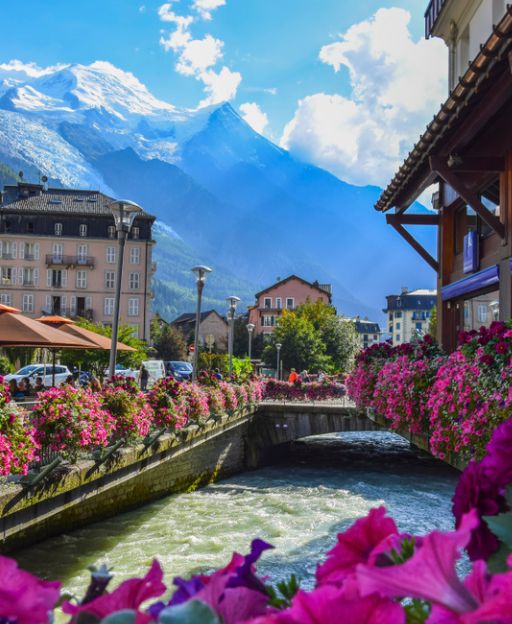
The Mountain Nobody Dared to Touch
For centuries, the people of Chamonix lived at the foot of Mont Blanc and wanted nothing to do with it. The mountain was unpredictable and deadly. Avalanches swept down without warning. Crevasses swallowed anything that fell into them. The local name for the glaciers translates roughly as “the cursed ice.”
The only people who went high on the mountain were hunters tracking chamois and crystal collectors searching the rocky outcrops for minerals they could sell. These men knew the terrain better than anyone. They could read the weather and the snow. They were strong, careful, and calm under pressure.
Then in the 1760s, a wealthy Swiss scientist named Horace-Bénédict de Saussure started visiting Chamonix. He became obsessed with climbing Mont Blanc. He offered a prize to anyone who could find a route to the summit. For twenty years, nobody claimed it.
The Day Two Local Men Changed History
On 8 August 1786, Michel Paccard and Jacques Balmat set out before dawn. Paccard was a local doctor. Balmat was a chamois hunter and crystal collector who spent weeks alone in the high mountains each season.
They had no specialised equipment. No insulated clothing. No oxygen. No radio. They carried basic alpenstock poles and a primitive barometer. Paccard wore his everyday shoes.
Late in the afternoon, they reached the summit — 4,808 metres above sea level. They stayed for just over half an hour, barely able to breathe in the thin air, then descended in the dark. When news spread through Europe, it caused a sensation. The highest point in the Alps had been conquered. And it had been done by two ordinary men from a mountain valley in France.
The following year, de Saussure climbed the mountain himself — with Balmat as his guide. The age of alpinism had begun, and it had started right here.
When the Wealthy Came Knocking
Word spread fast. Within a few years, well-to-do travellers from across Europe were arriving in Chamonix with one ambition: to climb Mont Blanc. They came from England, Germany, Italy, and Russia. They had money but no mountain knowledge. They needed guides.
The crystal hunters and chamois men of Chamonix stepped forward. They knew every slope, every crevasse, every dangerous passage. They began charging for their services. Guiding went from a side activity to a serious profession almost overnight.
By the early 1800s, competition between guides had become fierce. Disputes broke out over who had the right to lead which clients. Arguments turned ugly. The valley needed a system.
Enjoying this? 7,000 France lovers get stories like this every week. Subscribe free →
The World’s First Mountain Guide Company
In 1821, the guides of Chamonix did something remarkable. They formed the Compagnie des Guides de Chamonix — the world’s first professional mountain guide association. It still exists today, making it one of the oldest professional organisations of any kind in France.
The rules were strict. Every guide had to pass skill tests before joining. There was a rotation system — clients were assigned to guides in turn, so no single guide could dominate the work. Each member paid into a mutual fund to support injured guides and their families.
The uniform was specific: a distinctive hat, a jacket with brass buttons, and a guide’s badge. Wearing the badge without being a full member was forbidden. The guides took enormous pride in their profession. It was not just a job — it was an identity passed from father to son, and sometimes to daughters.
The Compagnie set the template for mountain guide associations across Europe and eventually the world. Today, nearly every country with serious mountains has a national guide organisation built on the same principles Chamonix established two centuries ago. The valley did not just produce great guides — it invented the very concept of professional mountain guidance.
What You Can Still See in Chamonix Today
Stand in the centre of Chamonix and look at the statue in the main square. It shows Jacques Balmat pointing upward, his arm aimed at the summit he and Paccard first reached in 1786. Beside him stands Horace-Bénédict de Saussure. The statue has been there since 1887, and locals still pass it every morning on their way to the mountains.
The Compagnie des Guides still operates from its office in the town. You can walk in and book a guide for almost any mountain experience — from a first day on a glacier to a full ascent of Mont Blanc. The guides who work there are often fifth or sixth-generation mountaineers from the same Chamonix families that guided the first tourists in the 1780s.
The Maison de la Montagne museum holds the full story — the equipment, the records, the photographs, the guide registers going back nearly two hundred years. If you want to understand what it means to be from this valley, this is the place to start. If you are planning your trip to France and the mountains are calling you, Chamonix deserves more than a single day. It is one of those rare places where the landscape and the history are equally extraordinary.
Most visitors come to Chamonix for the skiing or the summer hiking. They ride the cable car to the Aiguille du Midi and take photographs of the view. But the real story of Chamonix started long before the first ski lift was built. The French Alps are more affordable than you might expect once you know where to stay and when to go — and a few days in Chamonix is one of the most memorable ways to spend a week in France.
The Tradition That Never Really Stopped
There is something that happens every season in Chamonix that tourists rarely notice. On certain mornings, small groups of local guides head up into the high mountains together before the cable cars open, checking conditions on the routes they will take clients along in the coming days. It is not a ceremony. There is no official name for it. It is simply what guides from this valley have always done.
The equipment is better than it was in 1786. The routes are mapped in extraordinary detail. But the instinct — the careful reading of snow and weather, the calm assessment of risk, the absolute responsibility for another person’s safety in a dangerous place — has not changed at all.
Chamonix gave the world the idea that ordinary people could reach extraordinary places, as long as they had the right knowledge and someone who knew the way. Two hundred and forty years later, that idea is still alive every morning in this valley, still walking uphill before the rest of the world has woken up.
Love France? So do 7,000 of us.
Every week, our free newsletter delivers hidden gems, seasonal guides, local stories, French recipes, and the art of la vie française — straight to your inbox. Join the community that loves France as much as you do.
Subscribe Free — Get the Newsletter →
Love Ireland too? Join 65,000 Ireland lovers → · Love Scotland? Join 43,000 readers → · Love Italy? Join 30,000 readers →
Love France? So Do We.
Join our free newsletter and get the best of France — travel tips, hidden villages, food traditions, and cultural stories — straight to your inbox every week.
Free. No spam. Unsubscribe anytime.
📥 Free Download: France Travel Planning Guide
Itineraries, insider tips, and the places you must not miss on your next trip to France.
Leave a Reply