Walk into a boulangerie in Paris and order your croissant. You hand over your euros. The baker slides the bag across the counter.
On the collar of his white coat, three stripes of red, white and blue.
Most tourists don’t notice. Those who do have just discovered one of France’s most extraordinary institutions — and one of the best-kept secrets of daily French life.
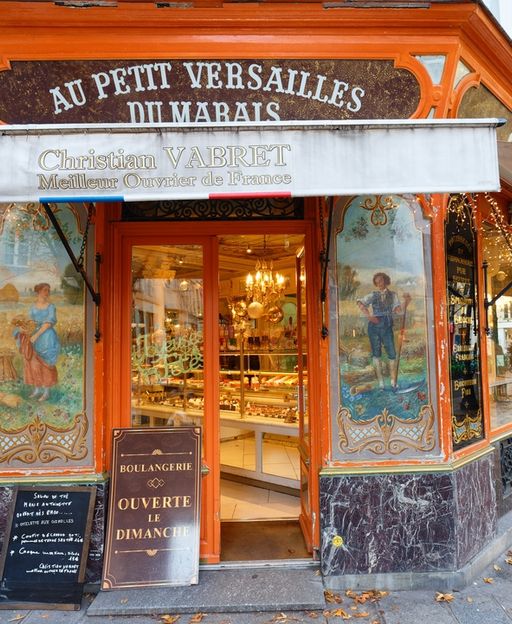
What Three Stripes on a Collar Mean in France
That collar belongs to a Meilleur Ouvrier de France — a Best Craftsperson of France.
It is not a decoration. It is not marketing. It is the result of years of training, sacrifice, and a gruelling national competition that France runs every four years.
To earn those stripes, a craftsperson must beat the best in the country at their trade. The judges are not celebrities or television personalities. They are the previous winners — men and women who went through the same ordeal and know exactly what it demands.
The collar is worn for life. You cannot buy one. You cannot fake one. In France, it means everything.
When you stand in front of a baker wearing those stripes, you are standing in front of someone who has been officially recognised as among the finest at their craft in all of France. That is not a small thing.
A Competition Held Every Four Years, Across 200 Trades
The Meilleur Ouvrier de France competition — often shortened to MOF — has been running since 1924. It began as a celebration of French craftsmanship at a time when France wanted to protect its artisan traditions. Today, it covers more than 200 trades.
Bakers compete. So do chefs, glassblowers, jewellers, cheese-makers, hairdressers, and furniture restorers. A florist can become an MOF. A tailor can become an MOF. A fishmonger who fillets with the precision of a surgeon can become an MOF.
The competition is held every four years, in the same rhythm as the Olympic Games. Candidates spend months — sometimes years — preparing their entry. The standards are brutal. In some trades, fewer than five people pass per cycle. In others, nobody passes at all.
There is no shame in not passing. The shame, in France, would be in not trying.
The Test Is Unlike Anything Else
Every trade has its own challenge. A baker might be asked to create a bread sculpture so technically precise that it could be displayed in a museum. A pastry chef must execute complex recipes under timed conditions, with no errors permitted.
The judging panel looks at precision, creativity, and mastery of technique. They are searching for something that cannot be faked: the mark of a craftsperson who has spent a lifetime in their trade and has nothing left to prove except everything.
Some candidates attempt the competition multiple times before passing. The collar is not handed out generously. That is the entire point.
France has a long tradition of demanding excellence from its bakers. The country even passed a law to protect what goes into a baguette — that same spirit of protecting craft and quality runs directly through the MOF competition.
Enjoying this? 7,000 France lovers get stories like this every week. Subscribe free →
Why France Created This in the First Place
France has always believed that a skilled craftsperson deserves the same respect as a doctor or a lawyer.
That belief runs deep. In the medieval guild system, apprentices spent years mastering a trade before they were allowed to call themselves a journeyman, let alone a master. The MOF competition is the modern version of that tradition — a formal, national recognition that craft matters.
The goal was never just to find the best baker or the best tailor. The goal was to say, as a nation: we value this. We believe the person who makes your bread at 4am every morning is worthy of the highest honour France can give.
In a country where even lunch is a ritual taken seriously, this should not be surprising. Food and craft are not separate from French culture. They are the culture.
What Winning Actually Changes
For the winner, life changes in practical ways. An MOF designation on a shop front attracts attention. Other bakers, chefs, and artisans come to learn. Restaurants and hotels actively seek out MOF suppliers. The French take the collar seriously.
But winning does not mean relaxing. Many MOF holders say the pressure intensifies after the competition. You are now a standard-bearer. Every product you make is held to the highest possible measure by the people who know what that collar represents.
Some winners teach. Some open schools. Some continue working in their trade exactly as they always did — the only difference being three stripes on their collar and the quiet knowledge that France has said: you are among the best who have ever done this.
How to Spot the Symbol When You Are There
The collar is the most visible sign — blue, white and red stripes on the lapel of a white coat. But you will also find it on shop windows, packaging, and menus. Sometimes it appears as a small logo: the letters MOF with the tricolour flag. Sometimes it is listed quietly alongside other accolades.
In Paris, several of the most celebrated bakeries are run by MOF holders. Outside Paris, the designation is rarer and often more meaningful. A small-town boulangerie with an MOF sign in the window has beaten craftspeople from across the whole of France to earn it.
When you find one, go in. Order something. Take your time. If you are planning your trip to France, adding a visit to an MOF boulangerie to your list is one of the simplest and most rewarding decisions you can make.
Watch how the work is done. You will notice the difference.
Most of what makes France extraordinary is hiding in plain sight. It is in the collar of a baker, the quiet pride of a craftsperson, and the conviction that doing something well — really well — is never a small thing.
Join 7,000+ France Lovers
Every week, get France’s hidden gems, seasonal guides, local stories, and the art of la vie française — straight to your inbox.
Love more? Join 65,000 Ireland lovers → · Join 43,000 Scotland lovers → · Join 30,000 Italy lovers →
Free forever · One email per week · Unsubscribe anytime
🇫🇷 Want More Hidden France?
Join 7,000+ subscribers who discover France’s best-kept secrets every week.
Subscribe Free — Join the Community →
Free forever · Unsubscribe anytime · No spam
📥 Free Download: France Travel Planning Guide
Itineraries, insider tips, and the places you must not miss on your next trip to France.
Leave a Reply