You are sitting in a cramped Paris wine bar on a Tuesday evening. The owner slides a glass across the counter without a word. It is cloudy. It smells of wet stone and ripe cherries. You take a sip — and it tastes like a place. Not just wine. A place.
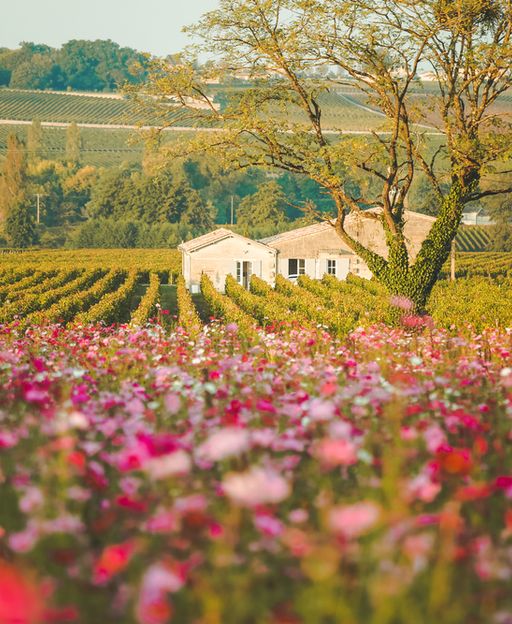
That is the moment people describe when they first encounter natural wine in France. It does not feel like a product. It feels like a conversation.
What Makes a Wine “Natural”
There is no official definition. That is part of the argument.
The broad idea is simple. Natural wine is made with as little intervention as possible. Grapes are grown without pesticides or herbicides. Fermentation happens naturally, driven by wild yeasts rather than lab-grown ones. Nothing is added in the cellar — no sulphites to stabilise the wine, no fining agents, no corrections.
The result behaves like a living thing. It changes from bottle to bottle. It can taste different six months after opening. It can be fizzy when you do not expect it.
To fans, that is the whole point.
The Rebels Who Started It All
The movement did not begin in Paris. It started in the vineyards.
In the 1980s, a small group of winemakers in Beaujolais began questioning everything they had been taught. Marcel Lapierre in Morgon was one of the first. He stripped everything back — no chemicals in the field, no intervention in the cellar. His wines were unlike anything the region had produced before.
In the Jura, Pierre Overnoy was doing the same thing quietly and almost in secret. In the Loire Valley, winemakers were returning to farming their soil entirely by hand.
These were not fashionable people. Many were considered eccentric. A few were written off entirely. They kept going anyway.
How Paris Fell in Love First
The bistros found them first.
A new generation of Paris restaurateurs in the early 2000s was tired of the same formulaic bottles on every wine list. They began seeking out the outliers — the growers no one had heard of, the bottles with handwritten labels and unfiltered contents.
Places like La Buvette in the 11th arrondissement became temples of the new approach. So did Le Verre Volé by the Canal Saint-Martin and Septime in Bastille. These were not just restaurants. They were arguments — a quiet insistence that wine should taste alive.
Word spread fast. Tokyo noticed. New York noticed. London noticed. France had, without quite meaning to, sparked a global conversation about what wine is actually for. If you are planning a trip built around wine, our guide to France’s best wine regions is a useful starting point.
Enjoying this? 7,000 France lovers get stories like this every week. Subscribe free →
Why the Old Guard Pushed Back
Not everyone was charmed.
The established appellation system — the rules that define what a Bordeaux or a Burgundy can and cannot be — has no category for natural wine. Many natural wines fall outside their regional designation because they do not meet the standards for colour, clarity, or chemical composition.
Critics from the traditional side argue that “natural” is a marketing term. That cloudy wine is a fault. That variation between bottles is a failure of craft, not a virtue.
The argument has divided families, collapsed friendships, and filled newspaper columns. In Bordeaux, the tension is particularly sharp. The region built its entire reputation on consistency, prestige, and ageing potential. Natural wine complicates that story in ways that are hard to ignore.
Where to Find the Real Thing
You do not need to go to Paris.
Most major French cities now have at least one wine bar devoted to low-intervention producers. In Lyon, Marseille, Nantes, and Montpellier, the scene is well established and easy to find.
In the countryside, small vignerons — particularly in the Loire Valley, Beaujolais, the Jura, and the Auvergne — often welcome visitors who want to taste straight from the barrel. Many do not have websites. You find them through word of mouth or by asking the right question at the right bar.
The natural wine movement has also been quietly good for obscure appellations. Regions that could never compete on prestige suddenly have something more interesting to offer: character. For help planning a trip around wine and culture, see our France travel planning guide.
France has always argued about wine. That is partly what makes it interesting. But this debate is about something deeper than fermentation techniques. It is about what it means to taste a place — to hold something in a glass that could not have come from anywhere else on earth.
In France, that has never been a small thing.
Join 7,000+ France Lovers
Every week, get France’s hidden gems, seasonal guides, local stories, and the art of la vie française — straight to your inbox.
Love more? Join 65,000 Ireland lovers → · Join 43,000 Scotland lovers → · Join 30,000 Italy lovers →
Free forever · One email per week · Unsubscribe anytime
Leave a Reply