
Most people sleep through it. By the time the first café in Paris pulls up its shutters, Normandy’s fishing harbours have already been awake for hours. The smell of diesel, salt, and strong coffee fills the air. The boats are already back.
Before the Tourists Arrive
The towns that line Normandy’s coast — Fécamp, Dieppe, Port-en-Bessin — look like postcard scenes when the sun is high. Pretty harbours. Stone buildings. Seagulls.
But visit before 6am and you see something else. These are working ports, and they always have been.
The rhythm here is not set by breakfast hours or check-in times. It follows the tides.
The Criée — France’s Daily Fish Auction
The criée is the fish auction, and it happens at the crack of dawn every weekday in working Norman ports. The word comes from the old French for “to cry out” — because that’s how it once worked. Men shouting bids across a cold stone floor.
Today the process is quieter. But the energy is the same.
Wooden crates line the dock. Sole, turbot, mackerel, crab. Everything landed that morning. Buyers — restaurant owners, fishmongers, wholesalers — move fast. A good catch sells in minutes.
By the time most of France is pouring its first coffee, the fish that will appear on tonight’s restaurant menus is already on its way.
The Fishermen Who Don’t Say Much
Go down to the quay at 3am and you’ll find them preparing the boats. They don’t tend to say much.
There’s a quiet pride in this work that outsiders can feel but rarely name. These families have been pulling fish from the Channel for generations. The knowledge — where the sole run, how to read the weather off the cliffs, when to stay in port — passes from parent to child.
Many boats are small, family-owned vessels. Normandy still has one of France’s largest populations of small-scale inshore fishermen. This is not industrial fishing. It’s something older.
Enjoying this? 7,000 France lovers get stories like this every week. Subscribe free →
The Harbour Café at 4am
Every fishing port in Normandy has one. A café that opens before 4am to serve the men heading out and the buyers arriving for the criée.
There’s usually a laminate counter. Coffee that’s strong enough to be a warning. The conversations are about tides, catches, fuel costs, and the weather systems rolling in off the Atlantic.
Nobody performs for tourists. This is just Tuesday.
Fécamp, Dieppe, and the Ports Worth Visiting
Not every Norman fishing port is easy to find. Some are tiny, with no signage and no tourist infrastructure at all.
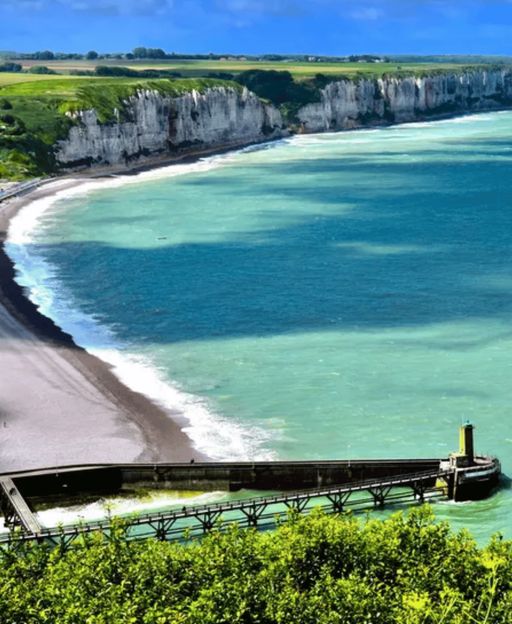
Fécamp sits beneath dramatic chalk cliffs and has one of the most active fishing fleets in the region. The quayside is easy to walk, and the morning market draws locals who know exactly what was landed that day.
Dieppe was once famous across Europe for its fish market. Herring in particular built this town. The Saturday market still draws thousands — though it starts at a more civilised hour.
For anyone planning a wider trip to the region, the full Normandy travel guide covers where to stay, what to see, and the best bases for exploring the coast. And if you’re still in the early stages of planning, the France planning hub is the place to start.
From Net to Table in Hours
What makes Norman fish culture remarkable is how fast the supply chain moves.
A turbot caught in the Channel at midnight can be on a restaurant table in Rouen by lunchtime. The chain from boat to plate is short and direct in a way that almost nowhere else in France can match.
That’s why fish dishes in Normandy taste different. Not because of any special technique, but because of time — or the lack of it between sea and stove.
And alongside the catch, Normandy’s other famous product — cream — finds its way into nearly every sauce. The combination of fresh Atlantic fish and local butter cream is one of the great quiet pleasures of French cooking. Further along the coast, the dramatic chalk cliffs glow at dusk in a way that has drawn painters here for two centuries — the Normandy coast at sunset is worth the journey on its own.
You don’t need to wake at 3am to feel it. Arriving at the harbour before the souvenir shops open is enough. The boats. The ice. The sound of crates being stacked. It tells you something about France that no guidebook quite captures — that the country’s real life has always been lived close to the land, and close to the sea.
Join 7,000+ France Lovers
Every week, get France’s hidden gems, seasonal guides, local stories, and the art of la vie française — straight to your inbox.
Love more? Join 65,000 Ireland lovers → · Join 43,000 Scotland lovers → · Join 30,000 Italy lovers →
Free forever · One email per week · Unsubscribe anytime
Leave a Reply