
Most visitors to Versailles see the same things. The Hall of Mirrors. The King’s bedroom. The formal gardens stretching to the horizon. They follow the crowd, take their photos, and leave.
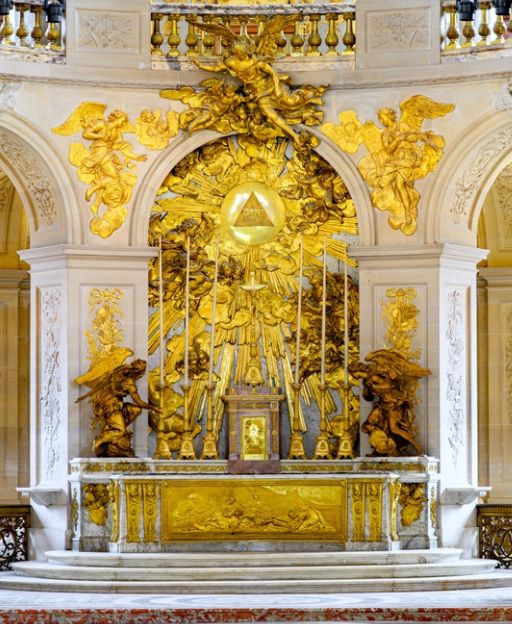
But behind the gilded rooms, down unmarked staircases and through concealed doors, lies a different Versailles entirely.
These are the spaces where history actually happened — and where almost no one thinks to look.
The King Who Built a Forge in His Own Palace
Louis XVI is remembered for many things. A weakness for pastry. A queen the world would never forget. An appointment with a guillotine he could not keep.
But few people know that this same king — ruler of the most powerful nation in Europe — spent his happiest hours at a forge.
Hidden in the upper floors of the palace, Louis kept a working blacksmith’s workshop. He was a skilled amateur locksmith. He made keys, repaired mechanisms, and worked with his hands in a way that court life rarely permitted.
The room still exists. Most tours never go near it. It tells you more about Louis XVI than any portrait ever could.
The Private World Marie Antoinette Built Behind Closed Doors
The state apartments at Versailles were designed to impress. They were not designed for living.
Marie Antoinette understood this better than anyone. Behind the formal rooms open to courtiers, she created her own world: the Petits Appartements. These small, personal rooms were decorated to her own taste — lighter, warmer, more human.
She had a library here. A reading room. A small salon where close friends could actually talk rather than perform.
These rooms are still there, tucked behind the grand façade. You need a guided tour to access them. Most visitors never bother. Those who do find themselves in a space that feels nothing like the Versailles they thought they knew.
The Door No One Notices in the Hall of Mirrors
The Hall of Mirrors is the most photographed room in France. Seventeen arched windows. Three hundred and fifty-seven mirrors. A ceiling covered in paintings that celebrate Louis XIV’s military victories.
And at least one door that almost no one notices.
Several of the mirror panels in the Hall are not mirrors at all. They are doors, fitted to blend perfectly with the wall. They were used by servants, by courtiers moving discreetly — by a palace that ran on hidden movement as much as visible ceremony.
Stand in the Hall long enough and you will start to notice the joins. The slight difference in the reflection. The subtle break in the symmetry. Most people are too busy looking up.
The Village the Queen Built to Forget She Was a Queen
Half a kilometre from the palace, at the far edge of the gardens, lies a cluster of thatched cottages beside a small lake. They look like an English hamlet that somehow wandered into France.
This is the Hameau de la Reine — Marie Antoinette’s model farm. She had it built in the 1780s as a place to escape the pressures of court. She kept chickens and goats here. She walked by the lake without ceremony or audience.
It is still there. Fully restored. And on most days, nearly empty. The crowds at Versailles rarely make it this far. If you love the stories behind France’s great châteaux, this corner of the grounds is worth the extra walk.
Enjoying this? 7,000 France lovers get stories like this every week. Subscribe free →
The Library That Reveals a Different King
Louis XVI was an avid reader. His private library at Versailles held thousands of books — history, science, geography, travel accounts from across the world.
He read about the American Revolution with great interest, even as his support for it helped bankrupt his own kingdom.
The library is rarely included in the standard tour. It is a small, quiet room, not designed to impress foreign ambassadors or humble provincial nobles.
It impresses because it is real. In this room you see not a king on a throne, but a man who liked to read by the window on winter afternoons. That is the Versailles worth finding.
Versailles was built to project power. Every gilded surface, every vast garden, every hall designed to make you feel small — all of it was deliberate.
But the palace also contains the opposite: quiet rooms, hidden staircases, private escapes. The places where the people who lived here tried, briefly, to be something other than history.
If you are planning a trip to France, put Versailles on the list. Then ignore the map. Go looking for the doors that don’t appear on it. Combine it with a week in Paris — Versailles is only 40 minutes from the city — and you will see a France that most visitors miss entirely.
The rooms that history almost forgot are the ones worth opening.
Join 7,000+ France Lovers
Every week, get France’s hidden gems, seasonal guides, local stories, and the art of la vie française — straight to your inbox.
Love more? Join 65,000 Ireland lovers → · Join 43,000 Scotland lovers → · Join 30,000 Italy lovers →
Free forever · One email per week · Unsubscribe anytime
Leave a Reply