
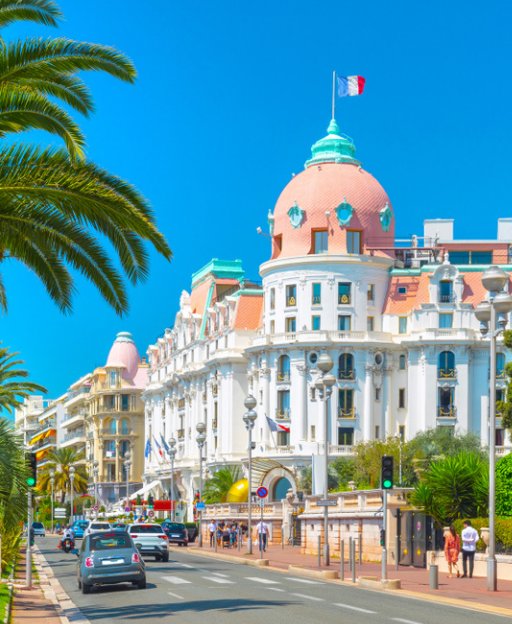
In 1294, the Count of Provence wrote that he had come to Nice “to enjoy the follies of carnival.” More than 730 years later, the city still throws the same party. Bigger, louder, and every bit as wild.
Why Nice Has Always Done This
The Carnaval de Nice is one of the world’s oldest documented carnivals. That 13th-century mention is not folklore — it is a real historical record. What it describes has never really stopped.
Today, the carnival runs for two full weeks each February. More than 150,000 visitors come to a city of roughly the same size. The Promenade du Paillon fills with floats, music, and enormous papier-mâché figures. Most of it is free to watch from the streets.
The city doesn’t treat this as a tourist event. It treats it as a fundamental part of who it is.
The King Who Rules and Then Burns
Every edition of the Nice Carnival is built around a single theme and a single character: Sa Majesté Carnaval — His Majesty Carnival. He’s a figure made of papier-mâché and wire, sometimes six or seven metres tall, built over several months by a team of designers and craftspeople.
He parades through the city for the full two weeks, presiding over everything. On the final night, he’s taken to the seafront and set alight on a barge. The flames bring the carnival to a close. When the fire dies, Lent begins.
There’s something ancient and oddly moving about watching a giant burn by the sea.
The Battle That Smells Like a Garden
One of the stranger and more beautiful elements of the Nice Carnival is the Bataille de Fleurs — the Battle of Flowers. Elaborate floats carry performers in floral costumes who throw fresh blooms into the crowd below. The crowd throws them back.
Mimosa, gerberas, carnations. Thousands of flowers travelling back and forth through the air. The promenade smells extraordinary during those afternoons. The event happens twice during carnival week and draws enormous crowds in its own right.
If you’re planning to visit Nice around carnival time, accommodation fills up fast. The Best Hotels in Nice and the French Riviera guide is worth bookmarking early.
What Carnival Actually Means in France
In France, carnival is not merely entertainment. It is one of the few moments when normal rules are suspended. The word itself comes from the Latin carne vale — farewell to meat. For centuries, Catholics ate richly in the days before Lent, knowing 40 days of fasting lay ahead.
But carnival also served a social function. It was the one time when order could be gently mocked. Masks allowed people to speak more freely. Costumes allowed for temporary reinvention. That spirit — the licence to be someone else for a while — runs through every French carnival, from Nice to Dunkerque and the dozens of smaller celebrations in between.
Enjoying this? 7,000 France lovers get stories like this every week. Subscribe free →
The Carnival Nobody Talks About
While Nice dominates the headlines, the Carnaval de Dunkerque operates by completely different rules. There are no flower battles, no papier-mâché kings, no elaborate floats.
Instead, local brass bands parade through the streets for days. Thousands of residents arrive in extravagant fancy dress — herring suits, full-sequin outfits, theatrical excess of every kind. Confetti pours from upper-floor windows until the streets are calf-deep in colour.
At the climax of the celebrations, a large smoked herring is thrown from the town hall balcony into the crowd below. This is not a metaphor. It is an annual tradition, and people genuinely scramble for it.
Dunkerque’s carnival is deeply local. It belongs to the people who live there, and outsiders are welcome — but they know they’re watching something that isn’t really for them.
Fat Tuesday and the French Table
Mardi Gras — literally “Fat Tuesday” — falls on a different date each year, depending on Easter. In France, it marks the last chance to eat richly before Lent. That means crêpes, above all else.
The tradition of making crêpes on Fat Tuesday is centuries old. Families gather around the pan. There’s usually an argument about who can flip one successfully while holding a coin in the other hand — a custom said to bring good fortune for the year ahead.
In bakeries across France, you’ll also find carnival beignets: deep-fried dough, dusted with icing sugar, sold warm in paper bags for eating on the street. They’re not subtle. They’re perfect.
For help planning your trip around seasonal events and traditions like these, the France travel planning guide covers everything you need to know before you go.
France doesn’t make a fuss about how old its traditions are. It just keeps doing them. A city by the sea, a paper king who burns, flowers flung through the air — and somewhere in the north, thousands in fancy dress, knee-deep in confetti, waiting for a herring. Some things don’t need explaining.
Join 7,000+ France Lovers
Every week, get France’s hidden gems, seasonal guides, local stories, and the art of la vie française — straight to your inbox.
Love more? Join 65,000 Ireland lovers → · Join 43,000 Scotland lovers → · Join 30,000 Italy lovers →
Free forever · One email per week · Unsubscribe anytime
Leave a Reply