
Drive through the rolling hills of the Meuse in north-eastern France and you might pass a road sign for a village that is not really there. No houses, no café, no church with a congregation. Just a sign, a cross, and the ghost of a place that existed before the guns of 1916 fell silent.
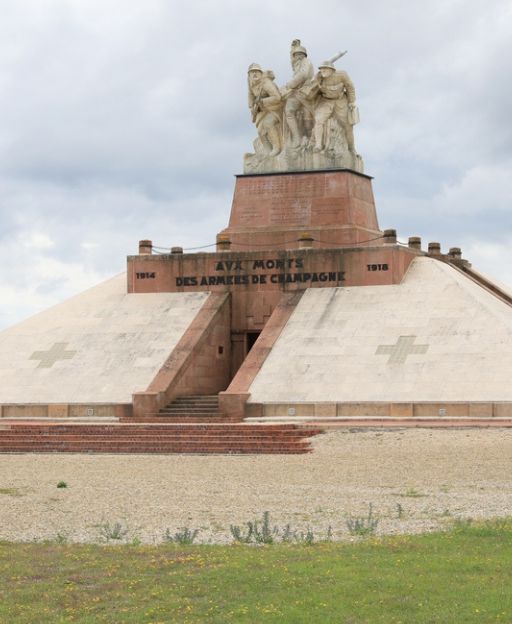
These are France’s “villages morts pour la France” — villages that died for France. Nine of them still exist as official French municipalities. They have mayors, civic records, and postcodes. Not one of them has a single permanent resident.
When a Village Becomes a Legal Ghost
During the Battle of Verdun, one of the longest and deadliest battles in history, the front line swept back and forth across the same ground for months. Some villages changed hands sixteen times in a single year.
By the end of 1916, places like Fleury-devant-Douaumont, Bezonvaux, Haumont-près-Samogneux, and Ornes no longer existed. Not damaged. Not partially destroyed. Gone. The buildings, the streets, the village squares — all erased.
After the war, the French government faced a choice. They could declare the land uninhabitable and simply remove these places from the map. Instead, they did something else entirely.
They kept the villages alive on paper.
The Mayors With No Constituents
Each ghost village is still an official French commune. The Conseil Général of the Meuse appoints a mayor to each one. They hold the office, attend ceremonies on important anniversaries, and maintain the civic record. There are no residents to represent, no council meetings to chair, no local disputes to resolve.
The role is almost entirely ceremonial — but the French state takes it seriously. These mayors carry the weight of an obligation to remember.
France has a phrase for villages like these: communes mortes pour la France. They are awarded the Croix de Guerre, the military honour given to those who died in service of the country. A village can receive a military medal. That tells you everything about how France thinks about what happened here.
Enjoying this? 7,000 France lovers get stories like this every week. Subscribe free →
The Zone Rouge — Where the Ground Is Still Dangerous
After the armistice, the land around Verdun was surveyed. What they found made permanent resettlement impossible. The soil was saturated with unexploded shells, chemical agents, and human remains. Millions of artillery rounds had been fired into an area not much larger than a small county.
The French government designated a Zone Rouge — a red zone — across much of the former battlefield. Farming was banned. Building was banned. Entry was restricted.
Over the following decades, teams of démineurs (bomb disposal workers) have slowly cleared parts of the zone, returning land to forestry and limited agriculture. But they estimate it could take another three centuries to clear everything. Even now, farmers across northern France turn up shells with every ploughing season — a phenomenon known as the “Iron Harvest.”
Parts of the land around the ghost villages remain off-limits today. The forest has reclaimed much of it. Trees grow through the ruins of cellars. Grass covers what were once garden walls. Nature has moved in, but the ground beneath is still not safe.
What You Will Find When You Visit
The ghost villages are open to visitors. You will not find much that looks like a village. At Fleury-devant-Douaumont, small signs mark where the streets once ran. A chapel was rebuilt in the 1920s as a memorial — it still stands. Beneath the grass, if you look carefully, you can see the outlines of building foundations.
At Bezonvaux, there is a simple stone cross at the centre of what was once the village. At Ornes, a memorial lists the names of the villagers who never came home. These are not tourist attractions in any conventional sense. They are places of silence.
If you are planning a trip to France that takes in something beyond the well-worn routes, a day in the Meuse — visiting Verdun and one or two of the ghost villages — is one of the most affecting things you can do. It is history that has not been tidied away.
A Country That Refuses to Forget
France’s approach to its WWI dead is unlike almost anywhere else. The country has kept ancient places alive for centuries, but the ghost villages represent something different — a deliberate refusal to move on, to erase, to pretend the losses were acceptable to absorb and forget.
The same impulse runs through the country’s war cemeteries, its roadside memorials in even the smallest communes, and the monuments aux morts that stand in every French village square. France lost around 1.4 million soldiers in the First World War. Nearly every family was touched. Forgetting was never an option.
The ghost villages are the most extreme expression of that refusal. They are officially alive because France decided that some places must not be allowed to simply disappear.
Drive past the sign for Fleury-devant-Douaumont on a quiet afternoon. Stop the car. Stand in the silence. The village is not there — and yet it is impossible to feel that it is entirely gone.
Join 7,000+ France Lovers
Every week, get France’s hidden gems, seasonal guides, local stories, and the art of la vie française — straight to your inbox.
Love more? Join 65,000 Ireland lovers → · Join 43,000 Scotland lovers → · Join 30,000 Italy lovers →
Free forever · One email per week · Unsubscribe anytime
Leave a Reply