
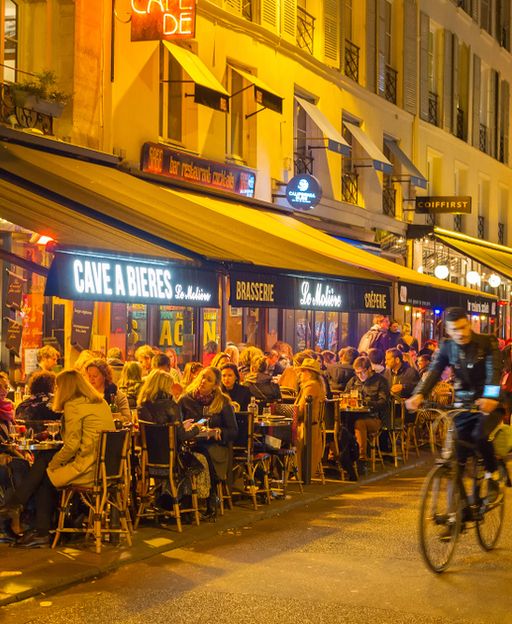
Your French friend waves from across the brasserie. You stand up. Do you extend your hand? Lean in for a kiss? And if it is a kiss — one cheek or two? Left first or right?
That frozen moment of uncertainty happens to almost every visitor in France. And it signals something important. The French cheek kiss — la bise — is so embedded in daily life that most French people have never had to think about it. They just do it.
What La Bise Actually Is
La bise is not a romantic gesture. It is a greeting — like a handshake, but warmer.
Two people lean towards each other and press their cheeks lightly together, making a soft kissing sound in the air. The lips may or may not actually touch skin. What matters is the warmth of the gesture, not the precision.
It happens between friends, family members, colleagues, and sometimes people who have only just met. When someone greets you with la bise instead of a handshake, they are telling you that you belong here.
How Many Kisses? It Depends Where You Are
Here is where it gets genuinely interesting.
The number of cheek kisses exchanged varies dramatically by region. In Paris and most of northern France, two is the norm — one on each cheek. In Normandy, many people use just one. Go south to Provence or Languedoc and three is common. Parts of the Loire Valley lean towards four.
A website called Combien de bises? (How many kisses?) maps the regional variations across the country. The result looks like a patchwork quilt — no single answer, no central authority deciding the rule. France is, in this way, still very much a country of regions.
Who Gets a Bise?
The rules around who greets whom with la bise are unwritten but generally understood.
Women typically exchange la bise with everyone — other women, men they know, colleagues, family friends. Men greet women with la bise and shake hands with other men, unless they are close friends or family.
In the workplace, new colleagues are often welcomed with la bise on their first day. After that, the morning round begins. Some French offices start each working day with a quiet circuit of greetings that would take a British office ten minutes to complete — and nobody considers it a waste of time.
Enjoying this? 7,000 France lovers get stories like this every week. Subscribe free →
When France Had to Stop
In March 2020, French health authorities asked people to suspend la bise. The recommendation came with genuine urgency. And the French complied.
But they found it deeply unpleasant.
There is something telling about a country publishing official guidance specifically about its greeting ritual. For many French people, the pause was not trivial. La bise is not just a habit. It is a daily confirmation that relationships are real, that warmth is normal, that belonging matters.
When restrictions lifted, la bise returned quickly. The French did not ease back into it gradually. They just started again.
Which Cheek Do You Start On?
This is the question that catches most visitors mid-lean.
In most of France, you go left cheek first — meaning your right cheek presses against theirs. But in some parts of the country, it is the opposite. Collisions happen. Both people apologise. Then laugh. Then complete the greeting anyway.
The French do not expect foreign visitors to know the rules. What they notice is whether you are willing to try. A stiff handshake when someone leans in for a bise reads as cold rather than confused. Just follow their lead.
What La Bise Tells You About France
La bise is not just a greeting. It is a window into how French life is organised.
France is a country where personal warmth is built into the daily structure of life. Where stopping to acknowledge someone properly — really properly — is not seen as inefficient. France has other unspoken social codes too: its relationship with silence surprises most visitors just as much as the kissing does.
Understanding la bise is part of understanding what to expect when you arrive. If you are still planning your trip to France, knowing the social rhythms will help you feel far less like an outsider once you are there.
The next time a French person leans in to greet you, lean in too. You are not just exchanging a pleasantry. You are stepping into a ritual that has shaped how the French understand friendship, warmth, and the small, important things that make daily life worth living.
Join 7,000+ France Lovers
Every week, get France’s hidden gems, seasonal guides, local stories, and the art of la vie française — straight to your inbox.
Love more? Join 65,000 Ireland lovers → · Join 43,000 Scotland lovers → · Join 30,000 Italy lovers →
Free forever · One email per week · Unsubscribe anytime
Leave a Reply