
Driving in France is one of the best ways to experience the country beyond Paris. With a hire car, you can explore lavender fields in Provence, follow the Loire Valley’s château trail, and find villages that no tour bus will ever reach. But French roads have their own rules and customs — and some of them will catch American drivers off guard.
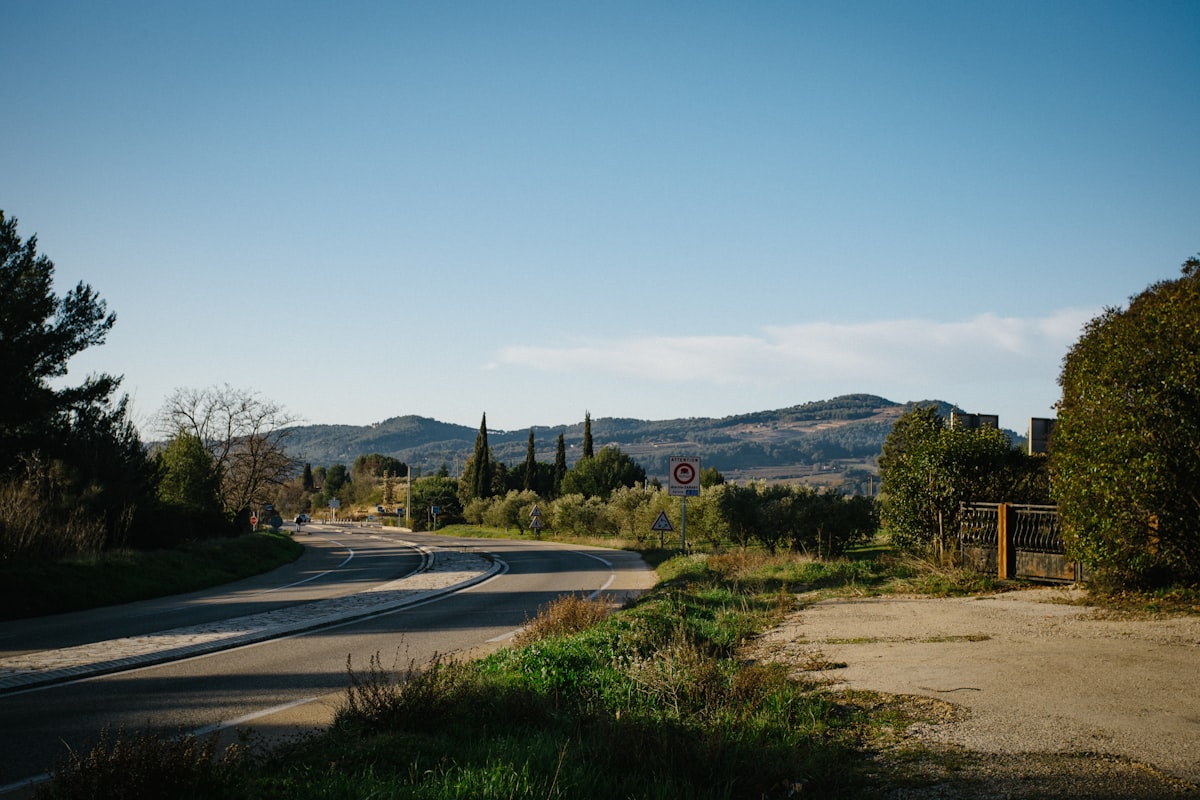
Photo: Jp Valery / Unsplash
This guide covers everything you need to know before you turn the key: permits, road rules, tolls, fuel, parking, and the gear you’re legally required to carry. Bookmark it for your trip planning.
Do Americans Need an International Driving Permit?
Technically, yes. France requires non-EU visitors to carry an International Driving Permit (IDP) alongside their valid US driving licence. You can get one from AAA for around $20 before you travel — it’s essentially a translation of your licence into French.
In practice, many rental agencies won’t ask to see it. But if you’re stopped by the gendarmerie (police) or involved in an accident, not having an IDP can create serious complications. It takes five minutes to sort out before you leave — don’t skip it.
Right-Hand Driving: The Adjustment
France drives on the right. If you’ve only ever driven in the UK or Ireland, this takes real concentration for the first few hours. If you’re American, the road side will feel natural — but the car might not.
Most hire cars in France are manual (stick shift). If you’re not comfortable with a manual gearbox and shifting with your right hand, book an automatic well in advance. They cost more but they’re worth it when you’re navigating a roundabout in Lyon for the first time.
Top tips for the transition:
- Keep your reference point on the centre line — you should always be to the right of it
- Be extra careful at junctions and when pulling out of car parks — your instinct may pull you left
- Overtake on the left only (this one Americans will find natural)
- Use your mirrors more than usual for the first day or two
Speed Limits in France
French speed limits are strictly enforced by fixed and mobile radar cameras (radars automatiques). Here’s what you need to know:
| Road Type | Speed Limit | In mph (approx.) |
|---|---|---|
| Autoroute (motorway) | 130 km/h | 80 mph |
| Route nationale (dual carriageway) | 80 km/h | 50 mph |
| Urban areas | 50 km/h | 30 mph |
| Residential zones | 30 km/h | 19 mph |
In wet conditions, autoroute limits drop to 110 km/h and nationale roads to 80 km/h. Speed cameras are everywhere — locals flash their headlights to warn oncoming drivers, but don’t rely on this. Fines start at €68 for minor infractions and escalate quickly. Your hire car company will pass the fine on to your credit card.
The French Toll System (Péage)
Most autoroutes in France are toll roads, and they’re not cheap. A drive from Paris to Nice will set you back roughly €70-80 in tolls alone. The system works like this:
- Take a ticket at the entry barrier (press the button if one doesn’t appear automatically)
- Keep the ticket safe — you need it to exit
- At the exit, insert your ticket and pay by card or cash
Look for the correct lane at toll plazas: the green arrow means the lane is open, the orange ‘t’ symbol is for Liber-t electronic tags only (the French equivalent of E-ZPass). If you’re hiring a car for more than a week, some rental agencies offer a Liber-t tag — ask when you book.
To avoid tolls entirely, use the routes nationales and départementales instead. They’re slower but far more scenic — and this is often where you’ll find the best of France. If you’re planning a 7-day road trip through France, mixing toll-free and autoroute sections gives you the best balance of speed and scenery.
Priority à Droite: The Rule That Catches Everyone
Priorité à droite means “priority from the right.” In many French towns and villages, a car entering from a road on your right has right of way — even if you’re on what looks like the main road. This rule catches out almost every foreign driver at least once.
You’ll know the rule does not apply when you see a yellow diamond sign (meaning you have priority) or a “STOP” or “Cédez le passage” (give way) sign on the side road. In towns without clear signage, assume priority à droite is in force and slow down at every junction.
Roundabouts
France has more roundabouts than any other country in the world — over 30,000 of them. Traffic flows anti-clockwise (counter-clockwise). The key rules:
- Give way to traffic already on the roundabout (this is different from the old priority à droite rule, which some very old roundabouts may still follow — look for signage)
- Signal left when entering if you’re taking an early exit, signal right as you approach your exit
- Stay in the outside lane for first or second exits; use the inside lane for later exits
- Multi-lane roundabouts in cities can be intimidating — the Place de l’Étoile around the Arc de Triomphe is famously chaotic. Don’t attempt it if you can avoid it
Fuel: Gazole, Sans Plomb, and Where to Fill Up
French petrol stations use different labels than you’re used to:
- Gazole or Diesel — diesel fuel (most hire cars in France run on diesel)
- Sans Plomb 95 (SP95) — unleaded petrol (regular)
- Sans Plomb 98 (SP98) — premium unleaded
- E85 — ethanol blend (only for flex-fuel vehicles)
Check your hire car’s fuel cap or rental documents before you fill up. Putting petrol in a diesel car is an expensive mistake. Autoroute service stations are the most expensive for fuel — supermarket stations (Leclerc, Carrefour, Intermarché) offer significantly cheaper prices. Fill up before joining the motorway whenever possible.
Parking in France: Blue Zones and Horodateurs
Parking in French towns follows a colour-coded system:
- Blue zones (zone bleue) — free but time-limited parking. You must display a blue cardboard parking disc (disque de stationnement) on your dashboard showing your arrival time. You can buy one at any tabac (newsagent) for about €1. Without the disc, you’ll be fined
- Pay-and-display (horodateur) — feed the meter, display the ticket on your dashboard. Many now accept cards or contactless payment
- Underground car parks — common in cities. Take a ticket on entry, pay at the machine before returning to your car
Never park where kerbs are painted yellow. Double parking is technically illegal but widely practised — don’t do it yourself.
ZFE Low-Emission Zones
France’s Zones à Faibles Émissions (ZFE) restrict older, more polluting vehicles from entering certain city centres. Paris, Lyon, Marseille, Toulouse, and several other cities enforce ZFE rules. You need a Crit’Air vignette — a coloured sticker showing your vehicle’s emission class — displayed on your windscreen.
If you’re hiring a car, most rental vehicles are new enough to qualify for Crit’Air 1 (the cleanest category) and should already have the sticker. Check with your rental company before collecting the car. If you’re driving your own vehicle, order the vignette from the official French government site well in advance — it costs €3.72 and takes 2-3 weeks to arrive.
What You Must Carry in the Car
French law requires every vehicle to carry specific safety equipment. Failure to produce any of these during a police check results in a fine:
- Hi-visibility vest (gilet jaune) — at least one, within reach of the driver (not in the boot). One per passenger is recommended
- Warning triangle — to be placed 30 metres behind your vehicle in case of breakdown
- Breathalyser (éthylotest) — technically still required by law, though the fine for not carrying one was suspended in 2013. Most locals don’t carry one, but hire cars often include it
- Headlamp beam deflectors — only needed if your car has UK-spec headlamps (not relevant for most hire cars)
Rental cars typically come equipped with all of the above. Check the glovebox and boot when you collect the vehicle.
Car Hire Tips for Americans
Hiring a car in France is straightforward, but a few things are worth knowing:
- Book automatic early — they’re a minority of the fleet and sell out in peak season
- Decline the rental company’s insurance if you have your own cover — many US credit cards include rental car insurance (check your card benefits). The Collision Damage Waiver (CDW) at the desk is often €15-25/day
- Check for mileage limits — some deals restrict you to a set number of kilometres per day
- Inspect the car thoroughly at collection. Photograph every scratch, dent, and scuff. French rental return staff can be very particular
- Minimum driving age is 18 in France, but most rental companies require you to be 21+, and drivers under 25 pay a young driver surcharge
- Consider collecting outside the airport — airport locations charge a premium. A city-centre branch or train station pick-up is often cheaper
Insurance: What You Need
Basic third-party liability insurance is included with every hire car by law. But the excess (deductible) can be €800-2,000 unless you buy additional cover. Your options:
- CDW from the rental company — reduces or eliminates the excess, but expensive at the counter
- Third-party excess insurance — companies like Insurance4carhire or iCarhireinsurance offer annual policies from around £40/$50. Far cheaper than the rental desk
- Credit card coverage — some premium US cards (Chase Sapphire Reserve, Amex Platinum) cover rental car damage. Call your card issuer to confirm and understand the claim process before you travel
Essential Road Trip Planning
Before setting off, a few practical preparations will make your drive smoother:
- Download offline maps — Google Maps or Waze both work well in France. Download the relevant regions before you leave your hotel Wi-Fi
- Carry cash — some older toll booths and rural fuel stations may not accept foreign cards
- Plan for service area stops — French autoroute rest areas (aires) are spaced every 20-30 km and range from basic picnic spots to full restaurants
- Avoid driving in Paris — the city’s traffic, one-way systems, and parking costs make it not worth the stress. Take the train into Paris and pick up your hire car when you leave
For a detailed day-by-day route, see our 7 Days in France: The Classic Road Trip Route. And if you’re still in the early stages of planning, our Planning Hub pulls together everything you need in one place.
Driving in France opens up a completely different side of the country. The autoroutes get you where you need to go quickly, but the real magic is on the smaller roads — through villages with boulangeries that haven’t changed in fifty years, past sunflower fields and vineyards, with nothing but your own schedule to follow. Take it slow, follow the rules, and enjoy the drive.
Leave a Reply