
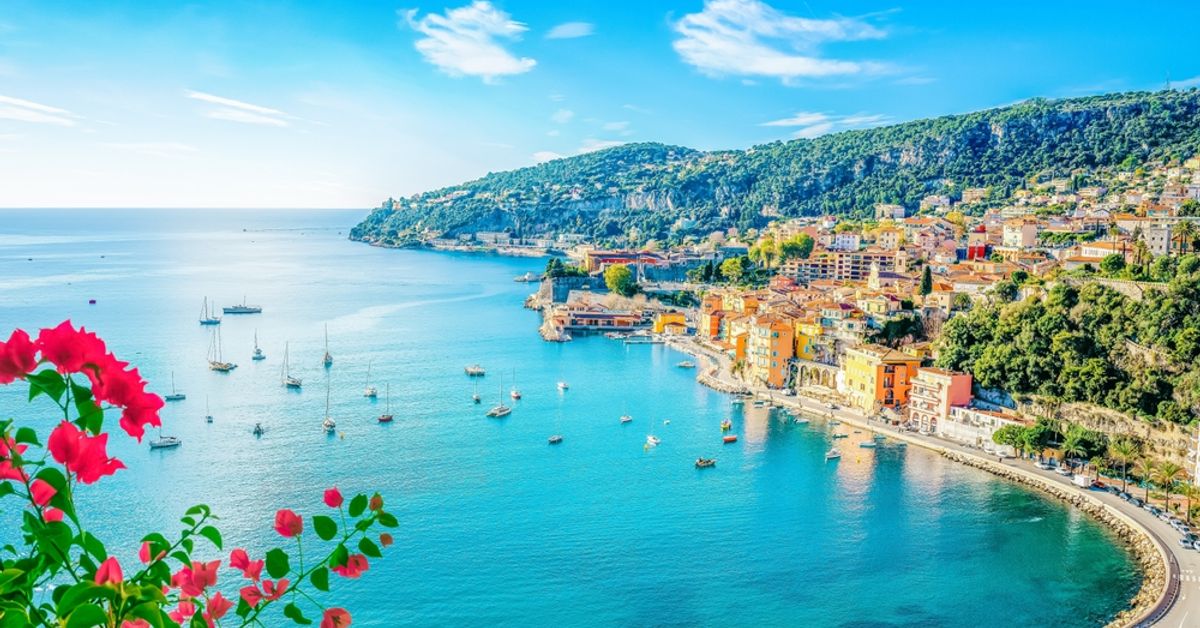
The French Riviera is one of those places that actually lives up to the hype. From the broad sweep of Nice’s Promenade des Anglais to the quiet hillside towns above Cannes, this stretch of Mediterranean coastline delivers sun, colour, and flavour in equal measure. If you’re planning a trip and need a solid French Riviera travel guide, this is your starting point — covering the best places to visit, when to go, how to get around, and what to eat.
Love France? Join 7,000+ readers on our free newsletter → lovetovisitfrance.substack.com
What Is the French Riviera?
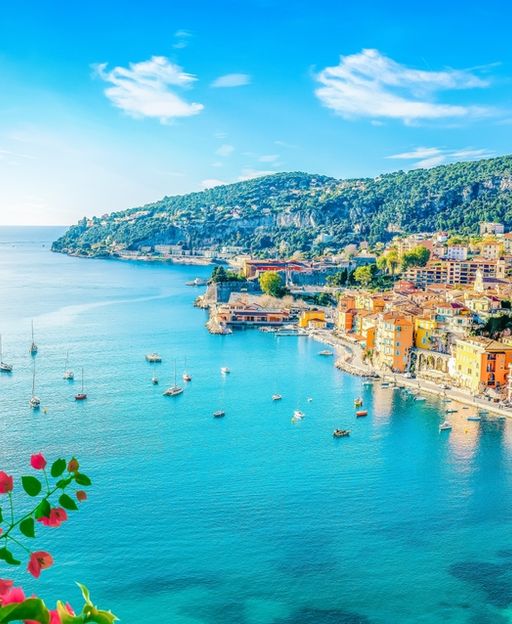
The French Riviera — known locally as the Côte d’Azur — runs along France’s southeastern coast, from the Italian border near Menton to the headlands east of Marseille. The name Côte d’Azur (Azure Coast) describes exactly what you see when you arrive: a sweep of brilliant blue water under reliably clear skies.
The region sits within the Provence-Alpes-Côte d’Azur administrative area, but it has its own distinct identity. This is where European royalty and American artists came in the late 19th century to escape grey northern winters. Where F. Scott Fitzgerald set scenes that felt like fever dreams. Where, today, millions of visitors arrive every summer — and where, if you time it right, you can still find pockets of genuine quiet.
Best Places to Visit on the French Riviera
Nice
Nice is the capital of the Riviera and the natural base for most visits. Its old town — Vieux-Nice — is a tangle of narrow streets, orange and ochre buildings, and covered markets that have been trading for centuries. The Promenade des Anglais follows the seafront for several kilometres and is best experienced early in the morning before the crowds arrive.
The Matisse Museum and the Marc Chagall National Museum are both genuinely excellent and neither requires a full day. Nice also has a main train station with frequent connections east to Monaco and west to Cannes, which makes it ideal as a hub for exploring the whole coastline.
Cannes
Cannes is famous for its film festival each May, but the rest of the year it belongs to shoppers, beach-goers, and day-trippers crossing to the Îles de Lérins. The islands are a 15-minute boat ride from the old port and offer a completely different pace — pine forests, quiet coves, and a medieval monastery on the Île Saint-Honorat that still produces wine and honey. The Croisette (the main seafront boulevard) is best experienced in the evening, when the light drops and the crowds thin.
Antibes and Juan-les-Pins
Antibes sits between Nice and Cannes and often gets overlooked, which makes it one of the more rewarding stops on the Riviera. The old town has intact medieval ramparts, a daily covered market, and the Picasso Museum inside the castle where the artist spent several productive months in 1946. Juan-les-Pins, just around the headland, has a younger atmosphere and some of the better sandy beaches in the area.
Villefranche-sur-Mer
Just east of Nice, Villefranche-sur-Mer is a working fishing port that has kept more of its original character than many Riviera towns. The bay is sheltered and deep — cruise ships anchor here — and the colourful buildings along the waterfront look exactly as they appear in photographs. It’s an easy day trip from Nice and well worth the 20-minute train journey.
Menton
Menton is the last French town before Italy, pressed against the border in a setting of terraced hillsides and lemon groves. It’s quieter than Nice or Cannes, popular with those who prefer a slower pace, and famous for its lemons — an annual lemon festival runs each February. The old town climbs steeply from the seafront and has a genuinely beautiful main square.
Monaco
Monaco is technically an independent principality, not part of France, but it’s surrounded by French territory and easy to reach by train from Nice in under 30 minutes. The casino in Monte-Carlo and the palace on the rock are the main draws. Prices are high — a coffee costs more here than anywhere else on the Riviera — but it’s worth an afternoon if you haven’t been before.
When to Visit the French Riviera
Planning Your France Trip?
Get France’s hidden gems and travel inspiration every week — free in your inbox.
The Riviera has a long season. May and June offer warm temperatures, smaller crowds than peak summer, and more reasonable accommodation prices. July and August are busy and hot — beach towns fill up, prices rise sharply, and traffic on the coastal Corniche roads can be slow.
September is the sweet spot for most visitors: still warm enough to swim, crowds thinning after the August rush, and the light turning golden in a way that feels completely different from midsummer. October is cooler but still pleasant, and the best month for exploring inland without the heat.
For more on timing your visit, see our guide to the best time to visit France.
How to Get There from the US
Nice Côte d’Azur Airport is the second-busiest airport in France. There are direct flights from New York with several airlines, and connections from other US cities via Paris or other European hubs. Once you land, the city centre is around 20 minutes by tram, or a short taxi ride.
Alternatively, many visitors fly into Paris Charles de Gaulle and take a TGV train directly to Nice. The high-speed journey takes roughly five and a half hours and drops you into the heart of the city.
Getting Around the French Riviera
The coastal train line connecting Nice, Villefranche-sur-Mer, Monaco, Menton, Antibes, and Cannes is one of the most useful rail routes in France. Trains run frequently and journey times are short — Nice to Cannes takes around 40 minutes, Nice to Monaco around 25 minutes. It’s cheap, scenic, and avoids the parking difficulties that come with driving in summer.
The three Corniche roads (at different heights on the cliffsides above Nice) are worth doing by car or bus for the views, but in high summer the coastal road can move slowly. If you want to explore inland — towards the Gorges du Verdon, the Luberon in Provence, or the villages of the Var — a hire car is the better option. See our guide to driving in France as an American before you get behind the wheel.
Where to Stay on the French Riviera
Nice is the most practical base, with the widest range of options across all budgets. Cannes and Antibes are worth considering if you prefer a slightly different atmosphere. Villefranche-sur-Mer is a quieter choice for those who want to be near Nice without the full city experience.
For specific hotel recommendations across the region, see our guide to the best hotels in Nice and the French Riviera.
What to Eat on the French Riviera
Niçois cooking is its own category — not the same as Provençal cooking further west, and quite different from northern French cuisine. A few things you’ll encounter that are worth knowing:
Socca is a flatbread made from chickpea flour, cooked in a wood-fired oven and eaten hot with a pinch of black pepper. You’ll find it from market stalls and street vendors across Vieux-Nice. It’s cheap, filling, and tastes completely different from anything you’d expect.
Salade Niçoise here is not what most visitors expect from the exported version. A traditional Niçoise uses raw vegetables — tomatoes, green beans, broad beans, radishes — with anchovies, hard-boiled eggs, and olives. Tuna is sometimes added, but the anchovy version is more authentic.
Pan Bagnat is essentially a salade Niçoise inside a round bread roll. It’s the perfect beach lunch — packed with flavour, inexpensive, and sold at markets across the region.
Pissaladière is the local answer to pizza — a thick bread base topped with slow-cooked onions, black olives, and anchovies. It’s sold by the slice in bakeries and at markets and makes a very good mid-morning snack.
How Many Days Do You Need?
Three to four days is enough to cover Nice, Villefranche-sur-Mer, Monaco, and Cannes at a relaxed pace. A full week lets you add Menton, the Îles de Lérins, the Corniche drives, and inland excursions.
The Riviera pairs naturally with a few days in Provence — the two regions are 2 to 3 hours apart by train or car. See our Provence travel guide for what to expect in that direction.
Budget Planning for the French Riviera
The Riviera has a reputation for being expensive — and by French standards, it is. But costs are manageable with a bit of planning.
What costs more here: seafront accommodation, restaurant meals near the beach, beach club fees, and anything in Monaco.
What costs about the same as elsewhere in France: the coastal train line, supermarkets, entrance to public museums, and socca from a market stall.
How to reduce costs: base yourself in Nice rather than Cannes or Monaco, buy lunch at the covered market rather than restaurants, and visit in May/June or September rather than peak July/August.
For a broader view of what a France trip costs overall, see our guide to how much a trip to France costs.
French Riviera Travel Guide: Essential Tips
- Book accommodation early for summer. July and August fill up well in advance — especially in Cannes and Nice seafront areas.
- Use the train. The coastal rail line saves time, money, and the headache of summer parking.
- Go to markets early. The Cours Saleya market in Nice starts winding down by midday.
- Walk the old towns in the evening. When day-trippers leave, the atmosphere shifts completely.
- The Corniche roads are worth the detour. The Grande Corniche above Nice offers views that the seafront road never can.
- Check what’s on in Cannes. The Film Festival in May changes the whole town — prices rise and some areas become harder to navigate if you’re not there for the festival.
- Carry cash for markets. Not all market stalls take cards, especially for socca and pan bagnat.
You Might Also Enjoy
- Best Hotels in Nice and the French Riviera — where to stay at every budget
- Provence Travel Guide — the perfect companion region to pair with your Riviera stay
- Best Time to Visit France — month-by-month guide for planning your trip
Plan Your France Trip
Ready to start planning? Our France trip planning hub covers everything from visas and transport to packing lists and itinerary templates — all in one place.
Join 7,000+ France Lovers
Every week, get France’s hidden gems, local recipes, and travel inspiration — the kind you won’t find in any guidebook.
Free forever · One email per week · Unsubscribe anytime
Leave a Reply