Every September, something quiet shifts across Bordeaux. The restaurants fill earlier than usual. The backroads carry more traffic. And out in the vineyards — those perfectly ordered rows of vines that roll on for miles — the most important three weeks of the entire year are about to begin.
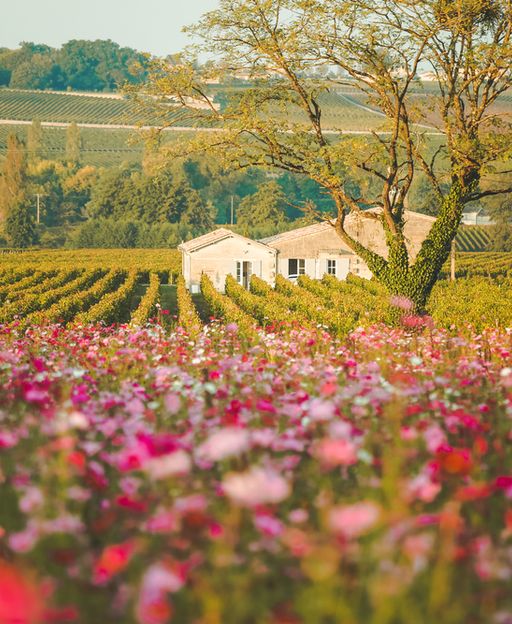
The harvest, called la vendange, is not just a farming event. In Bordeaux, it is a season of its own.
The Decision That Everything Depends On
Nobody in Bordeaux announces the harvest on a fixed date. The decision comes from the vines themselves.
Winemakers spend weeks tasting individual grapes, measuring sugar levels, watching the weather, and arguing with their own instincts. Harvest a week too early and the wine will be light and sharp. A week too late — with autumn rains closing in — and the whole crop can be lost.
In the past, the official start was declared by the town council, a tradition called the ban de vendanges. Some estates still keep it. The date is whispered about in the weeks before it arrives, then acted on almost overnight.
When the call finally comes, Bordeaux moves fast.
When the Workers Arrive
Within days, the estates are transformed. Tens of thousands of seasonal workers flood into the region — students, backpackers, travellers looking for a few weeks of honest work, and families who have returned to the same estate for three generations.
Life on a working estate during harvest is communal in a way that is almost forgotten elsewhere. Workers start before sunrise. They eat lunch together in the vineyard — long tables, simple food, and almost always wine. By midday, there are scissors in every hand and empty crates stacking up along the rows.
The work is not romantic. It is physical, repetitive, and exhausting. But the mood on a harvest estate is unlike anywhere else. There is a shared sense of purpose — something is being made, right now, out of what grows in this particular patch of earth.
What the Villages Look Like
The small towns that sit inside Bordeaux’s wine country — Saint-Émilion, Pauillac, Margaux, Pomerol — change their tempo completely.
Cafés and brasseries run harvest menus. The streets smell faintly of fermentation as the grapes reach the cellars. Estate kitchens that spend the rest of the year in quiet efficiency suddenly have fifty people eating dinner at long tables.
For anyone travelling through at this time of year, the atmosphere is striking. It does not feel like tourism. It feels like witnessing something that has nothing to do with visitors at all — a rhythm that exists entirely for its own reasons.
Enjoying this? 7,000 France lovers get stories like this every week. Subscribe free →
The First Press
When the grapes reach the cellar, they are sorted by hand before anything else happens. Every plot, every row, every parcel of vine is kept separate. This is what the word terroir actually means in practice — not an abstract theory, but a physical reality handled grape by grape.
The first juice that flows, called the must, is watched over carefully. What happens in those initial hours of fermentation will echo through the wine for years, sometimes decades. This is the moment that turns the season’s weather, the quality of the soil, and the skill of the winemaker into something that can be tasted across a table.
The anxiety during these first 48 hours is real. Even experienced winemakers describe it as the most tense part of the year.
After the Last Vine Is Picked
By mid-October, the harvest is usually finished. The workers pack up and leave. The estates return to quiet. The wine goes into barrels and disappears underground for the next eighteen to twenty-four months.
The villages that were briefly crowded go still again. The cafés go back to regular menus. The roads empty out.
And already, the talk turns to next year. What was the sugar reading? How will this vintage compare? Who took the risk on a later harvest date, and did it pay off?
For anyone who experienced it, that question has a kind of pull. If you are planning a trip to France and want to time it around something genuinely alive, our France planning guide is the place to start.
For more on the wine world that shapes this region, read about the natural wine revolution dividing France. And to see how Burgundy approaches its own harvest with very different rituals, see the Burgundy ritual that happens before a single grape is picked.
You do not need to know anything about wine to feel what the Bordeaux harvest is. You just need to be standing in those rows when the decision finally comes, watching three weeks of something real begin.
Join 7,000+ France Lovers
Every week, get France’s hidden gems, seasonal guides, local stories, and the art of la vie française — straight to your inbox.
Love more? Join 65,000 Ireland lovers → · Join 43,000 Scotland lovers → · Join 30,000 Italy lovers →
Free forever · One email per week · Unsubscribe anytime
Leave a Reply