
Half of France once spoke a different language. Not a patois. Not a dialect. A full, rich language — with poetry, law courts, and a literature older than anything written in French. Then Paris decided it had to go.
What followed was centuries of erasure. But Occitan never quite died.
A Language That Built a Civilisation
Long before France existed as a single nation, the south had its own world.
From the Atlantic coast of Gascony to the Alpine foothills of Provence, a language called Occitan held everything together. It was the tongue of the troubadours — the poets who invented the idea of romantic love and spread it across medieval Europe.
The word “troubadour” itself is Occitan, from the verb trobar, meaning to find or to compose. These were not folk singers. They were sophisticated artists whose work shaped Dante, Petrarch, and the whole tradition of European courtly poetry.
The courts of Toulouse, Montpellier, and Carcassonne rang with Occitan verse. The Counts of Provence exchanged diplomatic letters in it. The merchants of Languedoc negotiated contracts with it.
It was not French. And for centuries, that was perfectly fine.
The Year Paris Changed Everything
In 1539, King Francis I signed the Ordinance of Villers-Cotterêts. From that point, all legal documents in France had to be written in French — specifically, the French of Paris.
Not Occitan. Not Breton. Not Alsatian. Parisian French.
It did not wipe out Occitan overnight. But it set a direction. Over the following centuries, schools taught French and punished children for speaking their home tongue. Occitan was pushed from the courtroom to the kitchen — from public life to private shame.
By the 20th century, a single word captured the damage: vergonha. In Occitan, it means shame. Generations of southern French children grew up embarrassed by the language their grandparents spoke.
The Land Still Speaks It
Here is what most visitors to southern France never notice.
The place names on every signpost are Occitan. Toulouse is Occitan. Carcassonne is Occitan. The River Garonne, the Massif Central, the Camargue — all rooted in words that predate French settlement of the south.
Even the word Midi, used by the French to describe the south of the country, comes from Occitan. In a language shaped by the sun, miègjorn — midday — also meant south. Because that is where the light came from.
When you drive through Languedoc and see dual-language road signs, you are not looking at decoration. You are seeing the bones of a civilisation that Paris tried very hard to erase.
Enjoying this? 7,000 France lovers get stories like this every week. Subscribe free →
What Happened to the People Who Kept Speaking It
Occitan did not disappear. It went underground.
In mountain villages of the Ariège, the Lot, and the Hautes-Pyrénées, older residents kept speaking it at home. Shepherds used it in the high pastures. Winemakers in the Hérault used it in the vineyard. This was not nostalgia. It was simply how these communities had always talked.
French officials in the 19th and early 20th centuries saw regional languages as threats to national unity. Maps labelled southern France as linguistically backward. The goal was a France with one voice — and it was to be Parisian.
It did not work.
The Language Is Coming Back
Today, Occitan has an estimated 500,000 active speakers, with several million more who understand it passively.
In cities like Toulouse, Montpellier, and Perpignan, you can now study Occitan in state schools. Calandreta schools — fully Occitan-medium primary schools — operate across the south. Occitan radio stations broadcast. Music festivals celebrate troubadour culture in the same towns where it was born.
In 2021, the French Senate recognised Occitan as an official regional language. It was a quiet moment, lost in the news cycle. But in villages across the Midi, people noticed.
What the Visitor Sees
You do not need to speak Occitan to sense it when you travel south.
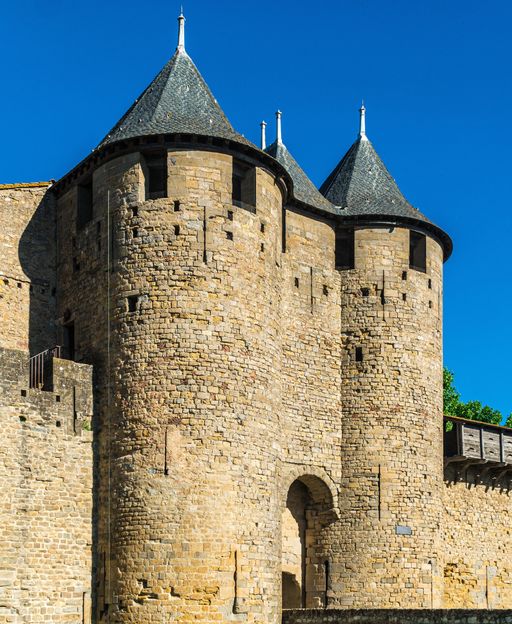
Walk the old city of Carcassonne at dusk. Read the dual-language street signs in Montpellier. Visit the ruins of Cathar castles in the Ariège — those fortresses were Occitan strongholds, and the crusade that destroyed them was partly a war against Occitan civilisation itself.
Notice the accents around you. The particular music of a southern French voice — the way vowels stretch and consonants soften — carries eight centuries of Occitan in its grain.
If you are planning a trip to France, the south holds a depth that most itineraries miss. Occitan is the reason the Midi feels different from everywhere else. It always was a different place.
Occitan was declared dead several times over. It survived every announcement. In a sun-bleached village in the Lot, in a Toulouse bar where someone is playing medieval lute music, in the throat of every southerner who says bonjour with that unmistakable Midi lilt — it is still there. Still saying things Paris never quite managed to translate.
Join 7,000+ France Lovers
Every week, get France’s hidden gems, seasonal guides, local stories, and the art of la vie française — straight to your inbox.
Love more? Join 65,000 Ireland lovers → · Join 43,000 Scotland lovers → · Join 30,000 Italy lovers →
Free forever · One email per week · Unsubscribe anytime
Leave a Reply