
Stand in the centre of Quimper on a market morning and listen carefully. Between the vendors calling out prices and the smell of crêpes on a cast-iron griddle, you might catch it — a language that sounds nothing like French. Older, rougher at the edges, full of hard consonants and vowel sounds that seem to come from somewhere else entirely. That language is Breton. It has been spoken here for fifteen hundred years.
A Kingdom Before It Was a Province
Brittany was an independent duchy for centuries before it officially merged with France in 1532. Even then, the terms of the union promised the region its own parliament, its own laws, and its own customs.
The French crown eventually dissolved those arrangements. But the memory never quite left. For many Bretons, joining France was an agreement, not a conquest — and agreements, they will quietly remind you, can always be revisited.
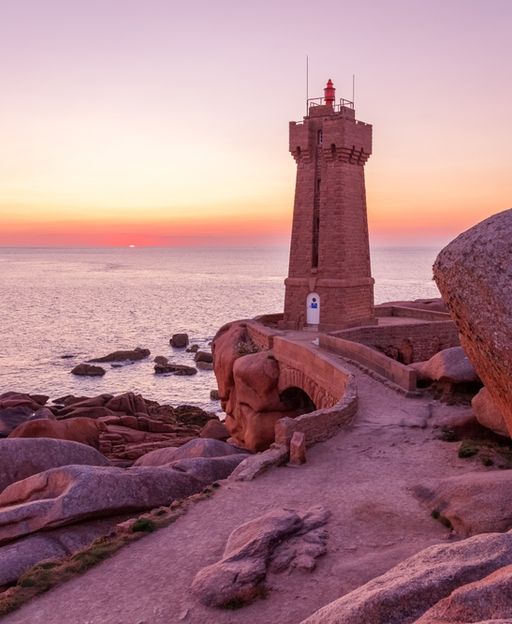
The peninsula juts out into the Atlantic like it is trying to keep its distance. The landscape reinforces the feeling. The grey granite, the windswept headlands, the narrow lanes lined with gorse — none of it looks like Normandy or Provence or anywhere else in France.
The Language That Was Nearly Lost
At its peak, around a million people in Brittany spoke Breton. By the mid-twentieth century, French schools had banned it from classrooms — sometimes with physical punishment for children caught using it in the playground. Numbers fell sharply.
Today, fewer than 200,000 people speak it fluently, and most of them are over fifty. You might expect the language to be quietly disappearing. Instead, something unexpected has happened.
Young Bretons are learning it again. Diwan schools, which teach entirely in Breton from nursery through to secondary level, now educate thousands of children across the region. Bilingual road signs have gone up across the peninsula. The language has found its way onto regional television. It is not thriving — but it is not dying either. It is holding on.
The Flag That Flies Next to the Tricolore
The Gwenn ha Du — meaning the white and black in Breton — is the regional flag of Brittany. It hangs from windows, flutters above town halls, and appears on car stickers from Rennes to the Finistère coast.
The stripes represent the historic districts of Brittany. The hermine spots in the upper left come from the old ducal coat of arms. It is not the flag of a separatist movement, exactly. It is something quieter: a way of saying we were here before France, and we are still here now.
Enjoying this? 7,000 France lovers get stories like this every week. Subscribe free →
What It Means to Be Breton Today
Modern Brittany is not trying to leave France. Most Bretons are proud of both identities — they vote in French elections, support French institutions, and celebrate Bastille Day. But they are also fiercely, cheerfully, sometimes stubbornly Breton.
The food is different. Butter goes into almost everything. Cider replaces wine. Crêpes — not the thin Parisian kind, but thick, dark buckwheat galettes — are eaten at any hour. The music is different too. The biniou bagpipe and the bombarde play at festivals that go on past midnight.
Those festivals are called Fest-noz — night feasts. They are communal dances, held outdoors, where hundreds of people form lines and circles and move together to music that sounds genuinely ancient. Unesco has listed the Fest-noz as an intangible cultural heritage of humanity. The Bretons have been doing it for centuries, and they show no sign of stopping.
Why It Matters When You Visit
Understanding that Brittany is not quite like the rest of France changes how you travel there. You start to notice the bilingual signs — French above, Breton below. You spot the Celtic knotwork carved above doorways in old towns like Dinan and Quimper. You realise that when someone tells you “we do things differently here,” they mean it quite literally.
If you are planning a trip to France, Brittany is the region most likely to surprise you. Our full Brittany travel guide covers the best coastline roads, the markets, the hidden villages, and how to get there from Paris.
France is a country of remarkable regional diversity — but nowhere makes the point quite as strongly as Brittany. The language, the flag, the festivals, the food: all of it adds up to something that feels like its own world.
There are parts of France where you feel like you have arrived in France. And then there is Brittany — a place that feels older, wilder, and harder to name. Go there prepared to be surprised by what France contains.
Join 7,000+ France Lovers
Every week, get France’s hidden gems, seasonal guides, local stories, and the art of la vie française — straight to your inbox.
Love more? Join 65,000 Ireland lovers → · Join 43,000 Scotland lovers → · Join 30,000 Italy lovers →
Free forever · One email per week · Unsubscribe anytime
Leave a Reply