
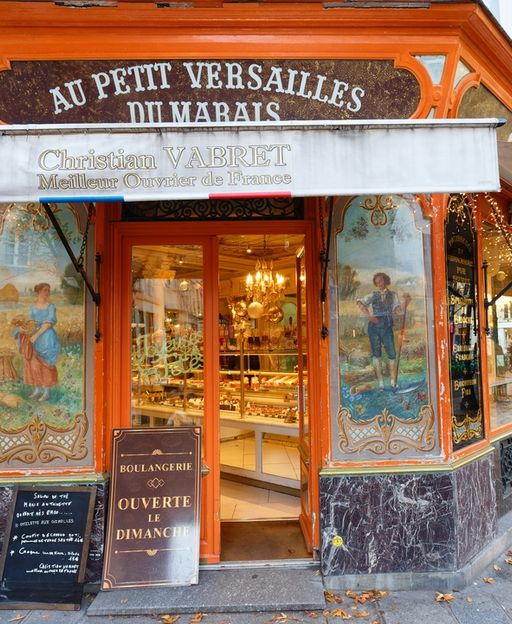
Walk through any French village or city neighbourhood before 9 in the morning and something will stop you. A short queue has formed outside a small door. The smell coming from inside that door is one of the best smells in the world.
The Ritual That Begins Before Breakfast
At somewhere between six and seven in the morning, boulangers across France slide their first trays from the oven. By half past seven, the baguettes are ready. By a quarter to eight, the queue has already formed.
This is not a special occasion. It is not a Sunday treat. It happens every morning — Monday to Saturday — in every town, village, and city quarter in France. The daily trip to the boulangerie is not a chore. It is one of the quiet anchors of French daily life.
The Etiquette Nobody Writes Down
There is an unspoken code to the French boulangerie queue. When you walk in, you greet not just the person behind the counter, but everyone in the room. A clear “Bonjour” as you enter is not optional — it is the bare minimum.
You know what you want before you reach the front. You do not hold up the queue by changing your mind, paying with a large note for a small purchase, or lingering too long. The exchange is brief but warm.
“Une baguette tradition, s’il vous plaît.” The baguette is handed over with no packaging — just paper if you are lucky, or tucked under your arm if not. You might add a pain au chocolat for the children. Then you pay, say “Merci, bonne journée,” and step back out into the morning air.
Thirty seconds. But somehow, also, a social event.
Why the Bread Cannot Wait
A French baguette has a shelf life of roughly four hours at its best. By evening it has lost much of what made it special. By the next morning, it is something to dip in soup — if you are generous with it.
This is not a flaw. It is the point. The 1993 French Bread Decree — the Décret Pain — sets out precisely what a traditional baguette may contain: flour, water, salt, and yeast. No preservatives. No additives. No shortcuts.
The result is bread that is extraordinary when fresh. The crust shatters. The crumb is soft but not dense. It smells like something worth walking across town for. Not every bread sold in France meets this standard — which is why not every shop is allowed to call itself a boulangerie.
Enjoying this? 7,000 France lovers get stories like this every week. Subscribe free →
The Baker Behind the Counter
Some boulangers carry a designation beside their name: Meilleur Ouvrier de France — the best artisan in France. It is awarded by a national competition and is one of the most prestigious titles a craftsperson can hold.
This is not a world that values speed over quality. A proper boulanger trains for years. They start work in the early hours every morning. They understand flour, humidity, fermentation, and heat in ways that take a career to master.
When you hand over your coins for a baguette, you are buying the result of that knowledge. That is part of what makes the trip feel like more than just shopping.
The Walk Home
Part of the ritual is the journey back. The baguette is still warm. It is tucked under the arm, or held vertically, or balanced beside the rest of the shopping. It rarely makes it home entirely intact.
There is a French word for the piece you take from the end of the baguette before you reach the door: le quignon. Sometimes called le crouton volé — the stolen crust. The French do not apologise for this. It is considered entirely normal.
If you are planning a trip to France, build in at least one morning to join the queue. Wake up early. Walk towards wherever the smell is coming from. Buy a baguette. Carry it home and lose a piece of the end before you get there.
It is, as the French say, tout à fait normal.
A Small Act of Choosing Well
The morning boulangerie run is one of the simplest pleasures in French life, and one of the most persistent. In a world that has made convenience a virtue, the French have quietly refused to stop doing this.
Every morning, the queue forms. The bread comes out of the oven. The smell fills the street. And for a few minutes, before the day properly begins, France is exactly what it has always been.
Join 7,000+ France Lovers
Every week, get France’s hidden gems, seasonal guides, local stories, and the art of la vie française — straight to your inbox.
Love more? Join 65,000 Ireland lovers → · Join 43,000 Scotland lovers → · Join 30,000 Italy lovers →
Free forever · One email per week · Unsubscribe anytime
Leave a Reply