
Halfway through a long Sunday lunch at a Norman farmhouse, the host stands up, disappears into the kitchen, and comes back with a small glass of amber liquid for every guest at the table.
Nobody stops eating. Nobody looks surprised. They pause, they drink, and they smile. And then they carry on.
This is the trou normand. And once you understand it, you’ll understand something essential about how Normandy eats.
What the Trou Normand Actually Is
“Trou normand” translates, roughly, as the “Norman hole.” The idea is simple: a small glass of calvados — Normandy’s apple brandy — opens up a space in the stomach and makes room for what’s still to come.
It sounds like a convenient excuse. In practice, it works.
The tradition dates back at least to the 19th century, though many believe it is far older. Norman tables have always been generous — thick cream, aged cheeses, slow-braised meats. The trou normand became the breath between acts. The pause that let you appreciate what came before and look forward to what was still coming.
Today, many restaurants serve a calvados sorbet instead. The alcohol is still there. The ritual still happens.
Normandy’s Apple Orchards Have Been Here a Thousand Years
Normandy was never wine country. The summers are cool, the soil heavy, the climate too unpredictable for grapes. But apple trees flourish here.
By the 13th century, cider was the everyday drink across the region. Wine was expensive and came from somewhere else. Cider was local, plentiful, and deeply part of daily life.
Over the centuries, that cider culture became more refined. Distillation turned fermented apple juice into calvados. Ageing in oak barrels turned calvados into something genuinely complex.
There are over 200 varieties of apple used in traditional Normandy cider production. Bitter, sweet, and sharp varieties are blended together with care. The balance matters enormously. Get it wrong and you have something flat and thin. Get it right and the result is aromatic, layered, and alive.
How Calvados Is Made
Calvados begins as cider. Pressed apple juice ferments for around a month, then gets distilled into a rough spirit. That raw liquid then spends years — sometimes decades — resting in oak barrels.
The best calvados carries an AOC designation from the Pays d’Auge region. Every stage is regulated: the apple varieties, the distillation method, the length of ageing. It cannot be rushed.
Older calvados develops layers of vanilla, spice, and dried fruit alongside the apple. A well-aged bottle can stand alongside the finest cognac or armagnac. Many people who try it for the first time are genuinely surprised by how refined it is.
Enjoying this? 7,000 France lovers get stories like this every week. Subscribe free →
The Norman Table Is Built for the Long Haul
A proper Norman meal doesn’t hurry. It begins with charcuterie and terrines. There’s usually a fish course — often a classic sole normande, swimming in cream. Then the meat: a slow-braised veal, or a roast chicken from a local farm.
And then, inevitably, the cheese. Camembert, Livarot, Pont-l’Évêque — all Norman, all deeply pungent, all worth every mouthful.
The trou normand arrives before the cheese course, or sometimes between the fish and the meat. It gives the table a moment to breathe. It signals that the meal is nowhere near finished.
This is, at heart, what separates Norman food culture from a simple meal. There’s a structure to the way they eat. Every course has its role. The pause is not wasted time — it’s part of the whole.
Where to Experience It Today
The trou normand is still practised across Normandy, especially in the countryside around Bayeux, Honfleur, and the Pays d’Auge. Look for farmhouses and auberges advertising “cuisine normande” and ask specifically whether they serve it. Most will say yes with some pleasure.
The Route du Cidre — a signposted driving trail through the apple orchards of the Pays d’Auge — passes by dozens of cideries and calvados producers who offer tastings. It’s one of France’s most overlooked food routes, and one of the most beautiful.
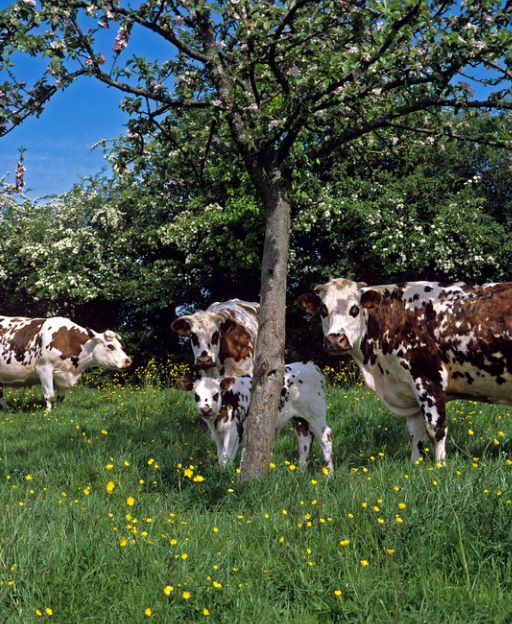
The rolling hills, the half-timbered farm buildings, the cattle grazing in orchards heavy with blossom — it looks like nothing else in France. Our Normandy travel guide covers everything you need before you go, and you can plan your broader trip through the France travel planning hub.
If you’re visiting in spring, the orchards are in blossom from April through May — one of the most quietly spectacular sights in northern France. The Normandy coastline is equally beautiful and an easy addition to any itinerary.
Join 7,000+ France Lovers
Every week, get France’s hidden gems, seasonal guides, local stories, and the art of la vie française — straight to your inbox.
Love more? Join 65,000 Ireland lovers → · Join 43,000 Scotland lovers → · Join 30,000 Italy lovers →
Free forever · One email per week · Unsubscribe anytime
There’s something quietly profound about a culture that built a pause into the middle of every long meal. Not a phone check. Not a hasty sip standing up.
A glass, a breath, a moment. Norman food has been doing this for centuries. It turns out that stopping — properly stopping — might be the whole point.
Leave a Reply