
In a forest in Burgundy, dozens of workers are building a castle. Not restoring one. Not filming one. Actually building a new medieval castle, from scratch, using only the tools and techniques available in the year 1228.
The project is called Guédelon. It began in 1997. It will take decades to complete. And you can visit while it is happening.
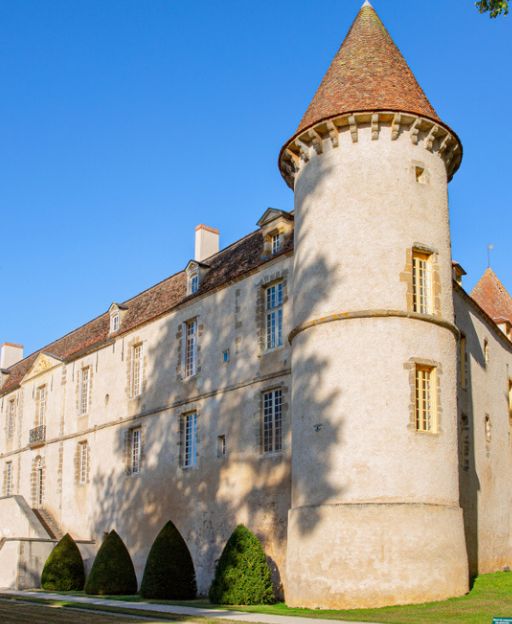
An Idea That Turned Into History
In 1997, Michel Guyot owned a château near the village of Treigny in the Yonne department of Burgundy. Exploring the surrounding land, he found an abandoned sandstone quarry surrounded by ancient oak forest — the exact raw materials medieval builders relied upon.
With historian Maryline Martin, he proposed something extraordinary: build a new castle the medieval way, using only materials and methods available in 13th-century Burgundy. Not a replica. An actual castle, built to last, using rediscovered techniques.
France’s Ministry of Culture backed it. Archaeologists and historians joined as consultants. Workers began quarrying stone on site.
That was nearly thirty years ago. Guédelon is still under construction.
No Power Tools. No Modern Materials.
At Guédelon, electricity has no place on site. Scaffolding is made from lashed oak poles. Stone is quarried from the ground beneath the castle itself and shaped with iron chisels. Lime mortar is mixed by hand to medieval recipes.
A treadwheel crane — a giant wooden wheel powered by a person walking inside it — lifts heavy blocks to the upper levels of the towers. Ropes are twisted by the resident rope-maker. Roof tiles are fired in an on-site kiln.
Cutting a single block of sandstone by hand takes around fifteen minutes. A modern diamond saw would finish it in seconds. That slowness is entirely the point.
The People Who Build It
In peak season, up to sixty craftspeople arrive each morning dressed in rough linen tunics, leather aprons, and boots designed for a world without concrete.
There are stonemasons, blacksmiths, carpenters, basket-weavers, potters, and tilers. Each guild works in its own corner of the site. Apprentices learn directly from master craftspeople — a transmission of skill that was nearly lost entirely.
The blacksmith forges the tools used by the stonemasons. The carpenter frames the timber ceilings. Nothing on site is ordered from a supplier — every piece is made here, as it would have been in the 13th century.
Some workers came for a summer and never left. Guédelon has quietly become a vocation for many of them.
Enjoying this? 7,000 France lovers get stories like this every week. Subscribe free →
What You Experience on a Visit
Guédelon is not a museum with barriers and placards. You walk around an active building site.
Dust rises from the quarry. Hammers ring on stone. The treadwheel crane groans as it lifts a block to a half-built tower. Workers call to each other across the courtyard.
Children often go quiet when they first arrive. There is something primally compelling about watching humans build something enormous by hand — no machines, no electricity, only stone and muscle and centuries-old knowledge.
Standing at the base of a tower that didn’t exist ten years ago, you feel the scale of what human hands can accomplish over time. Guided tours run at intervals, but much of the site is free to explore at your own pace.
Burgundy has no shortage of medieval history. This medieval hospital has survived in Burgundy for 600 years, funded entirely by wine — another reminder of just how deep the region’s story runs.
What Guédelon Has Taught the World
The project was a research site from the very beginning, not simply a visitor attraction.
By actually building the castle, historians have learned things no document could reveal. Why medieval staircases almost always spiral clockwise. How a working drawbridge counterweight behaves under real loads. Why certain wall thicknesses resist weathering better than others.
Every problem the medieval builders faced — how to keep water from penetrating a circular tower, how to build stairs that double as a defensive barrier — had to be solved by doing. Guédelon’s workers have become medieval engineers by necessity.
Guédelon now informs archaeological research across Europe. Building a thing, it turns out, is the only way to truly understand it.
France’s châteaux are full of stories that defy expectation — Leonardo da Vinci spent his final years in a French château and left it changed forever.
When to Go
Guédelon is near Treigny in the Yonne department of Burgundy — roughly two and a half hours south of Paris by car.
The site opens in April and runs through November. Peak season runs from May to September when the most craftspeople are at work. Mornings are best before the site fills up.
Most visitors expect to spend an hour. Most stay for two or three.
If you are planning a broader trip through this part of France, our France trip planning guide covers routes, timing, and what to see along the way.
The medieval world is usually encountered behind glass — preserved, explained, kept at a careful distance.
At Guédelon, the dust settles on your shoulders. The smell of cut stone drifts across the courtyard. Somewhere above you, a block of sandstone is being lifted by people walking in a wheel.
It is one of the most quietly extraordinary places in France.
Join 7,000+ France Lovers
Every week, get France’s hidden gems, seasonal guides, local stories, and the art of la vie française — straight to your inbox.
Love more? Join 65,000 Ireland lovers → · Join 43,000 Scotland lovers → · Join 30,000 Italy lovers →
Free forever · One email per week · Unsubscribe anytime
Leave a Reply