
Walk down almost any street in France and you will see it. A small marble plaque, fixed to a wall at eye level. A name. A date. The words ici est tombé — “here fell.” Most tourists walk straight past it. Those who stop find themselves standing at the exact spot where someone’s life ended — and where France decided the world should never forget it.
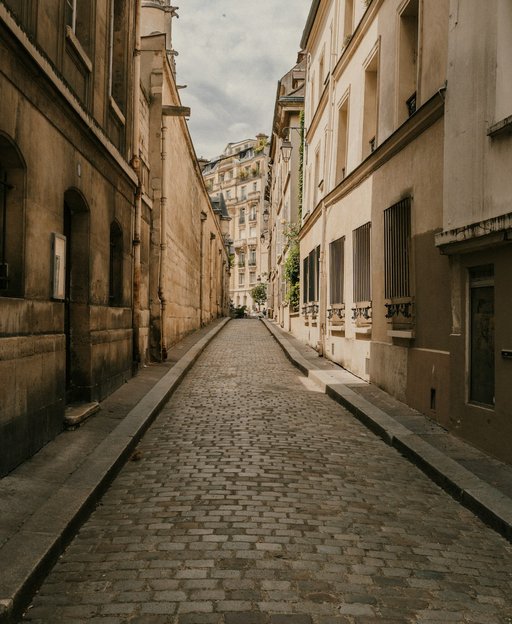
The Plaques Are Everywhere
After the Liberation in 1944, France began placing commemorative tablets on the exact spots where people died. You will find them on apartment walls, school gates, and street corners that look completely ordinary today. They mark where Resistance fighters were shot, where students were arrested on their way to school, where a single act of courage cost someone everything.
They are not statues. They are not museums. They are simply there, on the wall, at eye level, where the thing happened.
In Paris alone, there are thousands of them. In every French city, in almost every town and village, there are more. Many have been there for eighty years. A few were placed last year.
What the Words Mean
The language is deliberately simple. Ici est tombé means “here fell.” Mort pour la France — “died for France” — is the official state designation. Some plaques carry a single name. Others list eight or ten. There is almost always a date.
These are not abstract monuments. They are coordinates — the exact point on earth where a life ended.
The smallest plaques are often the hardest to process. A child’s name. A teacher. A 19-year-old student. A date in 1943 when half a street was arrested before dawn. You find yourself doing the arithmetic, working out how old they would be now, and then you stop because it doesn’t help.
The Roundup Plaques
Not every plaque marks someone who died fighting. Some mark where people were taken.
On quiet Paris streets, plaques record that in this building, families were arrested on this date by German police, aided by French police, and deported to Auschwitz. None returned. These plaques do not soften the language. They do not say “the authorities.” They say who was responsible.
The most visited is on the site of the Vélodrome d’Hiver in Paris — the stadium where more than 13,000 Jewish men, women, and children were rounded up in July 1942 before deportation. The operation was carried out by French police under German orders. The commemorative plaque was placed in 1994. It took fifty years for France to put it there.
Why France Has Been Doing This for Eighty Years
Many plaques were placed by neighbours in the weeks after Liberation — people who had watched the arrests and wanted the record on the wall before anyone could argue about what happened. Others came later, placed by families, schools, and town councils. Some have been added only in recent years, as researchers uncovered names that had been forgotten.
France has a long tradition of marking the places where people died. The villages destroyed in the First World War that France chose never to rebuild are another example of the same instinct — the refusal to let the landscape pretend nothing happened.
But the Resistance plaques are different. They are personal. Specific. They carry names, not numbers. And the work of finding those names, and putting them on walls, is not finished.
Enjoying this? 7,000 France lovers get stories like this every week. Subscribe free →
How to Find Them on Your Visit
Slow down and look at the walls. Most plaques are at eye level on buildings that have not changed since the 1940s. In Paris, the Marais district has dozens — you can find one on nearly every block. In Normandy, almost every village has at least one. In Lyon, which was a central hub of the French Resistance, they appear on almost every street in the old town.
There is no single official map, though local tourist offices in larger cities often have walking guides. The simplest approach is to stop looking up at the architecture and start looking straight ahead, at the walls. You will find them within minutes.
If you are planning your trip to France, it is worth building in an hour to walk slowly through a historic neighbourhood with no destination in mind. The plaques will find you.
France is not a country that hides what happened inside it. The evidence is on the walls. It has always been on the walls.
The next time you walk down a French street and catch a small marble tablet in the corner of your eye — stop. Read the name. Read the date. That plaque has been on that wall for decades, asking for exactly that: one moment’s pause from someone passing by.
Join 7,000+ France Lovers
Every week, get France’s hidden gems, seasonal guides, local stories, and the art of la vie française — straight to your inbox.
Love more? Join 65,000 Ireland lovers → · Join 43,000 Scotland lovers → · Join 30,000 Italy lovers →
Free forever · One email per week · Unsubscribe anytime
Leave a Reply