
Choosing where to stay in Paris can feel overwhelming. With twenty arrondissements, each with its own character, the neighbourhood you pick will shape your entire trip — from what you eat for breakfast to how you spend your evenings. A well-chosen base means shorter queues, better food, and the kind of wandering that turns a holiday into a story.
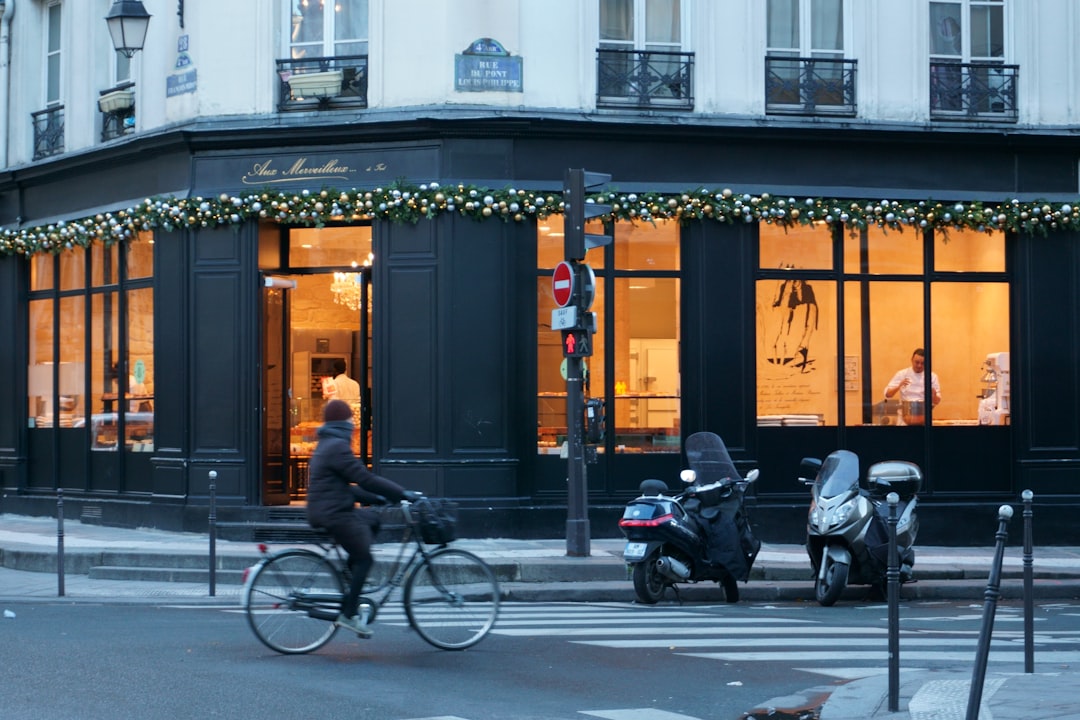
This guide matches seven of the best Paris neighbourhoods to your travel style, whether you’re a first-timer wanting the classic postcard experience, a culture-lover hunting galleries and vintage shops, or a budget traveller stretching every euro. For each area, you’ll find the vibe, realistic price ranges, Métro access, and honest tips from people who know the city well.
Before we dive in, if you’re still in the early stages of planning, our France Planning Hub covers everything from flights and rail passes to travel insurance and packing lists.
1. Le Marais (3rd & 4th arrondissements) — Culture, Nightlife & Vintage
The vibe: Le Marais is Paris at its most eclectic. Medieval townhouses sit beside contemporary art galleries. Falafel shops on Rue des Rosiers share the pavement with concept stores and LGBTQ+ bars. It is one of the few neighbourhoods where you can wander at midnight and still find the streets alive.
Price range: Mid-range to high. Expect €150–€280 per night for a decent hotel, though boutique guesthouses and well-reviewed apartments on side streets can come in around €120. Budget hostels exist but fill quickly.
Best for: Culture lovers, nightlife seekers, LGBTQ+ travellers, couples wanting a neighbourhood with personality rather than monuments.
Métro access: Excellent. Saint-Paul (Line 1), Hôtel de Ville (Lines 1 & 11), and Arts et Métiers (Lines 3 & 11) all serve the area. You can reach the Louvre on foot in fifteen minutes.
Insider tip: Book accommodation on the quieter northern edge (closer to Rue de Bretagne and the Marché des Enfants Rouges, the oldest covered market in Paris). You get the Marais atmosphere without the weekend tourist crush around Place des Vosges.
2. Saint-Germain-des-Prés (6th arrondissement) — Classic, Literary & Elegant
The vibe: This is the Paris of Hemingway and Simone de Beauvoir — historic cafés, independent bookshops, and gallerists who nod rather than smile. The streets are quieter than the Right Bank, the architecture is immaculate, and every second corner has a patisserie worth photographing.
Price range: High to luxury. Hotels average €220–€400 per night. The neighbourhood commands a premium, but the quality of even mid-range options is consistently strong. Budget travellers should look at the southern fringe near Rue de Rennes.
Best for: Couples on a special trip, literature and art enthusiasts, anyone who wants a refined, walkable base with easy access to the Left Bank’s museums.
Métro access: Saint-Germain-des-Prés (Line 4), Mabillon (Line 10), and Odeon (Lines 4 & 10). The Musée d’Orsay is a pleasant fifteen-minute walk along the Seine.
Insider tip: Café de Flore and Les Deux Magots are worth one visit for the history, but locals drink their morning coffee at Café de la Mairie on Place Saint-Sulpice — half the price, twice the atmosphere.
3. Montmartre (18th arrondissement) — Bohemian, Artistic & Budget-Friendly
The vibe: Hilly, cobbled, and stubbornly romantic. Montmartre still feels like a village within the city. Street artists sketch portraits below the Sacré-Cœur, wine bars hide down narrow staircases, and the views across Paris are extraordinary. It can be touristy around Place du Tertre, but two streets away you’re in a quiet residential quarter.
Price range: Budget to mid-range. Hotels and guesthouses run €80–€160 per night. Some of the best-value accommodation in central Paris is found here, particularly on the eastern slopes away from the basilica.
Best for: Budget travellers, solo adventurers, art lovers, anyone who wants character over convenience.
Métro access: Anvers (Line 2), Abbesses (Line 12), and Lamarck–Caulaincourt (Line 12). Note that Abbesses is the deepest station in Paris — take the lift if your knees are unreliable. Getting to central attractions takes 20–30 minutes.
Insider tip: Stay on Rue Lepic or Rue des Abbesses rather than near Place du Tertre. You’ll be closer to genuinely good restaurants (Le Coq Rico, Chez Plumeau) and further from the tourist-trap crêperies.
4. Champs-Élysées & 8th Arrondissement — Luxury, Landmarks & First-Timers
The vibe: Grand, wide, and unapologetically monumental. This is the Paris you see on television — the Arc de Triomphe, designer shopping, and the kind of hotels where the doorman remembers your name. It lacks the intimacy of smaller neighbourhoods, but for first-time visitors who want everything within reach, it works.
Price range: Luxury. Most hotels here charge €300–€600 per night, with five-star palaces going well beyond. There are a few three-star options on side streets around Rue de Ponthieu at €180–€250.
Best for: First-time visitors, luxury travellers, shoppers, anyone who wants a central base and doesn’t mind a less “local” feel.
Métro access: Outstanding. Charles de Gaulle–Étoile (Lines 1, 2, 6 and RER A), George V (Line 1), Franklin D. Roosevelt (Lines 1 & 9). You’re connected to virtually everywhere.
Insider tip: If you’re set on this area but want to eat well without spending €60 on a mediocre steak, walk five minutes south to Rue du Faubourg Saint-Honoré or north into the residential streets around Rue de Courcelles. The 8th has good food — just not on the Champs-Élysées itself.
5. Latin Quarter (5th arrondissement) — Students, History & Budget Dining
The vibe: The oldest part of Paris, centred on the Sorbonne and the Panthéon. Narrow medieval streets give way to cheap Vietnamese restaurants, second-hand bookshops, and students arguing over espresso. It has a lived-in, intellectual energy that the posher arrondissements lack.
Price range: Budget to mid-range. Hotels cluster around €90–€180 per night. The Rue Mouffetard end is slightly cheaper. Student-oriented hostels and budget hotels are plentiful.
Best for: Budget travellers, history enthusiasts, students, solo travellers who want an atmospheric and walkable base.
Métro access: Saint-Michel (Line 4 and RER B & C), Cluny–La Sorbonne (Line 10), Place Monge (Line 7). Notre-Dame and the Île de la Cité are across the bridge.
Insider tip: Avoid the restaurants with picture menus on Rue de la Huchette — they’re tourist traps. Instead, walk ten minutes to Rue Mouffetard for the market street atmosphere and genuine neighbourhood bistros like Le Mouffetard or Chez Léna et Mimile.
6. Opéra & Grands Boulevards (9th arrondissement) — Central, Connected & Shopping
The vibe: Practical and central without being soulless. The 9th sits between the tourist-heavy areas and the residential north, giving you easy access to everything. The grand Haussmann architecture is stunning, the Galeries Lafayette and Printemps are on your doorstep, and the covered passages (Passage Jouffroy, Passage des Panoramas) offer some of the most charming shopping in Paris.
Price range: Mid-range. Hotels run €130–€230 per night. This is one of the best value-for-location trades in Paris — less fashionable than Saint-Germain, but far better connected.
Best for: Shoppers, theatre-goers, practical travellers who want a central base, business visitors.
Métro access: Superb. Opéra (Lines 3, 7, 8 and RER A), Grands Boulevards (Lines 8 & 9), Cadet (Line 7). You can reach Gare du Nord in ten minutes for Eurostar connections.
Insider tip: The southern end of Rue des Martyrs (which climbs towards Montmartre) has become one of Paris’s best food streets. Pick up pastries from Du Pain et des Idées, cheese from the fromagerie, and eat dinner at Bouillon Chartier — a gorgeous Belle Époque canteen where three courses cost under €20.
7. Bastille & Oberkampf (11th arrondissement) — Local, Foodie & Nightlife
The vibe: If you want to live like a Parisian rather than visit like a tourist, the 11th is your neighbourhood. It’s where young locals actually go out — natural wine bars, craft cocktail spots, and some of the best new-wave bistros in the city. The streets around Rue Oberkampf and Rue de la Roquette buzz every evening without feeling manufactured.
Price range: Budget to mid-range. Hotels average €100–€190 per night. Apartment rentals offer particularly good value here, as it’s a residential neighbourhood with real supermarkets and launderettes.
Best for: Foodies, nightlife lovers, repeat visitors, anyone who wants an authentic neighbourhood base rather than a tourist district.
Métro access: Bastille (Lines 1, 5, 8), Oberkampf (Lines 5 & 9), Voltaire (Line 9). Line 1 puts you at the Louvre in ten minutes and the Champs-Élysées in fifteen.
Insider tip: Thursday evening is the best time to explore. The Marché d’Aligre is still buzzing from the daytime market, the bars are filling up but not yet rammed, and you can usually get a table at places like Le Servan or Septime without a reservation — something that’s nearly impossible at weekends.
Quick Comparison: Paris Neighbourhoods at a Glance
| Neighbourhood | Best For | Budget (per night) | Vibe |
|---|---|---|---|
| Le Marais | Culture & nightlife | €120–€280 | Eclectic, lively |
| Saint-Germain | Classic & literary | €220–€400 | Elegant, refined |
| Montmartre | Bohemian & budget | €80–€160 | Artistic, village-like |
| Champs-Élysées | Luxury & first-timers | €180–€600 | Grand, monumental |
| Latin Quarter | Students & budget | €90–€180 | Historic, intellectual |
| Opéra | Central & shopping | €130–€230 | Practical, connected |
| Bastille | Foodie & local | €100–€190 | Authentic, buzzy |
General Tips for Choosing Where to Stay in Paris
Book near a Métro station. This is non-negotiable. Paris is a walking city, but when your feet give out at 9pm, a nearby Métro entrance is worth its weight in gold. Check that your hotel is within five minutes’ walk of a station before booking.
Consider your airport transfer. If you’re arriving at Charles de Gaulle, neighbourhoods on RER B (Latin Quarter, Opéra) or connected to Line 1 (Champs-Élysées, Bastille, Le Marais) make the journey simpler. Orly is best reached via the Orlyval to Antony, then RER B.
Apartments suit longer stays. If you’re spending four nights or more, a well-reviewed apartment gives you a kitchen (breakfast in Paris hotels is often overpriced), a washing machine, and the feeling of actually living in the city. The 11th and 9th arrondissements have particularly good apartment stock.
Avoid ground-floor rooms in summer. Parisian buildings are old. Ground-floor rooms can be noisy and warm. Ask for a higher floor — the views improve with every flight of stairs.
Check for lift access. Many Parisian hotels in historic buildings have no lift, or a lift so small it fits one person and a handbag. If mobility is a concern, confirm lift access and room floor before booking.
Ready to Plan Your Trip?
Paris rewards those who plan well. Once you’ve chosen your neighbourhood, the rest falls into place — the restaurants, the walks, the happy accidents that happen when your base is right.
For a full day-by-day plan, see our One Week in Paris itinerary. And for everything else — flights, trains, travel insurance, and what to pack — start with our France Planning Hub.
Where to stay in Paris depends entirely on the kind of trip you want. Choose the neighbourhood that matches your style, book early, and leave room in your itinerary for the unplanned. That’s where Paris is at its best.
Leave a Reply