
Three days before, the sky is ordinary. Then the Mistral arrives. The air turns sharp and cold. The trees bend sideways. The light shifts to something almost violent in its clarity — blues you did not know existed, shadows so hard they look cut rather than cast. For the next two, three, sometimes seven days, the wind owns Provence.
A Force With a Name
Most winds are nameless inconveniences. The Mistral has been respected — and feared — for long enough to earn a proper noun.
It comes from the north, funnelled down the Rhône Valley from the Alps and the Massif Central, and it can arrive at speeds of 90 kilometres per hour or more without much warning. It is cold, dry, and relentless in equal measure.
The name comes from the Occitan word magistrau, meaning “masterly”. The people who named it were not being poetic. They were being accurate.
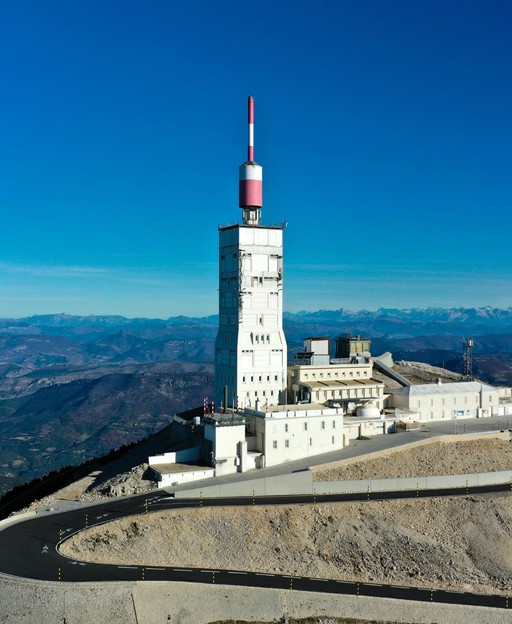
Mont Ventoux — the bare, bleached-white summit that rises above the Vaucluse — owes part of its treeless upper slopes to centuries of Mistral exposure. The wind has stripped it back, year after year, until only the stone is left. The mountain’s name comes from venteux: windy. That tells you something about how long this force has been in charge.
How It Shaped the Architecture
Stand in any old Provençal village and you will notice something odd. The northern facades of buildings are almost windowless — solid stone, no gaps for the wind to push through. Doors face south. Narrow lanes between houses are positioned to create shelter rather than views.
This is not accident or laziness. It is centuries of architectural memory. Builders in Provence learned the hard way that the Mistral finds every gap and makes it larger.
The cypress trees planted around farmhouses were not decorative either. A dense row of cypress on the northern side of a mas — a traditional Provençal farmhouse — is a windbreak, not a garden feature. You still see them today: tall, close together, leaning very slightly to the south.
What It Does to the Harvest
For wine and lavender growers, the Mistral is a complicated thing. It strips moisture from the air and the soil. It can ruin an olive harvest if it arrives at the wrong moment, or for too many days in a row.
But it also dries out grapes after rain, reducing the risk of mould and rot. Some winemakers will tell you, quietly, that a well-timed Mistral is the difference between a mediocre vintage and an excellent one.
Lavender farmers know a version of the same tension. Stressed plants concentrate their oils — and few things stress a lavender plant quite like days of relentless wind. Part of the reason Provençal lavender has such an intense fragrance is the very force that makes the harvest unpredictable. If you are planning a visit around the flowers, it is worth knowing that the lavender harvest moves faster than most visitors expect.
Enjoying this? 7,000 France lovers get stories like this every week. Subscribe free →
The Effect on People
This is where it becomes harder to be scientific. The Mistral has been blamed, across centuries, for headaches, irritability, insomnia, and arguments. There is an old Provençal saying — loosely translated — that three days of the Mistral can be forgiven, and on the fourth day nothing is.
Restaurants close their terraces. Markets pack up early. Locals walk with their heads down and their coats held tight. The wind does not pause. It does not soften overnight. It simply continues.
Writers and artists who spent time in Provence described the Mistral as something that gets into the nerves rather than just the bones. Van Gogh painted at Saint-Rémy-de-Provence during a period of heavy Mistrals. Look at the electric yellows and raw blues in some of those canvases, and the connection starts to make sense.
And then, as abruptly as it arrived, it stops.
After the Wind
The sky after a Mistral is the thing people who live in Provence never quite stop talking about. It is a blue with no grey in it, no haze, nothing soft. Every surface — limestone walls, red-tiled rooftops, the surface of a river — looks as though it has been scrubbed clean.
The quality of light is extraordinary. Photographers know it. Painters have always known it. The Mistral, for all the disruption it causes, is also responsible for the very quality of light that has drawn artists to this part of France for two centuries.
For visitors, the Mistral is often an unwelcome surprise. For those who stay long enough, it becomes part of what Provence is — difficult, dramatic, and occasionally magnificent. If you are planning your trip to France and including the south, check the wind forecast alongside the train timetable. The Mistral does not appear on postcards. But it will be there when you arrive.
For everything else you need to know about the region, the Provence travel guide covers it properly.
The best moments in Provence often come just after the Mistral passes: that silence, that impossible sky, that quality of light. The wind earns its name.
Join 7,000+ France Lovers
Every week, get France’s hidden gems, seasonal guides, local stories, and the art of la vie française — straight to your inbox.
Love more? Join 65,000 Ireland lovers → · Join 43,000 Scotland lovers → · Join 30,000 Italy lovers →
Free forever · One email per week · Unsubscribe anytime
Leave a Reply