
Sometime around noon on a Sunday in France, something remarkable happens. Villages go quiet. Car parks empty. Cafés pull down their shutters. And from behind closed doors and kitchen windows, extraordinary smells begin drifting into the street.
France has gone to lunch — and it will be a while before it comes back.
It’s Not a Meal — It’s a Ceremony
The French Sunday lunch is not a matter of convenience. It is the fixed point around which the week orbits. Grandparents, cousins, adult children who moved to the city — everyone finds their way back to the family table, usually between midday and half past twelve.
No one rushes. No one checks their phone. The meal has typically been in preparation since Saturday morning — a trip to the market, a slow braise started the evening before, a tart cooling on the windowsill.
There is an art to it. And like any art, it takes years to understand.
What Actually Happens at the Table
The lunch unfolds in stages, like a well-paced act of theatre. First comes the apéritif — pastis in the south, a chilled glass of local white wine in Burgundy, perhaps kir in Alsace. Everyone gathers, conversation begins, olives are passed around.
Then the entrée: a terrine, a soup, crudités with vinaigrette. Then the plat principal — a slow-cooked daube, a roast chicken sourced from the Saturday market, lamb with rosemary from the garden.
Then cheese. Then dessert. Then coffee. Then, if the conversation is good — and it usually is — digestifs. By three o’clock, no one is in any hurry to leave.
Where This Tradition Comes From
The long Sunday lunch has roots in Catholic France, when Sunday was a true day of rest. Families who had spent the week labouring in fields or workshops used Sunday as the one day to cook properly — and to eat well together at a table laid with care.
But even as France became largely secular, the ritual held firm. Sociologists have studied it. Politicians have occasionally tried to disrupt it — France allowed more Sunday trading in 2015, and hypermarkets stayed open. The Sunday lunch didn’t move an inch.
The French simply don’t see the table as a place to eat. They see it as a place to be.
Enjoying this? 7,000 France lovers get stories like this every week. Subscribe free →
Why Children in France Learn to Love This
Sit at a French family lunch and watch the children. They are not at a separate table. They are not eating something simpler while the adults have something complicated. They eat the same food, in the same sequence, at the same pace.
Across dozens of Sunday lunches, children learn how to eat a meal as a social act. How to sit with adults. How to taste carefully. How to wait. How to participate in conversation without dominating it.
It is arguably the oldest classroom in France — and one the rest of the world might quietly envy.
The Regional Variations Worth Knowing
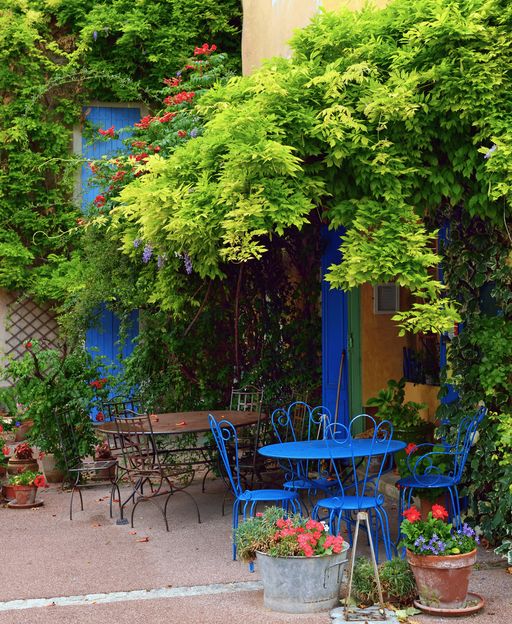
In Provence, Sunday lunch often migrates outdoors when the weather allows. A long stone table under a plane tree, a carafe of rosé, the sound of cicadas — the meal becomes inseparable from the landscape around it.
In Brittany, the table might feature oysters from the bay, cider rather than wine, and a far breton for dessert. In Alsace, choucroute garnie or a baeckeoffe — a layered meat and potato casserole slow-baked in a sealed pot since Saturday — anchors the meal.
The form is the same across France. The contents change completely. This is part of what makes French food so regionally distinct — the Sunday lunch reflects wherever you happen to be.
What Visitors Almost Always Miss
If you’ve spent a Sunday afternoon in a French village wondering where everyone has gone, now you know. The most common mistake tourists make is arriving at 2pm expecting lunch to still be available. Restaurants have served their last table. The boulangerie is dark. The tabac is shuttered.
The Sunday lunch is not designed for visitors. It is a private ritual, a family act. But if you are invited to one — by a host family, a friend, a chance encounter with someone curious about where you are from — accept without hesitation.
It is one of the most French things you can experience. Far more so than any monument. If you’re planning your trip to France, think carefully about your Sundays — book ahead for lunch, or embrace the beautiful emptiness of a French village at two in the afternoon.
Sunday evenings in France are a different matter entirely — lighter, quieter, often just soup and bread. The great meal of the day is long spent. And there is something rather beautiful about that too. For more on where to eat and what to find, the French market guide is the perfect place to start — Sunday morning at a marché is often where the Sunday lunch actually begins.
Love France? So do 7,000 of us.
Every week, our free newsletter delivers hidden gems, seasonal guides, local stories, French recipes, and the art of la vie française — straight to your inbox. Join the community that loves France as much as you do.
Subscribe Free — Get the Newsletter →
Love Ireland too? Join 65,000 Ireland lovers → · Love Scotland? Join 43,000 readers → · Love Italy? Join 30,000 readers →
Once you’ve sat at a French Sunday table — the unhurried wine, the conversation that loops back on itself, the cheese board arriving when no one asked for it — you’ll understand why nothing quite measures up. And you’ll find yourself, back home, wondering how to engineer something like it.
Love France? So Do We.
Join our free newsletter and get the best of France — travel tips, hidden villages, food traditions, and cultural stories — straight to your inbox every week.
Free. No spam. Unsubscribe anytime.
📥 Free Download: France Travel Planning Guide
Itineraries, insider tips, and the places you must not miss on your next trip to France.
Leave a Reply