
Most countries have laws about cars, taxes, and elections. France has those too. But France also has a law about bread.
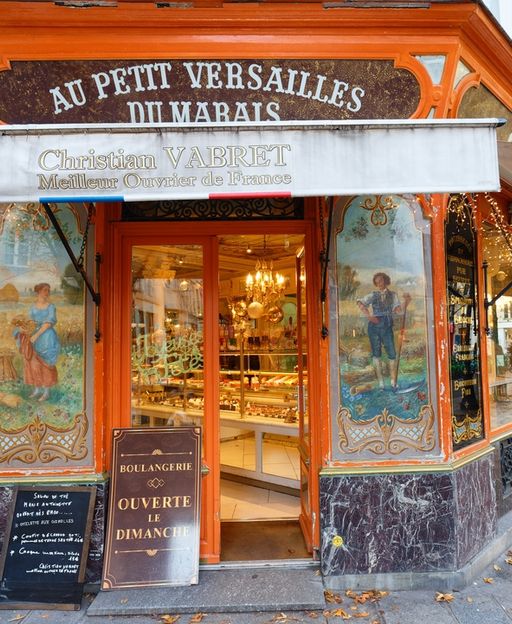
Specifically, about what can — and cannot — go into a baguette de tradition française. And the story behind that law says everything about why the French are the way they are.
The Law That Changed French Bread
In 1993, the French government passed what became known as the Décret Pain — the Bread Decree.
It had one job: to protect the traditional baguette from disappearing.
Under this law, a baguette labelled “tradition française” can only contain four things: wheat flour, water, yeast or sourdough starter, and salt. That is it. No additives. No preservatives. No frozen dough.
It also required that the bread be made entirely on the premises where it is sold. You cannot bake it in a factory, freeze it, and call it tradition. That is illegal.
To many, this sounds extreme. To the French, it sounds perfectly reasonable.
The baguette tradition is not just a food product. It is a living piece of French identity — which is exactly why the government stepped in to protect it.
Why France Needed a Law in the First Place
The story begins in the 1950s and 1960s, when industrial bread arrived in France.
It was cheaper, faster to make, and easier to distribute. It also tasted of almost nothing. Soft, pale, and spongy — it bore little resemblance to the baguettes Parisians had eaten for generations.
By the 1980s, thousands of small boulangeries had closed. Industrial bread had taken a significant share of the market. The craft was genuinely at risk.
That is when French bakers, food writers, and politicians started to push back. The 1993 decree was the result — a formal act of protection for something the French considered worth saving.
It was not nostalgia. It was a policy decision about cultural identity.
What a Boulanger’s Morning Actually Looks Like
A traditional baker does not keep normal hours.
Most boulangers start somewhere between 3am and 5am. The dough must be prepared, shaped, and left to rise slowly — a process called la pousse. There is no rushing it.
This slow rise is what gives a good baguette its irregular holes, its chewy crumb, and that particular crust that crackles when you break it. Speed kills that texture.
By 7am, the first baguettes are out of the oven. The smell travels down the street. It is one of the most reliable pleasures in French life.
The word “boulanger” itself comes from Old French, meaning the person who shapes the round loaves. The job has existed in France, in roughly this form, for centuries. The 1993 law was a way of making sure it continued.
If you are visiting France and wondering what to order at the counter, the French boulangerie breakfast guide walks you through everything you will find behind the glass.
Enjoying this? 7,000 France lovers get stories like this every week. Subscribe free →
The Protected Title Nobody Talks About
The Décret Pain was not the only protection the baguette tradition received.
French law also protects the title of boulangerie itself. You cannot call your shop a boulangerie unless you bake the bread on the premises. A shop that sells pre-made bread from elsewhere cannot legally use that name or display that sign.
This matters more than it sounds. It means that when you walk into a shop labelled boulangerie in France, you know the bread was made there, that morning, by someone who trained to do it.
The title artisan boulanger is similarly protected — reserved for bakers who have completed formal training and who work with their own hands.
These are not just job titles. They are legal designations that carry real responsibility.
How to Spot the Real Thing at the Counter
When you are standing in front of the display, there are a few things to look for.
A baguette de tradition française is usually slightly shorter than a standard baguette, often with a more irregular shape. The crust is darker and crisper. The inside has an open crumb — larger, uneven holes rather than a uniform texture.
It will cost a little more than the cheapest option in the case. Most French people consider that a reasonable price for something genuinely different.
Look for the words tradition or traditionnelle on the label or the menu board. That tells you it was made under the decree’s rules.
Before your trip, the France trip planning guide covers the practical details that make days like this go smoothly.
Why UNESCO Got Involved
In November 2022, UNESCO added the French baguette to its list of Intangible Cultural Heritage of Humanity.
It was a remarkable moment. Not for the baguette itself — which needed no validation — but for what it represented. UNESCO recognised that the craft of making a traditional baguette, the rituals around buying it, the daily relationship between baker and customer, was a living cultural practice worth preserving.
France did not need UNESCO to tell it this. But the world’s recognition made official what the French had always believed: that bread, done properly, is not just food.
It is the rhythm of daily life. It is the reason the boulangerie opens before the rest of the city wakes up. It is why, in France, ordinary rituals are taken seriously — because ordinary rituals, here, are anything but ordinary.
Some things do not need explaining. They just need protecting — and eating, warm, on the walk home.
🇫🇷 Join 7,000+ France Lovers
Get hidden gems, food secrets, and travel stories every week. Free forever.
Love France? So Do We.
Join our free newsletter and get the best of France — travel tips, hidden villages, food traditions, and cultural stories — straight to your inbox every week.
Free. No spam. Unsubscribe anytime.
📥 Free Download: France Travel Planning Guide
Itineraries, insider tips, and the places you must not miss on your next trip to France.
🇫🇷 You Might Also Love
Tours & experiences you might love


Powered by Viator. Some links are affiliate links — we may earn a small commission at no extra cost to you.

Leave a Reply