
Normandy is one of France’s most rewarding regions to visit. Few places pack this much history, natural beauty, and extraordinary food into a single stretch of coastline. Whether you are coming to walk the D-Day beaches, stand before Mont Saint-Michel at dawn, or simply eat your way through some of the best dairy produce in Europe, this Normandy travel guide covers everything you need to plan your visit.
Love France? Join 7,000+ readers on our free newsletter → lovetovisitfrance.substack.com
Where Is Normandy?
Normandy sits in the north-west of France, facing the English Channel. It stretches roughly from the Seine estuary in the east to the Cotentin Peninsula in the west. The region divides into Upper Normandy and Lower Normandy, though most visitors focus on the coast and the historic inland towns. Paris is about two hours away by train, which makes Normandy one of the most accessible regions in the country.
The D-Day Beaches and WWII Sites
For many visitors, especially Americans, the D-Day beaches are the primary reason to come to Normandy. On 6 June 1944, Allied forces landed on five stretches of coastline — Utah, Omaha, Gold, Juno, and Sword — in one of the largest military operations in history.
Omaha Beach carries the heaviest emotional weight. The American Cemetery above the bluffs holds nearly 10,000 graves, all facing west towards home. It is a quiet, carefully tended place, and most people leave in silence. The beach itself is wide and pale, and it is hard to stand there without thinking of what it cost.
Utah Beach, further west on the Cotentin Peninsula, has a strong museum and a sense of open space that makes it easier to picture the scale of the operation. Pointe du Hoc, between the two American beaches, is where US Rangers scaled the cliffs under fire. The craters and bunkers remain, and the landscape is still raw.
If you are based in Bayeux, the main town for WWII tourism, you can reach most of the American sites within 30 minutes by car. Bayeux also holds the famous Bayeux Tapestry — an 11th-century embroidered account of the Norman Conquest of England. Most people plan at least two days in this area, and many find they want three.
You can read more about the broader story of the medieval heritage that shaped Normandy’s identity throughout the region.
Mont Saint-Michel: Normandy’s Most Famous Sight
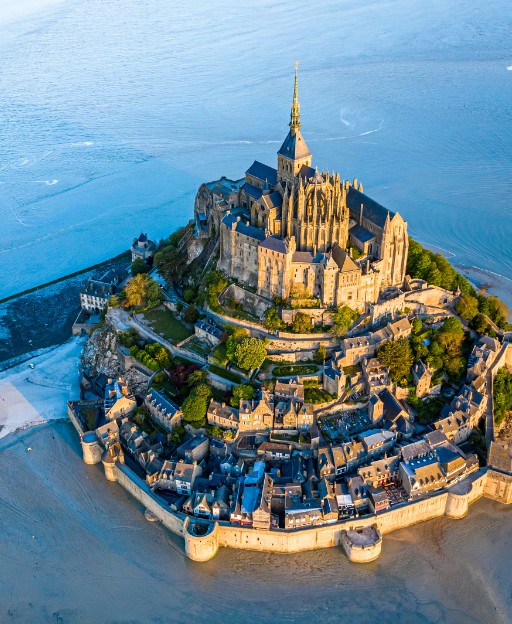
Mont Saint-Michel stands on a small rocky island just off the Normandy coast, close to the border with Brittany. A Gothic abbey rises from the summit, surrounded by a medieval village, all encircled by tidal flats that flood twice a day. At high tide, the island is cut off from the mainland. At low tide, you can walk across the sand.
It is genuinely one of the most dramatic sights in France. The combination of the architecture, the tide, and the sheer unexpectedness of the place is hard to describe. It must be seen.
The abbey sits at the top after a long climb up narrow streets lined with shops and restaurants. Some people find the crowds on the island frustrating — it is very popular — but the abbey itself remains impressive. The best way to experience it is to arrive early in the morning or stay until evening, when most day visitors have left.
You can learn more about why no army ever managed to take Mont Saint-Michel, which adds real depth to the experience.
The Normandy Coast: Cliffs, Harbours, and Fishing Villages
Beyond the D-Day sites and Mont Saint-Michel, Normandy’s coastline has its own character. The Alabaster Coast in Upper Normandy is named for its white chalk cliffs, which rise dramatically from narrow beaches. Étretat is the most famous stop along this stretch, with natural arches carved into the cliffs by the sea. Claude Monet painted these cliffs many times, drawn by the light and the ever-changing colour of the water.
Discover why Monet returned to the Normandy cliffs again and again — the story is as interesting as the view.
Honfleur, at the mouth of the Seine, is a different kind of town. Its inner harbour is lined with tall slate-fronted houses that have barely changed in three centuries. Artists began coming here in the 19th century and never quite stopped. It is an easy half-day from either Paris or Caen.
Smaller villages along the coast have a more lived-in quality. The fishing ports between Fécamp and Dieppe still work for a living. Normandy’s fishing villages offer a quieter and more authentic glimpse of coastal life in northern France.
Normandy Food and Drink
Normandy has some of the most distinctive regional food in France. The area is dairy country — rich pasture, apple orchards, and a wet climate that produces exceptional cream, butter, and cheese.
Camembert is the most famous Norman cheese, and the real thing, made near the village of Camembert in the Pays d’Auge, is very different from the supermarket version. Livarot, Pont-l’Évêque, and Neufchâtel are other Norman cheeses worth seeking out. Local markets are the best place to try them.
Calvados — apple brandy — is the regional spirit, and the tradition of the trou normand (a small glass of calvados mid-meal, to clear the palate and make room for more) is genuinely practised in the region. Cider, too, is excellent and everywhere.
Seafood is plentiful along the coast. Mussels, oysters, scallops, and sole are all local. In Honfleur and Deauville, you will find fish restaurants that have been feeding visitors for over a century.
When to Visit Normandy
Spring and early autumn are the best times to visit. April, May, September, and October offer mild weather, manageable crowds, and green landscapes. The D-Day commemorations take place in early June each year, drawing large numbers of visitors to the coastal sites.
Summer (July and August) is busy, particularly around Mont Saint-Michel and the most popular beaches. School holidays bring French families to the coast, and prices rise. If you visit in summer, book accommodation well ahead.
Winter is quiet, cold, and often grey. Some attractions reduce their hours or close. But the coast in winter has a stark quality that some visitors find more moving than the crowded summer version. The D-Day beaches are especially powerful on a grey November day.
How to Get to Normandy from Paris
The most comfortable option is the train. Direct services from Paris Saint-Lazare reach Caen (the main city for D-Day tourism) in about two hours. Rouen, capital of Upper Normandy, is about 75 minutes from Paris. Bayeux requires a change at Caen. For Mont Saint-Michel, you travel to Rennes or Pontorson and take a connecting service.
Hiring a car gives you far more freedom, especially for the D-Day beaches. Many of the most significant sites are spread across a wide stretch of coast and are difficult to link by public transport. Most car hire companies operate from Caen-Carpiquet Airport and from Paris Charles de Gaulle. The drive from Paris to Bayeux is around three hours.
Organised tours from Paris are widely available and useful if you only have one day. However, two to three days on your own gives you the time to absorb the D-Day sites properly and still see Mont Saint-Michel and the coast.
How Long to Spend in Normandy
A long weekend — three to four days — covers the essentials comfortably. You can see the D-Day beaches, visit Bayeux, and reach Mont Saint-Michel without rushing. A full week allows you to explore more of the coast, spend time in Rouen, and visit the Norman countryside at a slower pace.
Many visitors pair Normandy with Brittany to the west, travelling the Atlantic coast over seven to ten days. The two regions share the tidal flats around Mont Saint-Michel but have distinct characters. Normandy is heavier, more historical. Brittany is wilder and more Celtic in feeling.
Normandy Travel Guide: Frequently Asked Questions
Do I need a car to visit the D-Day beaches?
A car makes it much easier. The main sites — Omaha Beach, the American Cemetery, Pointe du Hoc, Utah Beach — are spread over a wide coastal area. Bus services exist in summer, but they are infrequent and limiting. If you are coming without a car, a guided tour from Bayeux or Caen is the most practical solution.
How far is Mont Saint-Michel from the D-Day beaches?
Mont Saint-Michel is about 100 kilometres south-west of the main D-Day beaches. By car, it takes roughly 90 minutes from Bayeux. Most visitors combine both in a three or four day trip, staying in Bayeux first and then travelling to Mont Saint-Michel on their last day before returning to Paris.
What is the best base for visiting Normandy?
Bayeux is the most convenient base for the D-Day beaches and is a historic town in its own right. Caen is larger, better connected by train, and a good choice if you are arriving without a car. For the coast and Étretat, a base in Fécamp or Étretat itself works well. Mont Saint-Michel has accommodation on the island and nearby in Pontorson, though many people visit as a long day trip.
You Might Also Enjoy
- Inside Jumièges Abbey: The Ruin That Once Rivalled Notre-Dame
- The Normandy Fishing Villages That Tourism Still Hasn’t Touched
- Why Monet Painted These Normandy Cliffs Over a Hundred Times
Plan Your France Trip
Ready to start planning? Our France trip planning hub covers everything from when to go to which regions suit your interests best. It is the best place to begin if you are putting together your first France itinerary.
Join 7,000+ France Lovers
Three times a week, get France’s hidden gems, local recipes, and travel inspiration — the kind you won’t find in any guidebook.
Subscribe free — enter your email:
🇫🇷 Discover the France Most Tourists Never Find
Get our free guide to 25 hidden villages of France — then join 7,000+ readers for weekly stories about places most guidebooks never mention.
Get Your Free Village Guide →Love more? Join 64,000 Ireland lovers → · Join 43,000 Scotland lovers → · Join 30,000 Italy lovers →
Free forever · Unsubscribe anytime
🇫🇷 You Might Also Love
Thinking about it seriously?
If you’ve started actually planning a move, our complete our complete Moving to France guide walks through every step, every cost, and the paperwork that catches most people out.
Tours & experiences you might love


Powered by Viator. Some links are affiliate links — we may earn a small commission at no extra cost to you.

Leave a Reply