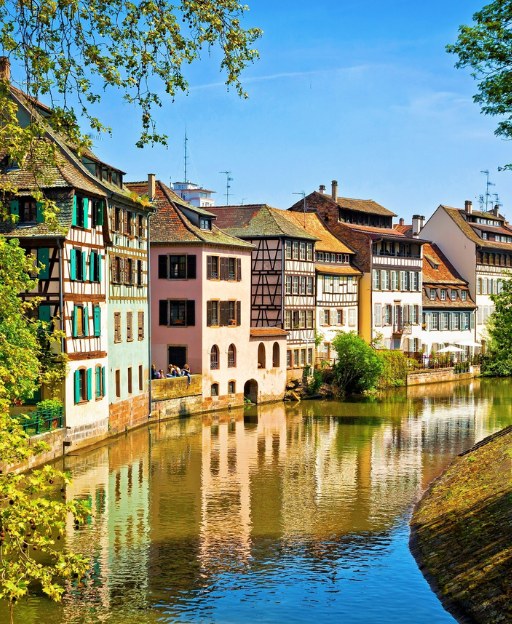
Stand on the bridge above Petite-France and you feel it immediately. Half-timbered houses lean over a slow canal. The cathedral rises above everything. Alsatian voices mix with French on the street. This is France — but it has not always been.
A City That Changed Its Nationality Four Times
Between 1870 and 1945, Strasbourg changed hands between France and Germany four times. After the Franco-Prussian War in 1871, Prussia annexed the city and renamed it Strassburg. Overnight, French became a forbidden language in classrooms. German replaced it entirely.
France reclaimed Strasbourg after the First World War in 1918. German street names became French again. The university switched languages. But the architecture stayed: tall baroque facades, Germanic spires, and half-timbered streets that no war could erase.
The Nazis seized the city again in 1940. Allied forces liberated it in November 1944 — the last major French city freed from occupation.
That history left a legal echo. Alsatian civil and social law still differs from the rest of France. Codes introduced under German rule remain in force today, covering everything from religious holidays to employment law. Nowhere else in France operates quite the same way.
The Quarter That Once Smelled of Leather
Petite-France was not always picturesque. For centuries, tanners and millers built their workshops along these canals. They positioned them downstream so the smell drifted away from the city centre. Workers cured animal hides in the running water and dried leather on the upper floors.
The workshops are gone. What remains are the best-preserved timbered facades in France, leaning gently over canal reflections in the morning light. Photographers come from across Europe for this exact view.
Walk to the Ponts Couverts — three medieval towers connected by stone bridges — for the best vantage point over the rooftops. Then turn north and follow the cathedral spire rising above everything else. If you want to explore more of the region, the Alsace Wine Route winds south through some of the most beautiful villages in France.
The Cathedral That Held a Record for 230 Years
Workers completed Strasbourg Cathedral in 1439. For the next 230 years, it stood as the tallest building in the world at 142 metres. Builders shaped it from pink Vosges sandstone, which glows rose-gold in afternoon sun.
Inside, the astronomical clock draws most visitors. Craftsmen built it in the 16th century. It still marks each hour with a parade of miniature figures, moving through religious scenes on a mechanism that has run for more than 400 years.
The rose window above the main entrance holds original 12th-century glass — over 800 years old and still intact. Few buildings in France can match this combination of scale, craftsmanship, and age. For context on how Alsace’s architecture blends French and German influences, read why every house in Alsace looks German — and why the French love it.
Why the Most-Disputed City Became a Capital of Peace
After the Second World War, France and Germany chose Strasbourg deliberately. Both countries wanted a symbol of reconciliation — a city that had belonged to each of them and survived. The Council of Europe opened here in 1949. The European Court of Human Rights followed. Then the European Parliament.
A city that armies fought over for 200 years now hosts the institutions designed to stop that happening again. Every month, MEPs travel from Brussels to sit in the grand glass parliament building beside the Rhine. The Strasbourgeois note the irony with quiet pride.
They identify as French — but they also claim the Alsatian dialect, the sauerkraut simmered in Riesling, and the Christmas market that German visitors recognise as their own. Strasbourg does not choose. It holds everything at once.
Enjoying this? 7,000 France lovers get stories like this every week.
Thinking about it for retirement? If you’ve started thinking seriously about retiring there, our complete our full Retire in France guide covers the visa, healthcare, cost-of-living, and the regions worth shortlisting.
What to Eat, Drink and Do in Strasbourg
Alsatian food rewards visitors who pay attention. Order choucroute garnie: sauerkraut piled with smoked pork, sausages, and potatoes — a dish that belongs to no single nation. Every serious brasserie in Petite-France serves it.
Flammekueche — also called tarte flambée — is the local flatbread. Bakers top it with crème fraîche, onions, and lardons, then fire it in a wood-burning oven until the edges char and the centre bubbles. Eat it with a cold glass of local Riesling.
The Christmas market runs from late November through December. Strasbourg hosts twelve separate markets across the city, with the oldest dating to 1570. Nearly three million visitors arrive each year. Book accommodation months ahead if you plan to visit in December.
Colmar, just 70 kilometres south, makes an excellent day trip from Strasbourg. Its old town is even more compact and equally beautiful — read the full Colmar guide before you go. And for planning your wider France trip, start with the France planning hub.
Frequently Asked Questions About Strasbourg
What is the best time to visit Strasbourg?
May through September brings the warmest weather and the liveliest café terraces along the canals. December draws millions of visitors for the Christmas markets, but expect significant crowds and higher prices. Avoid the August peak season if you prefer a quieter experience.
How far is Strasbourg from Paris by train?
The TGV high-speed train covers the 490 kilometres from Paris Gare de l’Est to Strasbourg in under two hours. Strasbourg works perfectly as a weekend trip from Paris, or as a base for exploring the wider Alsace region.
What language do people speak in Strasbourg?
French is the everyday language. Alsatian dialect — a Germanic tongue distinct from standard German — survives among older residents and in rural villages nearby. Many locals also speak German, and English is widely understood in the tourist centre and restaurants.
Is Strasbourg worth visiting beyond the Christmas markets?
Absolutely. The cathedral, Petite-France quarter, the European Parliament visitor centre, and the Alsatian Museum all reward visits year-round. Summer brings outdoor dining along the canals, and the surrounding wine villages are at their best from June through October.
Strasbourg rewards visitors who slow down. You can cover the highlights in a day — but the city makes more sense over an evening meal, a carafe of Riesling, and the sound of Alsatian being spoken at the next table. It belongs to France, to Europe, and to itself.
Join 7,000+ France Lovers
Three times a week, get France’s hidden gems, seasonal guides, local stories, and the art of la vie française — straight to your inbox.
Subscribe free — enter your email:
📲 Know someone who’d love this? Share on WhatsApp →
Love more? Join 65,000 Ireland lovers → · Join 43,000 Scotland lovers → · Join 29,000+ Italy lovers →
Free forever · Unsubscribe anytime
🇫🇷 You Might Also Love
Tours & experiences you might love


Powered by Viator. Some links are affiliate links — we may earn a small commission at no extra cost to you.

Leave a Reply