
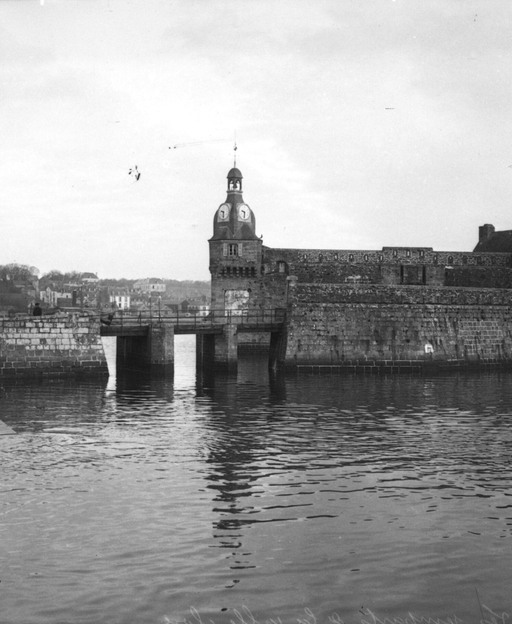
In a 1913 photograph of Concarneau, the clock tower stands over a narrow bridge, its reflection broken by ripples. You can still follow that view into the Ville Close, the walled island where this Breton port began. Before you cross, take a moment on the quay. From there, you can see what the town gained from the water and what it had to protect.
How Concarneau built its island walls
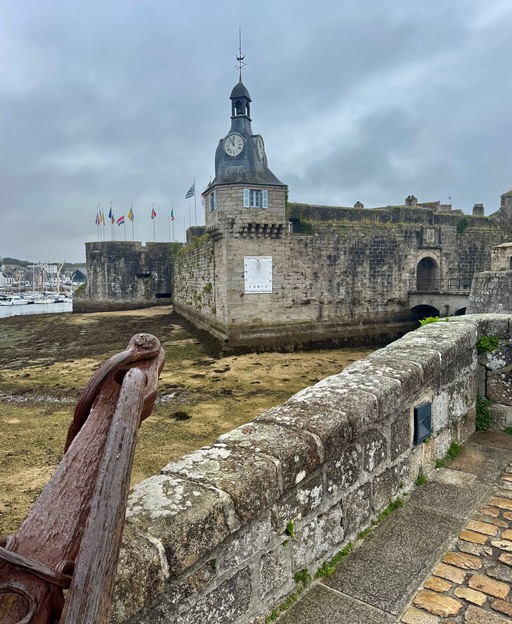
Concarneau’s old town occupies an islet inside its harbor. France’s historic monuments inventory traces the defenses from early timber barriers to stone walls, then to a major 15th-century rebuilding to accommodate artillery. The 17th century brought more changes, including gun platforms on some of the towers. The bridge takes you through layers of work that accumulated over centuries.
The clock tower is a later addition. Brittany’s heritage inventory dates it to 1906, just seven years before the Agence Rol photograph below. Compare the two photographs and you can pick out the same tower, the low stretch of wall beside it and the water at the base.
The fishing port grew beyond the walls
The island explains where Concarneau started. To see how it grew, look back toward the mainland. The tourist office traces the town’s expansion outside the walls from about 1850, when canneries opened and the sardine and tuna fleets helped support the local economy. The train arrived in 1883 and brought more visitors. The island is where we’d begin the walk, then we’d turn back toward the working harbor to see what changed.
How to visit the Ville Close
Start on the town side of the bridge for the clock-tower view. Cross on foot and give yourself time to walk through the old streets, where gabled and half-timbered houses stand inside the granite walls. Return to the quay for a wider view of the port. If you’d like to approach from the water, the Concarneau tourist office describes the small ferry from the former fishing quarter of Le Passage.
Check with the Maison du Patrimoine if walking the ramparts is important to you. The streets are open to visitors and part of the wall walk has seasonal hours. The town also offers a self-guided route, so you can go at your own pace.
Sources
- French Ministry of Culture, Ville Close ramparts (checked 26 Nov 2026 UTC for the 27 Nov edition)
- Brittany heritage inventory, Concarneau fortifications (checked 26 Nov 2026 UTC for the 27 Nov edition)
- Concarneau tourist office, history and heritage (checked 26 Nov 2026 UTC for the 27 Nov edition)
- Concarneau tourist office, visiting the Ville Close (checked 26 Nov 2026 UTC for the 27 Nov edition)
- Concarneau Maison du Patrimoine, visitor information (checked 26 Nov 2026 UTC for the 27 Nov edition)
Frequently asked questions
Can you walk into Concarneau’s Ville Close?
Yes. The bridge from the town quay takes you into the historic quarter. Check the Maison du Patrimoine separately for access to the wall walk.
Can you explore without a guided tour?
Yes. You can explore the streets independently, and the Maison du Patrimoine provides self-guided routes.
Tours & experiences you might love


Powered by Viator. Some links are affiliate links — we may earn a small commission at no extra cost to you.


Leave a Reply