
In late September, Gevrey-Chambertin smells of something between earth and sweetness. Tractors move slowly along the Rue de l’Église. Plastic crates stack three metres high in the village square. The harvest has arrived, and every soul here knows exactly what to do.
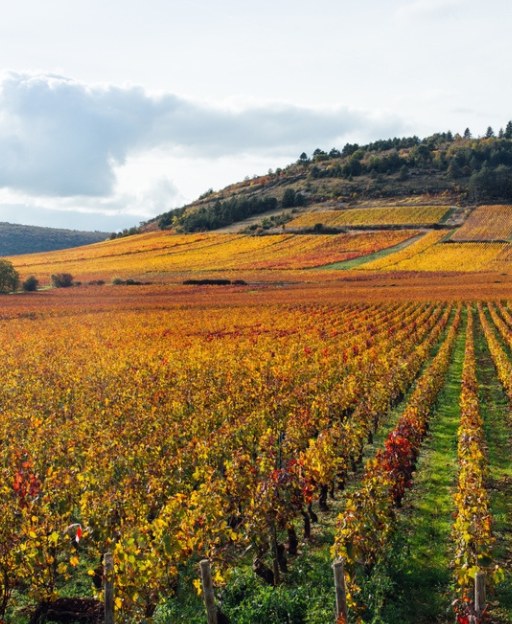
Burgundy is not one place. It is thirty miles of hillside between Dijon and Santenay — a narrow slope where the soil changes every hundred metres and every change matters. The villages along this ridge gave their names to the wines centuries ago. The wine and the village have been inseparable ever since.
The Names on the Labels Were Village Names First
Gevrey-Chambertin. Chambolle-Musigny. Vosne-Romanée. Pommard. Meursault. Puligny-Montrachet. These are not marketing inventions. They are the names of villages where people have grown grapes since at least the seventh century.
Each village claims its own strip of hillside. Vignerons call a named vineyard parcel a lieu-dit — a place with a name, a reputation, and usually a family attached to it. Growers inherit these parcels and pass them on through generations. A winemaker in Vosne-Romanée may tend vines their great-grandparents planted.
The finest parcels carry grand cru or premier cru classification. Gevrey-Chambertin alone holds nine grand crus — more than any other village on the Côte d’Or. Vosne-Romanée claims the most famous parcel on earth: Romanée-Conti, a small plot producing fewer than 6,000 bottles a year and trading for more than any other wine in the world.
Quiet Life Between the Harvests
Between January and August, these villages feel deeply still. The tabac opens at seven. The boulangerie sells out of bread by nine. Dogs sleep on warm pavements outside the fromagerie.
Nobody talks about wine constantly. Vignerons prune, train, and tend their vines from dawn. They check the weather obsessively. They attend co-operative meetings and argue about soil and rootstock. For them, this is agricultural work, not a lifestyle brand.
The weekly market in Beaune — the largest town on the Côte d’Or — draws locals from a dozen villages each Saturday morning. Cheese merchants, charcutiers, and vegetable growers fill the covered market hall. Residents buy what they need, exchange a few words, and move on. This is a working region, not a stage set.
For help planning your route through France’s wine country, the France trip planning guide covers all the essentials.
What the Harvest Looks Like from the Street
The vendanges — the grape harvest — transforms these villages completely. Places that felt half-asleep in August suddenly fill with noise and urgency in September.
Harvesting teams (vendangeurs) travel from across France, from Eastern Europe, and from Australia. Farmers open spare rooms and guesthouses. Village cafés extend their hours past midnight.
By six each morning, pickers move through the vine rows with small secateurs. By midday, the courtyards of every domaine overflow with crates of deep-purple Pinot Noir. The pressing room runs through the night. The smell of fermenting juice drifts from open doors into narrow streets.
Children who grow up in these villages know these sounds before much else: the clatter of plastic crates, the rumble of press machines, the sound of tired laughter at the end of a long vine row.
Enjoying this? 7,000 France lovers get stories like this every week.
Thinking about it for retirement? If you’ve started thinking seriously about retiring there, our complete our full Retire in France guide covers the visa, healthcare, cost-of-living, and the regions worth shortlisting.
The Cellars Beneath the Streets
Almost every building along the Côte d’Or hides a cave beneath it. Some trace back to medieval monks, who first mapped and classified these soils with remarkable care. Others date from the nineteenth century, when Burgundy’s wine trade expanded rapidly across northern Europe.
The great négociant houses — Bouchard Père et Fils, Louis Jadot, Joseph Drouhin — age hundreds of thousands of bottles below street level in Beaune. Many open their cellars to visitors, leading groups through vaulted stone tunnels beneath the old town walls.
Smaller domaines open by appointment only. You knock on an unmarked door, a vigneron appears in worn boots, and they walk you down stone steps into a cave smelling of oak and cold earth.
The Villages Worth Slowing Down For
Gevrey-Chambertin
This village anchors the northern Côte d’Or and holds more grand cru land than anywhere else along the slope. The main village road runs straight between vine rows on both sides.
Vosne-Romanée
Modest in size, extraordinary in reputation. A church, a cluster of narrow streets, a handful of domaines whose wines trade at auction for five-figure sums. Walk through on a Tuesday morning and it feels impossibly quiet for somewhere so celebrated.
Meursault
The Côte d’Or’s home of great white wine. Each November, Meursault holds the Paulée — a harvest feast where locals arrive with bottles from their own cellars and share them at long communal tables. Seats fill months in advance.
Beaune
The commercial heart of the region. The Hospices de Beaune — a fifteenth-century charity hospital with a striking tiled roof — holds a wine auction every November that sets price benchmarks for the entire vintage. The old town rewards three hours of unhurried walking.
If Burgundy opens your interest in France’s other wine regions, the guide to Sancerre and the Loire wine villages makes a fine companion read.
Common Questions About Visiting Burgundy
When is the best time to visit the Burgundy wine villages?
September and early October bring the harvest season, with every village at its most active and atmospheric. Spring (April to May) is quieter but equally beautiful, with vines budding and cellar doors open for tastings.
Do I need a car to explore the Côte d’Or villages?
Yes — public transport between villages runs infrequently. The route from Gevrey-Chambertin to Meursault covers under 20 kilometres, making it straightforward to visit several villages in a single day by car.
Can I walk into a domaine for a wine tasting without booking?
Smaller domaines usually require advance bookings, often weeks ahead during harvest season. Beaune has several négociant cellars and wine schools offering walk-in tastings, making it the easiest place to start before seeking out smaller producers.
What makes Romanée-Conti so expensive?
Romanée-Conti is a grand cru vineyard in Vosne-Romanée covering just 1.8 hectares. The domaine produces fewer than 6,000 bottles per year. Extreme rarity, centuries of reputation, and critical acclaim push prices to tens of thousands of pounds per bottle at auction.
Walk any lane between the vines at dusk and the light turns golden on the slopes. The villages glow softly at their edges. The smell of the soil rises to meet you. Burgundy does not try to impress. It simply exists, as it always has, and lets the world come to understand.
Join 7,000+ France Lovers
Three times a week, get France’s hidden gems, seasonal guides, local stories, and the art of la vie française — straight to your inbox.
Subscribe free — enter your email:
📲 Know someone who’d love this? Share on WhatsApp →
Love more? Join 65,000 Ireland lovers → · Join 43,000 Scotland lovers → · Join 29,000+ Italy lovers →
Free forever · Unsubscribe anytime
🇫🇷 You Might Also Love
Tours & experiences you might love


Powered by Viator. Some links are affiliate links — we may earn a small commission at no extra cost to you.

Leave a Reply