
Walk through Toulouse, Montpellier, or any market town in the Languedoc and you’ll catch something unexpected. Words appear on street signs, names sit carved above ancient doorways, and an older vendor at the morning marché murmurs a phrase that isn’t quite French. It’s Occitan — a language so old it predates France itself, and so stubborn it outlasted every attempt to silence it.
A Language That Built a Civilisation
Occitan once stretched from the Atlantic coast to the Alps, from the Pyrenees to the river Loire. Linguists call it the langue d’oc — the language that used “oc” to say yes, while the north used “oïl” (later “oui”). That boundary didn’t just separate two dialects. It marked two distinct worlds: two legal systems, two musical traditions, two entirely different ways of organising a society.
In the 12th and 13th centuries, Occitan held the prestige that French does today. Courts across Europe sent their poets south to learn it. The troubadours — travelling poets and musicians who invented the love lyric as Europeans know it — composed in Occitan exclusively. Dante studied it. The idea that a poem could celebrate earthly love, beauty, and longing rather than God alone? That came from the Occitan south.
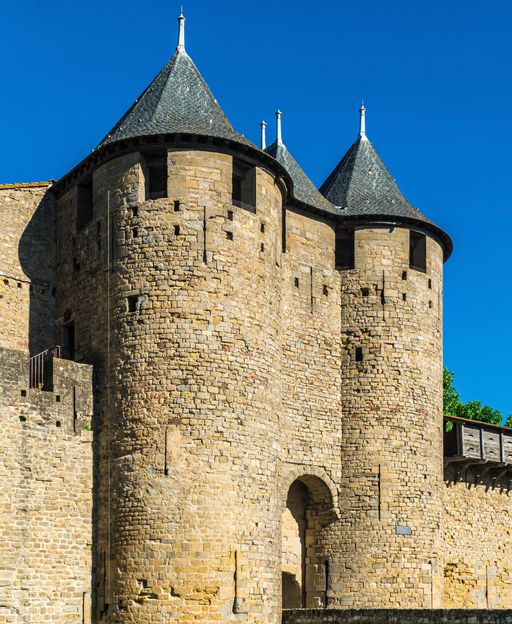
The Cathar faith flourished here too. The medieval Languedoc produced a sophisticated, tolerant culture that alarmed the Church in Rome — with consequences that still echo through the landscape. You can trace that history through the ruined fortresses of Cathar country, where the crusade against the south began in 1209 and ended a culture that Europe had spent a century building.
How France Tried to Silence It
In 1539, King François I signed the Edict of Villers-Cotterêts. The decree ordered all legal and administrative documents in France to use French — and only French. Occitan lost its official status overnight. Courts demanded French. Schools taught French. The language of twelve million people became, on paper, the language of nobody who mattered.
The French Revolution deepened the wound. Revolutionary leaders dismissed Occitan as a “patois” — a contemptuous word meaning a backward rural dialect. Speaking it in public carried social shame. In 19th-century schools, teachers hung a wooden clog around the neck of any child caught speaking Occitan in class. You wore it until you caught another child speaking, then passed it on.
Locals called the clog lou boulet — the ball and chain. It sat at the heart of the classroom like an accusation, generation after generation.
Enjoying this? 7,000 France lovers get stories like this every week.
Thinking about it seriously? If you’ve started actually planning a move, our complete our complete Moving to France guide walks through every step, every cost, and the paperwork that catches most people out.
The Poet Who Refused to Let It Die
In 1854, a group of young poets from Provence gathered at a farmhouse called Font-Ségugne and made a decision. They named themselves the Félibrige — a word lifted from an old Occitan prayer — and vowed to rescue the language through literature. Their leader, Frédéric Mistral, spent fifty years compiling an Occitan-French dictionary with over 100,000 words. His epic poems in the language earned him the Nobel Prize in Literature in 1904.
Mistral used the prize money to found a museum in Arles dedicated to Provençal culture. Throughout his life, he refused to write in French. At his death in Maillane in 1914 — the Provençal village where he grew up — the language of his grandfather still sat on his lips.
Where Occitan Lives Today
Occitan has no single capital, but Toulouse comes closest. The city’s nickname is La Ville Rose — the pink city — but locals call it Tolosa in Occitan, as they have for a thousand years. The Occitan Cross, a gold cross on red, flies above buildings and appears in logos, football strips, and tattoos across the south. It carries a weight beyond regional pride: it signals a memory of independence.
Across Gascony, Languedoc, Provence, and the Pyrenees, you’ll find street signs in both French and Occitan. Some villages hold Occitan-only festivals. Primary schools in several regions teach it alongside French. Radio stations broadcast in it. Around 200,000 people speak Occitan fluently today; several million more understand it.
Toulouse rewards visitors who slow down. This guide to Toulouse covers the city’s best surprises, from its rose-brick architecture to its market culture. If you’re planning a broader journey through the south, start with our France planning guide to map your route properly.
Frequently Asked Questions
What is the Occitan language?
Occitan is a Romance language historically spoken across southern France, parts of northern Italy, Monaco, and Spain’s Val d’Aran. It descends from Latin and developed alongside French but independently. The troubadour poets of the 12th century wrote in Occitan and spread its influence across medieval Europe.
Where can I hear Occitan spoken today in France?
Occitan is most alive in Toulouse, the Languedoc, Gascony, and parts of Provence and the Pyrenees. Bilingual road signs appear throughout these regions. The Occitan Institute in Toulouse supports active preservation, and you’ll find Occitan-language festivals in summer across the south.
What is the Occitan Cross?
The Occitan Cross is a twelve-pointed gold cross on a red background. Counts of Toulouse used it as their emblem in medieval times. Today it appears on flags, buildings, and clothing across the south of France — a visual marker of regional identity that predates modern France by several centuries.
When is the best time to visit Occitan France?
Spring (April to June) and early autumn (September to October) offer the best conditions — warm days, open villages, and active markets without peak summer crowds. Summer brings festivals and outdoor events in Toulouse, Carcassonne, and across the Languedoc, but book accommodation early in July and August.
There is something quietly defiant about a language that kings tried to silence and revolutionaries called backward. It survived not through politics or power but through ordinary people — grandmothers who murmured it in kitchens, poets who refused to switch, schoolchildren who wore the boulet and kept speaking anyway. The south of France carries that memory. You only have to listen.
Join 7,000+ France Lovers
Three times a week, get France’s hidden gems, seasonal guides, local stories, and the art of la vie française — straight to your inbox.
Subscribe free — enter your email:
📲 Know someone who’d love this? Share on WhatsApp →
Love more? Join 65,000 Ireland lovers → · Join 43,000 Scotland lovers → · Join 29,000+ Italy lovers →
Free forever · Unsubscribe anytime
🇫🇷 You Might Also Love
Tours & experiences you might love


Powered by Viator. Some links are affiliate links — we may earn a small commission at no extra cost to you.

Leave a Reply