
You arrive at noon expecting to leave by two. Four hours later, someone brings out the cheese, and nobody has moved to go. This is Sunday in France — and once you understand why, you will never rush through a meal again.
The Table Is Ready Before You Arrive
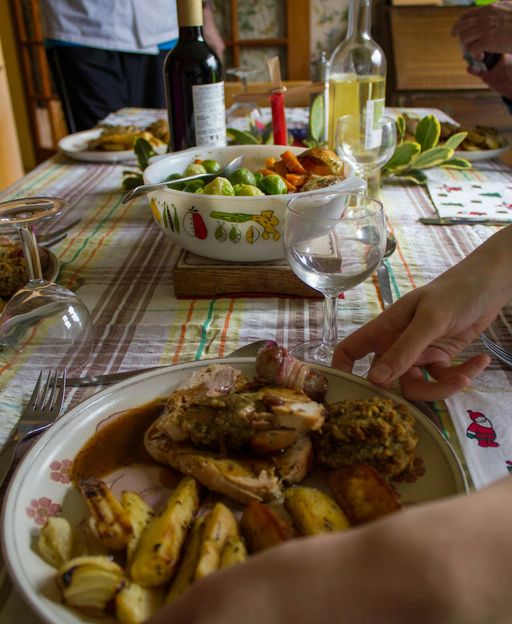
French families set the Sunday table the way other cultures set their Christmas tables. White tablecloth or linen placemats, proper cutlery for every course, multiple glasses — one for water, one for wine. Bread plates line one side.
Children sit at the adult table. Nobody eats in front of the television. Nobody arrives and immediately sits down. The ritual begins in a different room entirely.
The Apéritif Comes First
Before anyone touches the table, the host pours drinks in the sitting room or on the terrace.
A kir — white wine with a splash of blackcurrant liqueur — is the classic choice. Others favour pastis clouded with water, or a glass of sparkling wine. Small plates appear alongside: olives, thin-sliced saucisson, a bowl of nuts, perhaps gougères — tiny warm cheese puffs that disappear in seconds.
This phase lasts thirty to forty-five minutes. Visitors expecting lunch at noon discover it begins closer to one. Our guide to the French apéritif covers what to expect before the table is ever set.
Enjoying this? 7,000 France lovers get stories like this every week.
Thinking about it for retirement? If you’ve started thinking seriously about retiring there, our complete our full Retire in France guide covers the visa, healthcare, cost-of-living, and the regions worth shortlisting.
The Courses Follow a Fixed Order
The French Sunday table follows a sequence that families rarely deviate from.
Entrée first. A small starter sets the tone: charcuterie, a dressed salad, terrine with toast, or a simple soup. Light enough not to crowd the main, but deliberate enough to slow the table down.
The plat principal. Sunday’s main course has usually been cooking since morning. A poulet rôti carved at the table. A daube de boeuf slow-braised with olives and thyme. A leg of lamb rubbed with garlic and rosemary, pulled glistening from the oven. These dishes reward patience because they have already spent hours giving it.
The host refills glasses without being asked.
Then the cheese. Visitors expecting dessert next are always surprised. The French serve cheese before anything sweet. The board arrives with three or four varieties — a soft chèvre, a wedge of aged Comté, something oozing and pungent like an Époisses. Bread reappears. Conversation deepens. More wine follows. Read our full guide to the French cheese course to understand the unwritten rules.
Why the Cheese Course Is Non-Negotiable
Skipping the cheese course would feel to a French family like leaving a cinema before the final scene. The board arrives without ceremony but with clear intention. Guests cut their own portions and take their time. The pace drops further here than at any other point in the meal.
After cheese comes dessert — usually homemade. A fruit tart, a clafoutis, a charlotte made the previous evening. Then coffee, small and strong. And sometimes, depending on the household, a digestif: calvados from Normandy, armagnac from Gascony, or a small glass of marc.
The whole sequence runs three to four hours. On a good Sunday, longer.
What the Meal Is Really About
The Sunday lunch is not about food. It is about time.
More precisely, it is about the decision to make time unhurried, every week, with people who matter. The French call it convivialité — the art of being together well. UNESCO recognised the French gastronomic meal as an intangible cultural heritage in 2010, citing not the food itself but the social ritual surrounding it.
Children who grow up at these tables learn conversation before almost anything else. They sit through the cheese. They hear their grandparents argue about politics and their parents laugh at nothing in particular. The table passes the culture on.
Before your next trip, our guide to when to visit France can help you plan around seasonal traditions like this one.
Frequently Asked Questions
What time does Sunday lunch start in France?
Most French families begin the apéritif around noon and sit at the table between 12:30 and 1pm. Expect the meal to last until at least 3:30 or 4pm, sometimes later.
How many courses does a traditional French Sunday lunch have?
A classic French Sunday lunch includes four courses: entrée (starter), plat principal (main), cheese board, and dessert. Coffee and sometimes a digestif follow to close the meal.
Is it rude to leave a French Sunday lunch early?
Yes, leaving early is considered poor form. The Sunday lunch is a shared commitment, and guests are expected to stay through the cheese and dessert courses at minimum. Arriving and leaving within two hours sends entirely the wrong signal.
Nobody looks at the clock. That is the point. Somewhere between the second glass of wine and the cheese board, you stop thinking about what comes next and simply exist in the room. France does not offer this feeling accidentally — it has spent centuries building it into Sunday.
Join 7,000+ France Lovers
Three times a week, get France’s hidden gems, seasonal guides, local stories, and the art of la vie française — straight to your inbox.
Subscribe free — enter your email:
🇫🇷 Discover the France Most Tourists Never Find
Get our free guide to 25 hidden villages of France — then join 7,000+ readers for weekly stories about places most guidebooks never mention.
Get Your Free Village Guide →📲 Know someone who’d love this? Share on WhatsApp →
Love more? Join 65,000 Ireland lovers → · Join 43,000 Scotland lovers → · Join 29,000+ Italy lovers →
Free forever · Unsubscribe anytime
🇫🇷 You Might Also Love
Tours & experiences you might love


Powered by Viator. Some links are affiliate links — we may earn a small commission at no extra cost to you.

Leave a Reply