
Most people drive through Dinan without stopping. They follow the signs to Saint-Malo or Mont-Saint-Michel and miss one of the most complete medieval towns in France entirely.
That is a serious mistake.
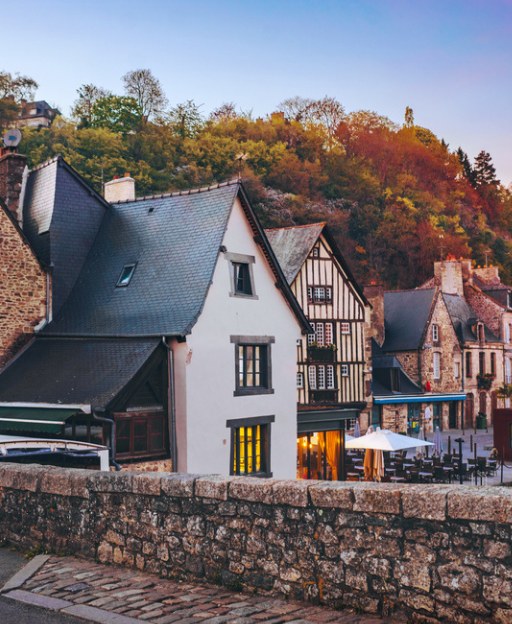
Dinan sits on a granite clifftop above the Rance estuary in northern Brittany. Its medieval ramparts stretch for two kilometres. The old town inside those walls looks almost exactly as it did six hundred years ago.
A Town the Wars Somehow Spared
Dinan was wealthy enough to build in stone but too far from Paris to matter in the conflicts that destroyed so many other French towns. History passed it by, and the result is extraordinary.
Walk along the ramparts at sunset. The light turns the granite houses gold. The sound of church bells carries from the Basilica of Saint-Sauveur below. The River Rance winds through a valley so green it looks painted.
Dinan appears on very few tourist itineraries. Most visitors to Brittany focus on the coast — the beaches, the oyster beds, the dramatic cliffs. The medieval interior stays quiet. If Brittany has ever intrigued you, our guide to why Brittany feels like a different country inside France explains the deeper story.
The Vieille Ville Nobody Prepared You For
The old town centres on the Place du Guesclin, named after Bertrand du Guesclin — a Breton knight who became Constable of France in the fourteenth century. A statue of him on horseback stands in the square. Locals walk past it every morning on their way to the market.
The cobbled streets radiate outward from here. Half-timbered houses lean over narrow lanes. Crêperies and artisan workshops fill the ground floors. The smell of galettes cooking on cast-iron biligs drifts through every alley.
This is the Brittany that the tourist brochures promise but rarely deliver.
The Thursday Market
The Thursday market at Place du Champ draws farmers and producers from across Côtes-d’Armor. Stalls fill the square and overflow down the surrounding streets.
Vendors sell butter, honey, local cheeses, and vegetables that never reach a supermarket. Locals arrive early with cloth bags and spend an hour debating which strawberries are worth the price. The market is not a performance for tourists. It is how the town feeds itself.
Enjoying this? 7,000 France lovers get stories like this every week.
Thinking about it for retirement? If you’ve started thinking seriously about retiring there, our complete our full Retire in France guide covers the visa, healthcare, cost-of-living, and the regions worth shortlisting.
The Port Down Below
A steep cobbled path called the Rue du Jerzual drops from the old town down to the port. The descent takes about ten minutes. Medieval artisans’ houses line both sides of the path. Several still operate as working studios — a glassblower, a leather craftsman, a painter with canvases propped in the doorway.
At the bottom, the Rance estuary opens into calm water. Wooden boats sit moored at the quay. Cafés place their tables on the riverbank. The whole scene looks frozen somewhere in the last few centuries.
In summer, river boats run from Dinan south to the tiny village of Dinan-Lehon, dominated by a restored Augustinian abbey. The trip takes forty minutes each way and costs almost nothing. Very few visitors know it exists.
What to Do in Dinan
Three places anchor any visit to the town.
The Château de Dinan houses a local history museum. Its keep dates from the fourteenth century. Views from the top reach across the rooftops and down to the valley below.
The Basilica of Saint-Sauveur began construction in the twelfth century. The building shows Romanesque and Gothic styles placed side by side, evidence of the centuries it took to complete. The quiet interior comes as a relief after the busy cobbled streets outside.
The Ramparts Walk covers the full two-kilometre circuit in about an hour. Several towers along the route are open to climb. The section overlooking the Rance valley offers the most dramatic views in town.
Planning to eat like a local while in Brittany? Read our guide to the Breton galette ritual that turns lunch into a three-hour ceremony. For full trip planning, the Love France planning hub has everything you need before you go.
Your Questions About Dinan, Answered
When is the best time to visit Dinan in Brittany?
Late May through September offers the best weather for exploring the ramparts and riverside. July and August bring the most visitors. Early June and late September give you quieter streets and easier restaurant bookings without losing good weather.
How do I get to Dinan from Paris?
Take the TGV from Paris Montparnasse to Rennes, then a regional train or bus to Dinan. The total journey takes around three hours. A hire car gives more flexibility for exploring the surrounding Côtes-d’Armor countryside and smaller villages beyond Dinan.
Is Dinan worth visiting for more than one day?
Yes. The town works best over two nights. One day covers the main sights easily. A second day allows time for the Thursday market, the river boat trip to Dinan-Lehon, and the slower pace that makes a medieval town memorable rather than just another stop on a list.
Dinan earns nothing from being rushed. It offers itself slowly, street by street, one quiet courtyard at a time. That is exactly what makes it worth the detour.
Join 7,000+ France Lovers
Three times a week, get France’s hidden gems, seasonal guides, local stories, and the art of la vie française — straight to your inbox.
Subscribe free — enter your email:
🇫🇷 Discover the France Most Tourists Never Find
Get our free guide to 25 hidden villages of France — then join 7,000+ readers for weekly stories about places most guidebooks never mention.
Get Your Free Village Guide →📲 Know someone who’d love this? Share on WhatsApp →
Love more? Join 65,000 Ireland lovers → · Join 43,000 Scotland lovers → · Join 29,000+ Italy lovers →
Free forever · Unsubscribe anytime
🇫🇷 You Might Also Love
Tours & experiences you might love


Powered by Viator. Some links are affiliate links — we may earn a small commission at no extra cost to you.

Leave a Reply