
France has one of the best transport networks in Europe. Whether you are planning a week in Paris, a road trip through Provence, or a whistle-stop tour of the Loire Valley, knowing how to get around France will save you time, money, and stress. From the legendary TGV high-speed trains to scenic autoroute drives and affordable bus services, this guide covers every practical option so you can plan with confidence.
France’s TGV and High-Speed Rail Network
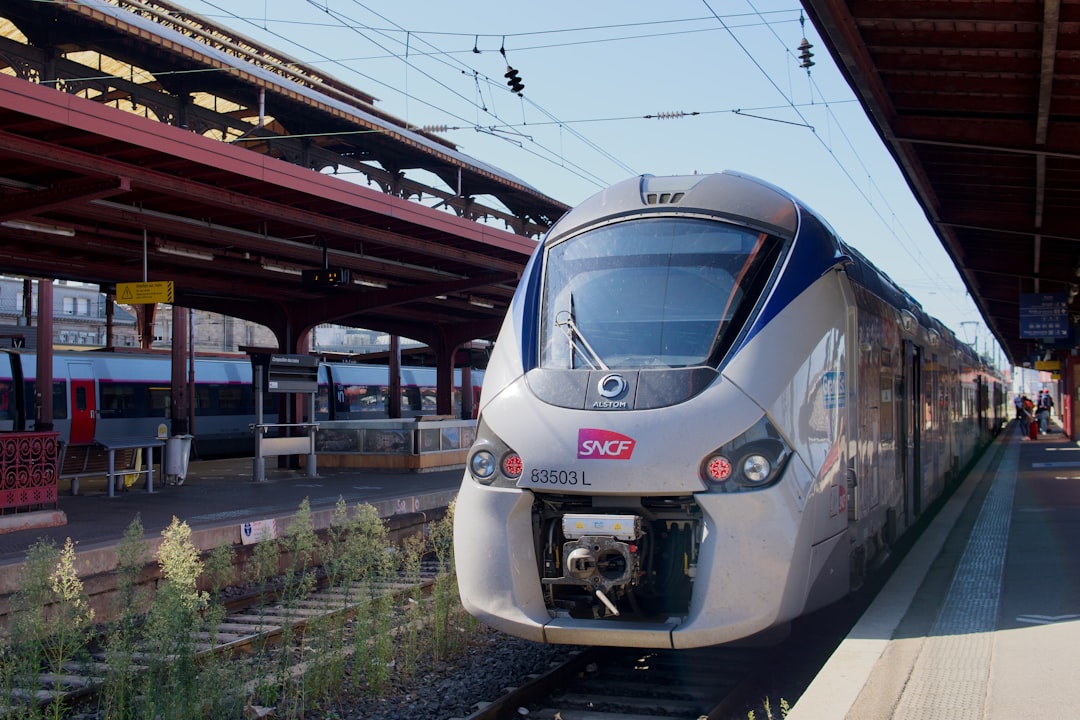
The TGV (Train à Grande Vitesse) is the backbone of long-distance travel in France and one of the finest high-speed rail systems in the world. Operated by SNCF, TGV trains connect Paris to major cities at speeds up to 320 km/h. Paris to Lyon takes just two hours, Paris to Marseille around three hours, and Paris to Bordeaux a mere two hours and ten minutes.
Key routes radiate from Paris, typically departing from dedicated stations: Gare de Lyon serves the south-east (Lyon, Marseille, the Riviera), Gare Montparnasse covers the south-west (Bordeaux, Toulouse), Gare du Nord handles northern routes and Eurostar services, and Gare de l’Est serves Strasbourg and the east.
Booking TGV Tickets
Book through the SNCF Connect app or website (sncf-connect.com). Tickets go on sale roughly three to four months in advance, and the earliest fares are significantly cheaper. A Paris-to-Nice ticket booked well ahead can cost as little as €19, whereas a last-minute fare may exceed €100. Look out for Ouigo services — SNCF’s low-cost TGV brand — which offers even cheaper fares on selected routes, though with fewer frills (no power sockets, limited luggage).
If you are visiting from outside Europe, consider a Eurail France Pass. It offers unlimited travel on SNCF trains over a set number of days within a month, which can be excellent value if you plan to cover several cities. Seat reservations are compulsory on TGV services and cost a small supplement on top of the pass.
Regional and Local Trains (TER)
🇫🇷 Free France Road Trip Itinerary
The perfect Provence & South of France driving route — day-by-day plan, best stops, and hidden gems included. Free when you join 7,000+ France lovers.
Get the Free Road Trip Guide →Beyond the TGV, France’s TER (Transport Express Régional) network connects smaller towns and rural areas within each region. These trains are slower but affordable and often scenic — the TER services through Alsace, the Pyrenees, and along the Côte d’Azur are particularly lovely.
TER tickets do not require advance booking; you can buy them on the day at station machines or via the SNCF Connect app. Many regions offer day passes or weekend deals. The Intercités service fills the gap between TER and TGV, connecting medium-distance cities on classic rail lines — think Paris to Clermont-Ferrand or Bordeaux to Nantes.
If you are planning a longer trip, our 10-day France itinerary combines several of these routes beautifully.
Driving in France: Autoroutes, Tolls, and Speed Limits
Driving gives you the freedom to explore France’s villages, vineyards, and countryside at your own pace. The motorway network is extensive and well-maintained, though most autoroutes are toll roads (péage). Here is what you need to know.
Toll Roads (Péage)
Most French autoroutes charge tolls collected at péage booths. You will either take a ticket on entry and pay on exit, or pass through a fixed-rate barrier. Costs add up: driving from Paris to Nice on the A6 and A8 costs roughly €70–80 in tolls alone. Many booths accept credit cards, and the Bip&Go electronic tag lets you breeze through dedicated lanes without stopping.
To avoid tolls entirely, use the routes nationales (N-roads) and routes départementales (D-roads). They are slower but free, and often far more scenic. For a classic scenic drive, see our 7-day France road trip route.
Speed Limits
Speed limits in France are strictly enforced with numerous fixed and mobile radar cameras:
- Autoroutes: 130 km/h (110 km/h in rain)
- Dual carriageways: 110 km/h (100 km/h in rain)
- Single carriageways: 80 km/h
- Built-up areas: 50 km/h (sometimes 30 km/h in town centres)
Fines for speeding start at €68 and increase sharply. Radar detectors are illegal in France — even having one switched off in your car can result in a €1,500 fine.
Fuel Costs and ZFE Zones
Petrol (essence) and diesel (gazole) prices in France typically range from €1.70 to €2.00 per litre. Motorway service stations charge a premium — fill up at supermarket fuel stations (Leclerc, Carrefour, Intermarché) for significantly lower prices.
France has introduced ZFE zones (Zones à Faibles Émissions) in major cities including Paris, Lyon, Marseille, Strasbourg, and Toulouse. These low-emission zones restrict access based on your vehicle’s Crit’Air vignette — a windscreen sticker rating your car’s emissions from 0 (electric) to 5 (oldest diesels). Older, more polluting vehicles may be banned from city centres entirely on high-pollution days. You can order a Crit’Air vignette online for around €4 before your trip at certificat-air.gouv.fr.
Car Hire in France
Hiring a car is straightforward from all major airports and city centres. International firms (Hertz, Europcar, Avis) and local operators are widely available. A few tips:
- Book early for the best rates, especially in summer.
- Manual gearboxes are the default and cheaper; specify automatic if you need one.
- Fuel policy: “full to full” is standard — return the car with a full tank to avoid inflated refuelling charges.
- Excess insurance: Consider separate excess-reduction cover from a third-party provider, which is often far cheaper than the hire company’s own.
- Carry a warning triangle and reflective jacket — both are legally required in your vehicle.
Buses: FlixBus and BlaBlaCar
Long-distance buses have become a genuinely competitive option in France over the past decade. FlixBus operates an extensive network connecting major and mid-sized cities, with fares often starting from just €5–10. Journeys take longer than the TGV but the savings can be substantial — a Paris-to-Lyon FlixBus ticket might cost €9 compared to €30–50 by train.
BlaBlaCar, France’s home-grown ride-sharing platform, is another excellent budget option. You book a seat in someone’s car heading in your direction. It is widely used by locals and tourists alike, and often costs less than the bus. BlaBlaCar also now operates its own bus services on popular routes.
For short-distance travel within regions, local bus networks (often branded as the regional transport authority) connect smaller towns to railway stations and larger hubs. These are usually inexpensive — sometimes just €1–2 per journey.
Domestic Flights
For longer distances — say Paris to Toulouse, Biarritz, or Corsica — domestic flights can save considerable time. Air France, Transavia, easyJet, and Volotea all operate domestic routes. Flight times are typically one to two hours.
That said, the French government has banned short-haul domestic flights where a direct train alternative exists in under two and a half hours. This means routes like Paris–Lyon and Paris–Bordeaux are now train-only. For remaining routes, book early for the best fares and factor in airport transfer time — which brings us to our next section.
Getting from Airports to City Centres
Every major French airport has solid public transport connections into the city centre. Here are the key ones:
- Paris Charles de Gaulle (CDG): RER B train to central Paris in 35 minutes (€11.80). Roissybus to Opéra in around 60 minutes (€16.60). Taxis to central Paris have a flat rate of €56 (Right Bank) or €65 (Left Bank).
- Paris Orly: Orlyval + RER B, or Tram T7 to Villejuif then Métro 7. OrlyBus to Denfert-Rochereau (€11.50).
- Lyon Saint-Exupéry: Rhônexpress tram to Lyon Part-Dieu station in 30 minutes (€16.90).
- Nice Côte d’Azur: Tram Line 2 to the city centre in 30 minutes (€1.50 — one of the cheapest airport transfers in Europe).
- Marseille Provence: Shuttle bus to Gare Saint-Charles in 25 minutes (€10).
- Toulouse Blagnac: Airport shuttle or Tram T2 to the city centre (€1.70).
In all cases, avoid unlicensed taxis at arrivals. Use the official taxi rank or pre-book a transfer.
Planning Your Transport: A Quick Comparison
Choosing the right transport depends on your route, budget, and how much flexibility you want:
- TGV: Best for city-to-city travel. Fast, comfortable, reliable. Book early for cheap fares.
- TER/Intercités: Ideal for regional exploring and connecting to smaller towns.
- Driving: Essential for rural France, villages, wine regions, and road trips. Factor in tolls and fuel.
- FlixBus/BlaBlaCar: Budget-friendly for longer journeys where time is not critical.
- Domestic flights: Only worth it for Corsica, the far south-west, or if you find a bargain fare.
Many travellers combine two or three of these. A common and excellent approach: fly into Paris, take the TGV south, hire a car for a week exploring Provence or the Dordogne, then return the car and train back to Paris for your flight home. Our Planning Hub can help you piece together the perfect route.
Practical Tips for Getting Around France
- Download SNCF Connect before you travel. It handles bookings, e-tickets, and live departure boards for all train services.
- Validate your ticket if you have a paper ticket — use the yellow composteur machines on the platform before boarding. Failure to do so can result in a fine.
- Carry a Navigo card in Paris. It gives unlimited travel on the Métro, RER, buses, and trams within chosen zones for a week (€30.75 for all zones).
- Book TGV seats early. Fares triple closer to departure. Set a reminder for when bookings open.
- Avoid driving in Paris. Traffic is intense, parking is expensive, and the Métro is faster for getting around the city.
- Check strike schedules. Transport strikes (grèves) are a fact of life in France. The SNCF Connect app shows disruption alerts — always have a backup plan.
- Consider a Eurail Pass if you plan four or more long-distance train journeys in a single trip.
For a deeper look at planning your first trip, see our complete First Time in France guide.
Getting around France is part of the adventure. Whether you are watching the countryside blur past from a TGV window or meandering through lavender fields on a sun-warmed D-road, the journey itself is one of the great pleasures of visiting this country. Plan your transport well, book your trains early, and you will find that France rewards the prepared traveller handsomely.
Start planning: Visit our France Planning Hub for itineraries, packing lists, and destination guides.
Love France? So Do We.
Join our free newsletter and get the best of France — travel tips, hidden villages, food traditions, and cultural stories — straight to your inbox every week.
Free. No spam. Unsubscribe anytime.
📥 Free Download: France Travel Planning Guide
Itineraries, insider tips, and the places you must not miss on your next trip to France.
🇫🇷 You Might Also Love
Tours & experiences you might love


Powered by Viator. Some links are affiliate links — we may earn a small commission at no extra cost to you.

Leave a Reply