
In 1719, the most powerful nobleman in France began building his stables. Not a modest set of horse stalls. A palace — for horses. With domed ceilings, carved stone archways, and room for 240 animals. His reason? He was entirely convinced that when he died, his soul would return to earth in the body of a horse.
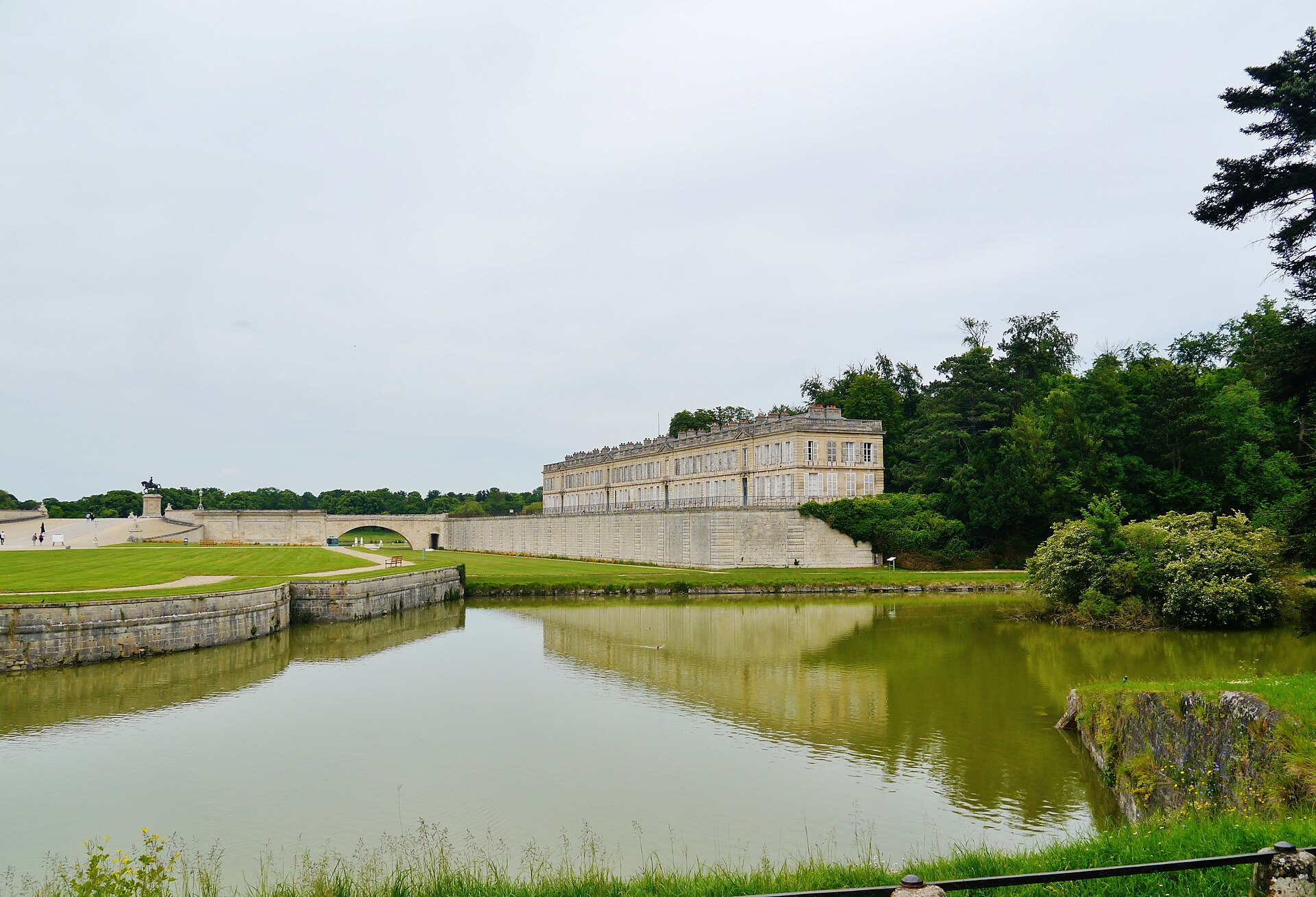
The Man Behind the Stables
Louis-Henri de Bourbon, the 8th Prince de Condé, was one of the most influential men in early 18th-century France. He served as chief minister to the young Louis XV, commanded armies, and controlled vast estates across the country. He was also, by most accounts, deeply eccentric.
His most firmly held belief — not whispered privately but acted upon publicly — was that after death, he would be reincarnated as a horse. This was no fleeting obsession. It informed his building decisions in a way that still shapes the landscape of Chantilly today.
If he was going to return as a horse, he intended to live somewhere worthy of his station.
Stables Fit for a Prince
The Grandes Écuries — the Great Stables — still stand at Chantilly today, 45 minutes north of Paris. Architect Jean Aubert designed them at a scale that startled even the French court. The main building stretches 186 metres. Inside, 240 horses were housed in carved stone stalls beneath arched ceilings of remarkable craftsmanship.
Five hundred hunting dogs had their own quarters nearby. Ninety-nine coaches could be stored under the same roof. The complex had its own interior courtyard, a riding school, and staff accommodation.
When the stables were completed in 1740, they were widely considered among the finest buildings in France. Louis XV came to visit and, by some accounts, was visibly envious. The Prince had built something that outshone royal works.
The Château That Came Second
Here is the odd twist. The grand turreted château you see in photographs of Chantilly is not the original. The earlier château was largely demolished during the Revolution. What stands today was rebuilt almost entirely in the 1870s and 1880s by the Duke of Aumale.
The stables, however, survived unchanged through the Revolution, the Napoleonic era, and two world wars. The building meant for horses outlasted the one meant for humans by more than a century without significant alteration.
Walking the grounds today, you feel a strange imbalance. The stables face the château with an almost competitive grandeur. In a way, they won.
Enjoying this? 7,000 France lovers get stories like this every week. Subscribe free →
What Chantilly Became
The estate that surrounds both buildings is remarkable. The forest covers 63 square kilometres — a former royal hunting ground. The Hippodrome de Chantilly, one of France’s most celebrated horse racing venues, runs alongside the estate. Horses have been central to Chantilly life for more than 300 years.
Inside the stables, the Musée du Cheval celebrates the history of horses in French culture — from medieval tournaments to classic races. It is one of the more unusual museums in Europe. The Prince’s peculiar logic, in a way, is quietly honoured by its existence.
Chantilly makes for a perfect day trip from Paris — direct trains run from Gare du Nord in under an hour. Most visitors arrive expecting a château and leave astonished by the stables.
The Art Collection Nobody Expects
The château itself holds one of France’s most important private art collections. The Condé Museum is second only to the Louvre in scale and quality. Raphael, Botticelli, Poussin, Ingres — displayed in rooms that have barely changed since the 19th century.
The Duke of Aumale, who rebuilt the château and assembled much of the collection, left it to the Institut de France on a single condition: nothing could ever be moved, sold, or lent. Every painting remains exactly where he placed it.
It is the kind of place that rewards slow visitors. Those who rush to see the château often miss the stables. Those who start with the stables tend to linger much longer than planned.
If you are planning your trip to France, Chantilly belongs on your list — not as an afterthought, but as a destination in its own right. It pairs well with a visit to the Loire Valley châteaux, where France’s other great architectural obsessions live.
The racing season brings a different crowd every June, when France’s classic races — the Prix du Jockey Club and the Prix de Diane — are run here. The town fills with people in summer hats and the atmosphere is unlike anything else in the French calendar.
Still Waiting
Whatever you make of the Prince’s beliefs, it is impossible to stand inside the Grandes Écuries and dismiss them entirely. The scale, the craftsmanship, the sheer architectural seriousness of the place — something was driving this beyond mere vanity.
He built these stables for a version of himself he had not yet become. Three centuries later, they are still the finest thing at Chantilly. And in a strange, impossible way — perhaps the finest compliment the Prince ever paid to a horse.
Join 7,000+ France Lovers
Three times a week, get France’s hidden gems, seasonal guides, local stories, and the art of la vie française — straight to your inbox.
Subscribe free — enter your email:
Free forever · Unsubscribe anytime
🇫🇷 You Might Also Love
Tours & experiences you might love


Powered by Viator. Some links are affiliate links — we may earn a small commission at no extra cost to you.

Leave a Reply