The first morning of your trip to France arrives. You wander downstairs, stomach rumbling, half-expecting a buffet spread of eggs, bacon, toast and orange juice. What you find instead is a basket of bread, some butter, jam, and a pot of coffee. Welcome to le petit déjeuner — the French breakfast — and it is one of the most delightful food experiences you will have in France, once you understand what it actually is.
French breakfast is simpler, lighter, and more elegant than what most English-speaking visitors expect. There are no fry-ups, no stacks of pancakes, no bottomless coffee refills. Instead, there is extraordinary bread, perfect pastry, and strong coffee served with real intention. The trick is knowing where to go, what to order, and how to enjoy it like the French do.
What Is a French Breakfast, Exactly?
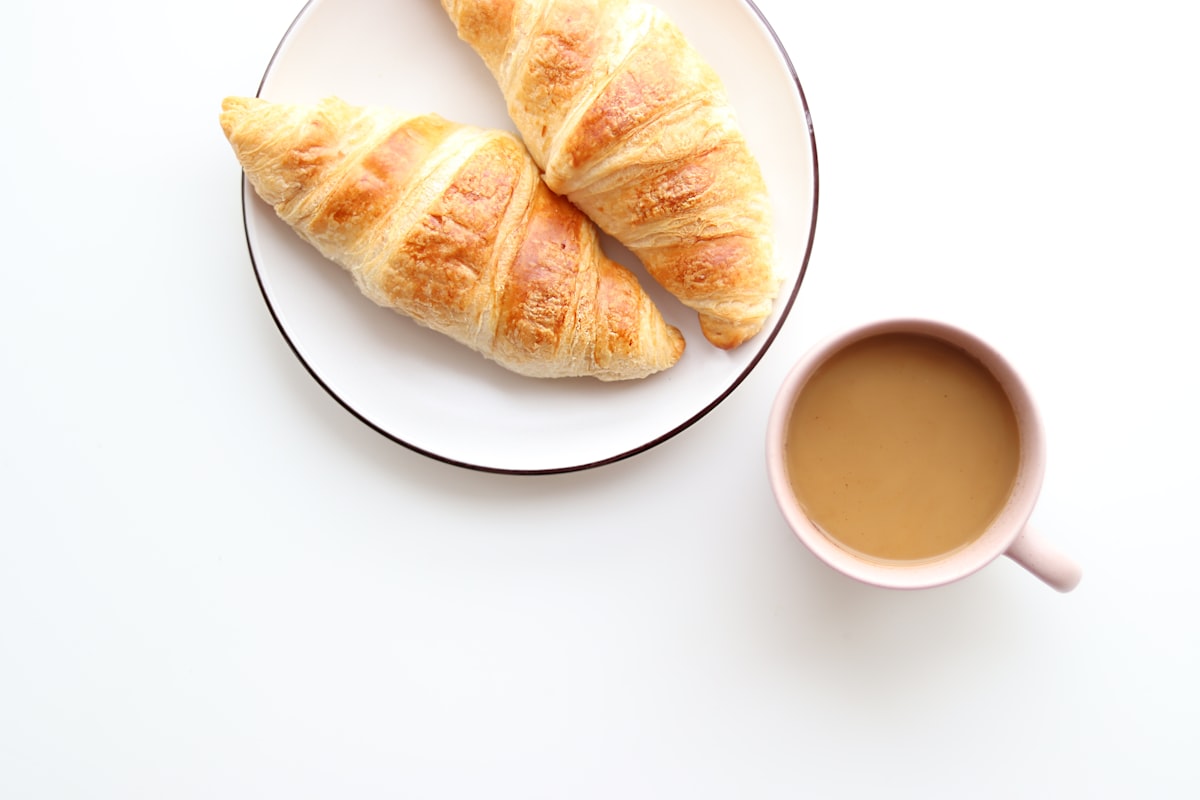
Le petit déjeuner translates literally as “the little lunch” — and that name tells you everything. The French treat breakfast as a small, sweet meal to start the day. It is not the main event. It is not a chance to load up on protein. It is, quite simply, good bread, something sweet, and a hot drink.
A typical French breakfast at home consists of a tartine — a piece of baguette or sliced bread, toasted or not, spread with butter and jam — alongside a bowl or large cup of coffee, tea, or hot chocolate. That is it. Children might have cereal or a biscuit. Adults might add a croissant on the weekend. But the core of the French breakfast has not changed in generations: bread, butter, jam, coffee.
This simplicity can be startling if you are used to a full English or American-style breakfast. But give it two mornings and you will understand the appeal. There is something deeply civilised about sitting at a small table with a perfect croissant, a pot of apricot jam, and a large café crème, watching the morning unfold through a café window.
The Boulangerie: Your First Stop Every Morning
The boulangerie is the heartbeat of every French neighbourhood. By law, a shop can only call itself a boulangerie if it bakes its bread on the premises — so when you see that word above the door, you know the bread and pastries inside were made that morning, probably before dawn.
For the best selection, arrive early. Most boulangeries open between 6:30 and 7:00 in the morning, and the first batches of croissants are the finest. By 9:00, the most popular items may already be gone. The French know this, which is why you will see queues forming at 7:15 on any given weekday.
What to Order at the Boulangerie
🇫🇷 Discover the France Most Tourists Never Find
Get our free guide to 25 hidden villages of France — then join 7,000+ readers for weekly stories about places most guidebooks never mention.
Get Your Free Village Guide →Here is your essential guide to the pastry counter:
Croissant — The classic. A proper French croissant is made with pure butter (au beurre), which gives it a rich, golden colour and flaky layers that shatter when you bite into them. If it looks pale and doughy, it was likely made with margarine — move on. A good croissant should feel light, smell buttery, and leave crumbs everywhere. That is how you know it is real.
Pain au chocolat — The same buttery, laminated dough as a croissant, but rolled into a rectangular shape with two batons of dark chocolate inside. In the southwest of France, you will hear this called a chocolatine — and this naming debate is one of the great culinary arguments of France. Order whichever name the locals use and enjoy it warm.
Chausson aux pommes — An apple turnover made with puff pastry and a filling of stewed apple compote. Less well known among tourists but beloved by the French. It is slightly sweet, slightly tart, and makes a wonderful change from chocolate and butter.
Pain aux raisins — A spiral of brioche-like dough studded with raisins and glazed with a light custard. Children adore these, and frankly, so do most adults.
Baguette tradition — Not a pastry, but essential. The baguette tradition (or baguette de tradition française) is made without additives, using only flour, water, salt, and yeast. It has a crackly, golden crust and a soft, airy interior with an almost sweet, wheaty flavour. This is what you want for your morning tartine. Ask for a tradition rather than an ordinary baguette — the difference is remarkable.
The Café: Understanding French Coffee
After the boulangerie, the café is the second essential stop — or, if you prefer, your only stop, since many cafés serve pastries alongside coffee. But let us be honest: the real reason to sit in a French café in the morning is the coffee and the atmosphere.
French coffee culture is nothing like what you may be used to at home. There is no filter coffee. There are no ventis, grandes, or flat whites. Coffee in France is simple, strong, and served in small quantities. Here is what to order:
Un café — A single espresso. This is the default. If you simply say “un café, s’il vous plaît,” this is what you will receive: a small, powerful shot of coffee in a tiny cup. It is meant to be drunk quickly, often standing at the bar.
Un café crème — Espresso with steamed milk, roughly equivalent to a latte but typically smaller. This is the quintessential French breakfast drink. Order a café crème in the morning and you will fit right in. Order one after lunch and the waiter may raise an eyebrow — in France, milky coffee is a morning thing only.
Un noisette — An espresso with just a dash of hot milk or foam, similar to a macchiato. The name means “hazelnut,” referring to the colour the milk creates. If you find a café crème too milky, this is your order.
Un allongé — An espresso lengthened with hot water, similar to an Americano. If you find straight espresso too intense, an allongé gives you more volume without milk.
Un chocolat chaud — Hot chocolate, and in France it is made properly: thick, rich, often with real melted chocolate rather than powder. This is not just for children. Many French adults drink hot chocolate at breakfast, particularly in winter, and there is absolutely no shame in ordering one.
What you will NOT find: filter coffee, drip coffee, or anything resembling a bottomless cup. If your hotel offers “American coffee,” it is usually an allongé or, occasionally, a filter machine tucked in a corner for international guests. Embrace the espresso-based system — it is better.
The Tartine: The Real French Breakfast
If the croissant is the glamorous star of French breakfast, the tartine is the quiet hero that actually feeds the nation every morning. A tartine is simply a piece of bread — usually half a baguette, sliced lengthways — spread with butter and jam. That is all. And it is magnificent.
The key is the quality of each component. The bread must be fresh, ideally a baguette tradition bought that morning. The butter should be good French butter — salted or unsalted, depending on the region (Brittany favours salted; most of the rest of France uses unsalted). The jam can be anything: apricot is the national favourite, followed by strawberry, raspberry, and cherry. Many households make their own.
You will see tartines served at every hotel breakfast, every café, and in every French home. The bread may come as sliced baguette, as toasted bread (pain grillé), or occasionally as brioche. Some people dip their tartine into their coffee. This is not considered rude — it is considered normal.
The tartine is the reason the French do not need a complicated breakfast. When your bread is this good and your butter is this rich, simplicity is not a limitation. It is a luxury.
What NOT to Expect at a French Breakfast
Managing expectations will save you from disappointment on your first morning. Here is what you will not find at a typical French breakfast table:
No eggs. The French eat eggs, of course, but not at breakfast. Eggs are for lunch or dinner — in quiches, omelettes, or salads. If your hotel offers scrambled eggs at the breakfast buffet, it is catering to international guests, not following French tradition.
No bacon or sausages. Cooked meat at breakfast is simply not part of French food culture. Charcuterie is for apéritif, not for seven in the morning.
No pancakes or waffles. Crêpes and gaufres exist in France, obviously, but they are street food, dessert, or an afternoon snack — not breakfast.
No toast as you know it. French bread is not sliced sandwich bread. If something is “toasted,” it means lightly grilled or dried slices of baguette, not what comes out of a toaster at home.
No orange juice (usually). Freshly squeezed orange juice (jus d’orange pressé) is available in many cafés and hotels, but it is not the automatic accompaniment to breakfast that it is in Britain or America. If you want it, ask for it.
Regional Variations Worth Knowing
While the basics of French breakfast remain consistent across the country, regional touches add variety:
In Brittany, expect salted butter on everything and possibly a kouign-amann — a buttery, caramelised pastry that is outrageously rich and utterly addictive. Breton crêpes may also appear at breakfast in some guesthouses.
In Alsace, breakfast leans more Germanic. You may find cold meats, cheese, and darker breads alongside the usual pastries. The kougelhopf, a ring-shaped brioche-like cake studded with almonds, is a regional breakfast staple.
In Provence, breakfast might include lavender honey drizzled over bread, fresh figs in season, or a slice of fougasse — a flatbread flavoured with olive oil, herbs, or olives.
In the Basque Country, you may encounter gâteau basque — a dense, buttery cake filled with cherry jam or pastry cream — alongside strong coffee. The Basque take their breakfast pastries seriously.
In Normandy, the butter is exceptional (look for Isigny), and you may find teurgoule, a slow-baked cinnamon rice pudding, offered at guesthouse breakfasts.
Hotel Breakfast vs. Doing It Yourself
Most French hotels offer le petit déjeuner for an additional charge, typically between 10 and 18 euros per person. At a basic hotel, this means a buffet of bread, croissants, jam, butter, yoghurt, cereal, juice, and coffee. At a good hotel, it means all of that plus fresh fruit, charcuterie, cheese, eggs, and excellent pastries.
Is it worth paying for? Sometimes. If you are staying at a charming guesthouse or a hotel with a particularly good breakfast reputation, the experience can be lovely — especially if it is served in a courtyard or dining room with character.
But here is the honest truth: you will almost always have a better breakfast by walking five minutes to the nearest boulangerie, buying a croissant and a baguette, and taking them to a café. The bread will be fresher, the pastries will be better, the coffee will be stronger, and the whole experience will feel more authentically French. You will also spend roughly 5 to 8 euros instead of 15.
The exception is if your hotel rate includes breakfast. In that case, eat it — and then go to the boulangerie anyway for a mid-morning croissant. Nobody is judging.
How to Order: Essential French Phrases
You do not need to speak fluent French to order breakfast, but a few phrases will make the experience smoother and earn you a warmer reception:
- “Bonjour” — Always, always say this first. Before you order anything, greet the person. This is non-negotiable in France.
- “Un croissant, s’il vous plaît” — One croissant, please.
- “Deux pains au chocolat, s’il vous plaît” — Two pains au chocolat, please.
- “Une baguette tradition, s’il vous plaît” — One traditional baguette, please.
- “Un café crème, s’il vous plaît” — One café crème, please.
- “L’addition, s’il vous plaît” — The bill, please (in a café).
- “C’est tout, merci” — That’s everything, thank you.
- “Pas trop cuit” — Not too well baked (if choosing a baguette — the French often specify how brown they want it).
A smile goes a long way, and making the effort in French — even imperfectly — is always appreciated.
What Does a French Breakfast Cost?
One of the best things about breakfast in France is how affordable it is when you do it the local way:
- Croissant: 1.10–1.50 euros
- Pain au chocolat: 1.20–1.60 euros
- Baguette tradition: 1.20–1.50 euros
- Café crème (at a café): 3.00–4.50 euros
- Espresso (un café): 1.50–2.50 euros
- Chocolat chaud: 3.50–5.00 euros
- Jus d’orange pressé: 4.00–6.00 euros
A full French breakfast — croissant, tartine, café crème — bought at a boulangerie and café will typically cost between 5 and 8 euros per person. In Paris, prices are at the higher end; in smaller towns, you will often pay less. Compare this to a 15-euro hotel breakfast buffet, and the boulangerie route wins on both quality and value every time.
The Chains vs. Independent Boulangeries
You will see familiar names across France: Paul, with its dark green awnings, is everywhere — in city centres, train stations, and airports. Maison Kayser (now Eric Kayser) has a loyal following for its sourdough-based breads. La Mie Câline and Marie Blachère are popular regional chains.
Are they bad? No. Paul, in particular, produces consistently decent croissants and reliable coffee. In a pinch — at a train station at 6:00 in the morning, for instance — these chains are a perfectly fine option.
But independent boulangeries are almost always better. The bread is made in smaller batches with more care. The recipes may be family secrets passed down through generations. The croissants are hand-shaped rather than machine-formed. And the experience of buying from a neighbourhood baker who knows the regulars by name is part of the joy of being in France.
Look for boulangeries that display awards in the window — many participate in regional and national competitions for the best baguette or best croissant, and the winners are rightfully proud of their titles. In Paris, the winner of the annual Grand Prix de la Baguette supplies bread to the Élysée Palace for a year. These are artisans at the peak of their craft.
A Morning Routine Worth Adopting
After a few days in France, you will likely fall into a rhythm. Wake up. Walk to the boulangerie. Buy a croissant and a baguette tradition. Carry the baguette under your arm (you will feel wonderfully French doing this). Sit at a café terrace. Order a café crème. Tear off a piece of baguette, spread it with butter and jam. Watch the morning unfold.
This is not just breakfast. This is one of the small, daily pleasures that makes France so deeply appealing. It is not about luxury or expense — it is about quality, simplicity, and the belief that even the first meal of the day deserves to be done well.
The French breakfast may surprise you with its simplicity. But give it a chance, and it will win you over completely.
Love France? So Do We.
Join our free newsletter and get the best of France — travel tips, hidden villages, food traditions, and cultural stories — straight to your inbox every week.
Free. No spam. Unsubscribe anytime.
📥 Free Download: France Travel Planning Guide
Itineraries, insider tips, and the places you must not miss on your next trip to France.
🇫🇷 You Might Also Love
Tours & experiences you might love


Powered by Viator. Some links are affiliate links — we may earn a small commission at no extra cost to you.

Leave a Reply