
Most people picture France as croissants and châteaux. Stone villages. Lavender fields. The Eiffel Tower at dusk.
They are not wrong. But they are missing something — something wild, windswept, and entirely unexpected.
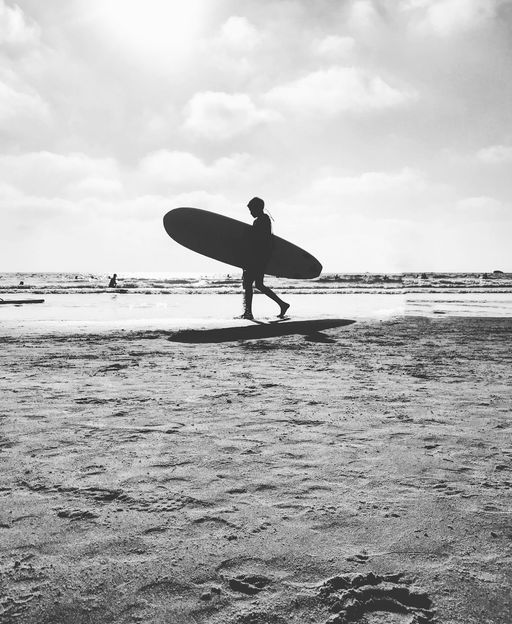
France has a world-class surf coast. It stretches for nearly 200 kilometres along the southwest, from the mouth of the Gironde estuary down to the edge of the Basque Country. Most visitors fly over it on their way to Bordeaux or Biarritz. Almost none of them stop.
The Coast That France Never Bothered to Market
The Landes coast runs south from the Médoc. There are no cliffside villages here. No medieval hill towns. No chic promenades lined with brasseries.
There is just the Atlantic, the sand, and the trees.
Behind nearly every beach, a vast pine forest stretches inland as far as you can see. This is the Forêt des Landes — the largest man-made forest in Western Europe. Napoleon III ordered it planted in the 19th century to drain the marshy, malarial lowlands that had made this coast nearly uninhabitable.
The result is one of the strangest and most beautiful landscapes in France. Dark pine trunks, salt air, and the sound of the ocean filtering through the trees. It feels nothing like the rest of the country.
How Hossegor Became Europe’s Surf Capital
Somewhere in the mid-1970s, a few surfers from California and Australia arrived in a small town called Hossegor and could not believe what they found.
The beach break there is exceptional. A particular configuration of sandbars — shaped by the powerful Atlantic swell sweeping in from the Bay of Biscay — creates some of the most consistent, powerful waves in Europe. Surfers call it a hollow, fast break. The kind that punishes amateurs and rewards the committed.
Word spread. By the 1990s, the major surf brands had set up headquarters here. Today, the World Surf League holds one of its most prestigious events on these beaches every autumn. The best surfers in the world come to Hossegor each October.
And yet, outside the surf world, almost nobody in France talks about it.
Enjoying this? 7,000 France lovers get stories like this every week. Subscribe free →
The Calm Behind the Break
What makes Hossegor unusual is the contrast between the ocean and the town itself.
The beach faces the full force of the Atlantic. The waves are serious. The rips can be strong. But behind the beach, a saltwater lake sits perfectly still. Lac d’Hossegor is warm, shallow, and calm. Families swim here while the surfers charge the ocean a few hundred metres away.
The town centre is low-rise, relaxed, and genuinely local. There is no luxury hotel strip. No cruise ship pier. Pine trees grow up to the edges of the streets. In the morning, you can drink a coffee in the shade and hear birds, and faintly, the ocean.
This is a France that operates at its own pace.
The Rhythm of the Coast
In July and August, the Landes coast fills with French families on holiday. The campsite culture here is strong — long-established sites set in the pines, where the same families return every summer. It is quiet, domestic, and deeply French.
If you come in June or September, the mood shifts. The beaches are quieter. The surf is often better — autumn swells begin to build in September. The towns are easier to move around in.
Further south, the fishing town of Capbreton sits at the mouth of an underwater canyon called the Gouf de Capbreton. This canyon channels cold, deep Atlantic water up to the surface, making the light extraordinary in the late afternoon. Fishermen still launch boats here. The harbour market sells the morning catch.
If you are planning to explore the southwest further, the Basque Country begins just a short drive south — and why that region feels so different from the rest of France is a story worth understanding before you arrive.
Getting There and Getting the Most From It
The nearest major hub is Bordeaux, about 90 minutes north by car or train. Biarritz has its own airport with seasonal routes from across Europe.
From either direction, the coast road changes as you move south of Arcachon. The tourist infrastructure drops away. The landscape opens up. You begin to feel like you have found something not quite meant to be found.
The France planning hub is a good place to start if you are building a trip around the southwest — it covers transport, regions and the best times to visit each part of the country.
Most visitors to France never make it here. That is, in many ways, exactly its appeal.
Join 7,000+ France Lovers
Three times a week, get France’s hidden gems, seasonal guides, local stories, and the art of la vie française — straight to your inbox.
Subscribe free — enter your email:
🇫🇷 Discover the France Most Tourists Never Find
Get our free guide to 25 hidden villages of France — then join 7,000+ readers for weekly stories about places most guidebooks never mention.
Get Your Free Village Guide →Free forever · Unsubscribe anytime
🇫🇷 You Might Also Love
Tours & experiences you might love


Powered by Viator. Some links are affiliate links — we may earn a small commission at no extra cost to you.

Leave a Reply