
France is made up of 13 administrative regions and dozens of distinct cultural areas, each with its own food, language history, landscape, and identity. When people ask which French region has stolen your heart, they rarely mean the official administrative boundaries. They mean the place that made them stop, look around, and think: I could live here.
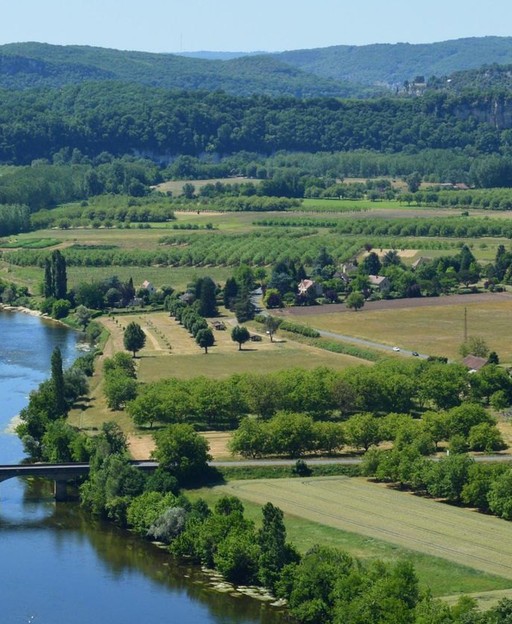
This article looks at four regions that come up again and again in that conversation — Provence, Brittany, Alsace, and the Loire Valley — and what makes each of them genuinely different from the others.
If France has got under your skin, you are not alone. Subscribe to our free newsletter for stories, travel ideas, and insider tips from all across the country.
Provence: Sun, Lavender, and Roman Ruins
Provence sits in the south-east, bordered by the Alps to the north and the Mediterranean to the south. It is the region most people picture when they think of France: rows of purple lavender, stone farmhouses baking in summer heat, and markets overflowing with olives, herbs, and honey.
But Provence offers more than scenery. It has some of the best-preserved Roman architecture outside of Italy. The amphitheatre in Arles still hosts events. The theatre and triumphal arch at Orange are UNESCO-listed and genuinely impressive in scale. The Pont du Gard aqueduct, built without mortar, has stood for nearly 2,000 years.
The food here is distinct from the rest of France. Olive oil replaces butter. Tomatoes, courgettes, and aubergines form the base of most dishes. Bouillabaisse — the fish stew of Marseille — is more complicated to make properly than most cookbooks admit, and the debate over which fish belong in it is taken very seriously by locals.
The lavender season runs roughly from late June to mid-August, peaking around mid-July in the Valensole plateau. Outside of that window, Provence is quieter, more affordable, and arguably more enjoyable. The Luberon villages — Gordes, Bonnieux, Roussillon — are worth visiting year-round, though summers bring crowds.
Aix-en-Provence is the region’s most liveable city: a university town with wide, plane-tree-lined boulevards, excellent markets on Tuesdays, Thursdays, and Saturdays, and a strong café culture that has nothing to do with tourism.
Brittany: Coastline, Crêpes, and Celtic Roots
Brittany juts out into the Atlantic in the far north-west of France, and it feels like a different country. Historically, it was. Brittany maintained its own parliament and legal system until the French Revolution, and the Breton language — closely related to Welsh and Cornish — is still spoken by an estimated 200,000 people today.
The coastline is the main draw: 2,700 kilometres of it, ranging from the pink granite cliffs of the Côte de Granit Rose near Ploumanac’h to the sandy beaches of the Côte d’Émeraude around Saint-Malo. The sea here is not the warm Mediterranean. It is cold, powerful, and the tides are among the largest in Europe. The bay of Mont-Saint-Michel has a tidal range of up to 14 metres.
The food in Brittany is built around two things: seafood and buckwheat. Oysters from the Belon River and the bay of Cancale are eaten simply, with bread and butter. Galettes — savoury crêpes made from buckwheat flour — are a staple, filled with egg, ham, and cheese. Sweet crêpes follow. Cider and local beer replace wine as the drink of choice.
The medieval town of Dinan, set above the Rance estuary, is one of the best-preserved in France. Quimper, with its Gothic cathedral and traditional Breton pottery, gives a clearer picture of the region’s cultural identity than the tourist-heavy fishing ports. Saint-Malo, a walled port city with a remarkable history of privateers and explorers, is worth a full day.
Brittany rewards slower travel. The interior — the Argoat — is largely overlooked, but it has standing stones at Carnac (around 3,000 of them, dating back to 3300 BC), dense forests, and a string of canal routes ideal for walking or cycling.
Want more like this? Join our free France newsletter and get regional guides, hidden towns, and practical travel tips delivered every week.
Alsace: Half-Timbered Villages and the Wine Route
Alsace is in the north-east, squeezed between the Rhine and the Vosges mountains, and it has changed hands between France and Germany four times since 1871. That history has produced something unique: a region that feels unmistakably French but carries the architecture, food culture, and dialect of the German-speaking world.
The villages here — Eguisheim, Riquewihr, Kaysersberg, Ribeauvillé — are the most photographed in France. The half-timbered houses painted in ochre, rose, and pale green line cobbled streets without a gap. They look constructed for a film set but have been standing since the 15th and 16th centuries.
The Alsace Wine Route runs for 170 kilometres from Marlenheim in the north to Thann in the south, passing through most of the famous villages. The wines are mostly white: Riesling, Gewurztraminer, Pinot Gris, and Pinot Blanc. Alsatian Riesling is drier than its German counterpart and pairs well with the local food — tarte flambée (thin-crust pizza with crème fraîche, onions, and lardons), choucroute garnie (sauerkraut with various meats and potatoes), and baeckeoffe (a slow-cooked meat and potato casserole).
Strasbourg is the regional capital and one of the most significant cities in Europe — home to the European Parliament and the Council of Europe, it sits on the border between France and Germany in a way that makes both feel equally present. The cathedral, built from pink Vosges sandstone, took more than three centuries to complete and was the tallest building in the world from 1647 to 1874.
Winter is arguably the best time to visit Alsace. The Christmas markets, which have been running in Strasbourg since 1570, draw visitors from across Europe and remain largely rooted in tradition rather than pure commercialism. Colmar’s market, set around the canals of the Petite Venise district, is equally worth attending.
The Loire Valley: Châteaux, Gardens, and the Royal Past
The Loire Valley stretches for about 280 kilometres through central France and contains more than 300 châteaux. For roughly a century — from the late 1400s to the mid-1500s — this was the centre of French royal power, and the architecture shows it.
Chambord is the largest, with 440 rooms and a famous double-helix staircase, possibly designed by Leonardo da Vinci, who spent the last three years of his life in the region at the invitation of François I. Chenonceau spans the Cher river on a series of arches and is the most visited château in France after Versailles. Villandry has no royal history to speak of but contains the most elaborate formal gardens in France, covering six hectares across multiple terraces.
The Loire Valley was designated a UNESCO World Heritage site in 2000, covering a 280-kilometre stretch of the river and its immediate surroundings. The designation recognises not just the châteaux but the wider cultural landscape — the light, the flatness of the valley floor, the gentle pace of the river.
The region also produces serious wine. Muscadet, Sancerre, Pouilly-Fumé, Vouvray, and Chinon are all Loire wines with distinct characters. The Loire appellation system is one of the most complex in France, covering around 60 different appellations along the river’s length.
Tours is the practical base for exploring the valley: well connected by rail, with a lively old quarter, a good food market, and easy cycling access to the nearest châteaux along dedicated routes that follow the river and its tributaries.
How to Choose
The answer depends on what you are actually after. Provence and Alsace are more immediately rewarding on a short trip — the villages are compact, the scenery is concentrated, and the food and wine culture is easy to access. Brittany and the Loire Valley tend to benefit from slower travel, more time, and a willingness to move beyond the obvious highlights.
Climate matters too. Provence and the Loire are warmest in summer. Brittany is mild but wet and unpredictable year-round. Alsace has cold winters and warm summers, with some of the highest sunshine hours in France despite its northern latitude.
Budget is another factor. Provence in July and August is expensive, particularly accommodation in the Luberon and along the coast. Brittany is generally more affordable. Alsace prices spike in December during market season. The Loire Valley is fairly consistent year-round.
There is no wrong answer. Every region in France has something that other regions cannot replicate. The best approach is to visit one properly rather than rushing through all four.
If you have already found your favourite French region — or if you are still looking — subscribe to our free weekly newsletter for in-depth guides to every corner of France, from the Basque Country to the Alps and everywhere in between.
Tours & experiences you might love


Powered by Viator. Some links are affiliate links — we may earn a small commission at no extra cost to you.

Leave a Reply