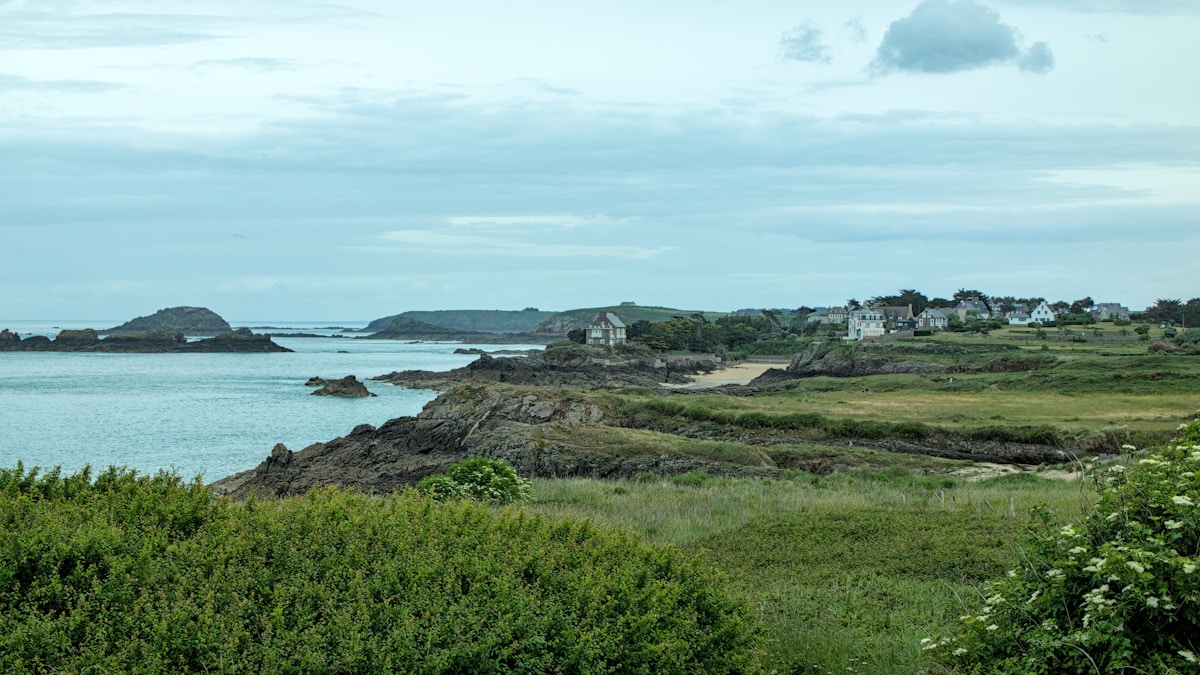
Brittany is the part of France that feels least like France — and that is precisely its charm. Jutting out into the Atlantic on the nation’s far north-western corner, this proudly Celtic peninsula has its own language, its own flag, its own music, and a coastline so dramatic it could silence even the most seasoned traveller. Granite headlands crumble into turquoise coves. Medieval walled towns guard harbours where fishing boats still land the morning catch. Neolithic standing stones predate the pyramids. And in every crêperie, the galettes arrive golden and crisp, washed down with cool cider from earthenware bowls.
If you have been dreaming of a France beyond Paris and the Riviera — wilder, quieter, and utterly unforgettable — Brittany is where you need to be. This guide covers the region’s essential destinations, its remarkable food, the practicalities of getting there, and the Celtic culture that makes it unlike anywhere else in the country.
Love France? So do we. Join thousands of fellow Francophiles and get our free weekly newsletter — the best of French travel, food, and culture delivered every week. Subscribe here.
The Unmissable Destinations of Brittany
Saint-Malo: The Corsair City
No Brittany travel guide can begin anywhere other than Saint-Malo. This magnificent walled city rises from the sea like a granite fortress, its ramparts encircling a dense maze of cobbled streets, seafood restaurants, and boutiques selling Breton striped tops. Walk the full circuit of the walls at high tide, when the waves crash against the base of the fortifications, and you will understand why this was once home to France’s most feared corsairs — state-sanctioned pirates who made fortunes raiding English and Dutch shipping.
Beyond the walls, Saint-Malo boasts some of the finest beaches in northern France. The Grande Plage du Sillon stretches for nearly two kilometres, backed by a line of elegant belle époque hotels. At low tide, you can walk across the sand to the islands of Grand Bé (where the writer Chateaubriand is buried) and Petit Bé, with its 17th-century fort. Time your visit around the extraordinary tides — the difference between high and low water here can exceed twelve metres, among the greatest in Europe.
Dinan: A Medieval Masterpiece
🇫🇷 Discover the France Most Tourists Never Find
Get our free guide to 25 hidden villages of France — then join 7,000+ readers for weekly stories about places most guidebooks never mention.
Get Your Free Village Guide →Half an hour inland from Saint-Malo, Dinan is one of the best-preserved medieval towns in all of Brittany. Perched high above the River Rance, its half-timbered houses lean over steep cobbled lanes that wind down to a tiny harbour. The 14th-century ramparts are still largely intact, and the view from the Tour de l’Horloge (clock tower) takes in a jumble of slate roofs, church spires, and the green valley below.
Thursday is market day, when the Place du Guesclin fills with stalls selling local cheeses, cider, honey, and crêpes made to order. It is the perfect place to stock up on picnic supplies before walking the towpath along the Rance, which connects Dinan to the coast at Saint-Malo via a beautiful canal route popular with cyclists and walkers alike.
Carnac: Stones Older Than Stonehenge
On the southern coast of Brittany, the small town of Carnac is home to one of the most extraordinary prehistoric sites on Earth. More than 3,000 standing stones — menhirs — are arranged in parallel rows stretching for over three kilometres across the heathland. Erected between 4500 and 3300 BC, they are older than Stonehenge by a thousand years and older than the Egyptian pyramids.
Nobody knows for certain why they were placed here. Theories range from astronomical observatories to religious processional routes to markers for the dead. What is beyond dispute is the sheer, humbling scale of the place. Visit early in the morning or late in the evening, when the light is low and the tour groups have gone, and you will feel the weight of five millennia pressing down on the landscape. The Musée de Préhistoire in town provides excellent context.
Quimper: The Heart of Breton Culture
If you want to understand what makes Brittany culturally distinct from the rest of France, Quimper is the place to start. The historic capital of Cornouaille, it sits at the confluence of two rivers and is dominated by the soaring twin spires of the Cathédrale Saint-Corentin, one of the finest Gothic churches in the region.
Quimper has been famous for its faïence pottery since the late 17th century, and the HB-Henriot factory still produces hand-painted pieces in traditional designs — bold peasant figures, floral borders, and the distinctive Breton blue-and-yellow colour palette. The Musée de la Faïence is worth an hour, and the factory shop is dangerous for anyone who loves ceramics. Beyond pottery, Quimper is the best base for exploring the rugged Finistère coast, and its restaurant scene punches well above its weight for a town of its size.
The Pink Granite Coast and Ploumanac’h
Brittany’s northern coast between Perros-Guirec and Trébeurden is known as the Côte de Granit Rose — the Pink Granite Coast — and it is one of the most visually striking stretches of shoreline in France. Enormous boulders of rose-tinted granite, sculpted into fantastic shapes by millennia of wind and waves, tumble down to crystal-clear water. Some resemble animals, others mushrooms or human faces.
The Sentier des Douaniers (customs officers’ path) from Perros-Guirec to Ploumanac’h is the essential walk, taking roughly two hours along the clifftops with jaw-dropping views at every turn. Ploumanac’h itself was voted France’s favourite village in 2015, and with its pink granite lighthouse, tiny harbour, and unspoilt beaches, it is easy to see why. Come in the late afternoon, when the setting sun turns the rocks an almost impossible shade of salmon pink.
Planning a trip to France? Our Planning Hub has everything you need — from transport tips to regional itineraries. And if you want weekly inspiration, join our free newsletter.
Belle-Île-en-Mer: The Island Escape
The largest of Brittany’s islands, Belle-Île-en-Mer sits fourteen kilometres off the coast of Quiberon and is reached by a 45-minute ferry crossing. It is a world apart — barely seventeen kilometres long, with a wild, wave-battered western coast of cliffs and grottos and a gentler eastern shore of sandy beaches and sheltered coves.
The island’s main town, Le Palais, is guarded by a massive Vauban citadel. Sauzon, to the north, is a picture-postcard fishing village with brightly painted houses reflected in a tiny harbour. The star attraction, however, is the Aiguilles de Port-Coton — a series of dramatic sea stacks on the western coast that Claude Monet painted 39 times during his stay in 1886. Hire a bicycle (the island is small enough to cover in a day) and bring a picnic. Belle-Île rewards those who linger.
Concarneau: The Walled Fishing Port
Concarneau is one of France’s busiest fishing ports, and the morning fish auction at the criée is a spectacular, chaotic affair. But it is the Ville Close — a tiny fortified island in the middle of the harbour, connected to the mainland by a drawbridge — that draws most visitors. Enclosed by thick granite walls, the Ville Close is packed with crêperies, gift shops, and a small but fascinating fishing museum.
If you visit in August, you may catch the Fête des Filets Bleus (Festival of the Blue Nets), one of the oldest folk festivals in Brittany, featuring traditional music, Breton dancing, and a grand procession through the town. Outside festival season, Concarneau is an excellent base for exploring the southern Finistère coast, with boat trips available to the offshore Glénan archipelago, whose white sand beaches and turquoise water look almost Caribbean.
Vannes and the Gulf of Morbihan
Vannes is a beautifully preserved medieval city on the edge of the Gulf of Morbihan, an enclosed inland sea dotted with more than forty islands. The old town is a delight — half-timbered houses, a 13th-century cathedral, lively covered markets, and some of the best restaurants in southern Brittany. The Wednesday and Saturday markets on the Place des Lices are outstanding.
From Vannes, boat trips explore the Gulf of Morbihan (the name means “little sea” in Breton), stopping at the Île-aux-Moines and the Île d’Arz. The calm, sheltered waters make it ideal for kayaking and sailing. The gulf is also a major site for oyster farming, and you can buy a dozen fresh oysters from waterside producers for a few euros — eaten standing up, with a squeeze of lemon and a glass of Muscadet.
Brest: Maritime Capital
Heavily bombed during the Second World War and rebuilt in functional concrete, Brest is not the prettiest city in Brittany. But it has a gritty, authentic energy that rewards visitors who look beyond the surface. The magnificent natural harbour — one of the finest in Europe — has been France’s principal Atlantic naval base since the 17th century, and the Musée National de la Marine, housed in the medieval Château de Brest, tells the story brilliantly.
Océanopolis, Brest’s world-class aquarium, is outstanding — three pavilions covering temperate, tropical, and polar marine environments. The city is also the start and finish point for the famous Brest International Maritime Festival, held every four years and attracting thousands of tall ships and traditional boats from around the world. The Rue de Siam, Brest’s main commercial street, has good restaurants and bars, and the waterfront area around the Port de Commerce has been smartly regenerated.
The Food of Brittany
Breton cuisine is built on superb raw materials, prepared with honest simplicity. It is comfort food of the highest order, and eating well in Brittany is remarkably affordable.
Crêpes and Galettes
The galette — a savoury buckwheat pancake — is the foundation of Breton cooking. The classic galette complète comes filled with ham, cheese, and a fried egg, but fillings range from andouille sausage and caramelised onions to scallops and leeks. Sweet crêpes, made with wheat flour, are served for dessert — the simplest (butter and sugar, or salted caramel) are often the best. Every town has its crêperie, and the proper accompaniment is always a bowl of dry cider, served cold.
Fruits de Mer
With hundreds of kilometres of coastline, Brittany is a paradise for seafood lovers. The plateau de fruits de mer — a towering platter of oysters, langoustines, crab, whelks, prawns, and clams, served on a bed of crushed ice — is the quintessential Breton feast. Cancale, just east of Saint-Malo, is France’s oyster capital, and you can buy them by the dozen from stalls along the waterfront, shucked while you wait. In restaurants, look for Breton lobster (homard bleu), coquilles Saint-Jacques (scallops, at their best from October to March), and cotriade, Brittany’s answer to bouillabaisse.
Cidre, Chouchen, and Breton Butter
Forget wine — Brittany drinks cider. The best is farmhouse cidre brut, dry and slightly sparkling, served in traditional ceramic bowls. For something stronger, try chouchen, a Breton mead made from fermented honey that dates back to Gaulish times — it is sweet, potent, and dangerously drinkable.
Breton butter, and particularly beurre demi-sel (salted butter), is legendary. The most famous producer is Jean-Yves Bordier in Saint-Malo, whose hand-shaped butter appears on the tables of Michelin-starred restaurants across France. And then there is kouign-amann — a rich, caramelised pastry from Douarnenez made from bread dough, butter, and sugar, folded and baked until golden and shatteringly crisp. It is quite possibly the greatest pastry in France, and that is not a claim made lightly.
Celtic Culture and Fest-Noz
Brittany is one of the six Celtic nations (alongside Ireland, Scotland, Wales, Cornwall, and the Isle of Man), and its Celtic heritage runs deep. The Breton language, Brezhoneg, closely related to Welsh and Cornish, is still spoken by around 200,000 people, and you will see bilingual road signs throughout the region. The black-and-white Gwenn-ha-Du flag flies everywhere.
The most vibrant expression of this culture is the Fest-Noz — literally “night festival” — a traditional Breton social gathering of music and dance, recognised by UNESCO as part of the Intangible Cultural Heritage of Humanity. Fest-Noz events happen year-round across Brittany, in village halls, barns, and open fields. The music is typically provided by pairs of singers or musicians playing bombarde (a Breton oboe) and biniou (Breton bagpipes), and the dances — circle dances, chain dances, and couples dances — are open to everyone. No experience is needed; someone will always show you the steps.
The Festival Interceltique de Lorient, held every August, is the grand showcase — ten days of Celtic music, dance, and culture drawing performers from all the Celtic nations and half a million visitors. It is one of the great cultural festivals of Europe.
Getting to Brittany
By air: Brest, Rennes, and Dinard all have airports with seasonal flights from the UK and other European cities. Nantes, just south of Brittany, is a larger hub with more year-round connections and easy access to southern Brittany by car or train.
By train: The TGV runs from Paris Montparnasse to Rennes in just 1 hour 25 minutes, and to Brest in around 3 hours 30 minutes. From Rennes, regional trains connect to Saint-Malo (50 minutes), Vannes, Quimper, and other key towns.
By ferry: Brittany Ferries operates crossings from Portsmouth and Plymouth to Saint-Malo and Roscoff, and from Cork to Roscoff. This is an excellent option if you want to bring a car, and the overnight crossings are comfortable — you arrive fresh in the morning, ready to explore.
By car: Brittany is well connected by motorway from Paris (roughly 4 hours to Rennes) and Normandy. Once in the region, a car is invaluable — many of the best coastal spots and villages are poorly served by public transport.
Best Time to Visit Brittany
The best months are May to September, with July and August being the warmest and busiest. June and September offer an excellent balance — long days, warm weather, manageable crowds, and lower prices. Spring (April-May) can be beautiful, with wildflowers covering the coastal paths, though the sea is still cold for swimming.
Brittany’s weather is maritime and changeable — even in summer, pack a waterproof jacket and be prepared for the occasional grey day. The upside is that the light is extraordinary: soft, silvery, and constantly shifting, which is exactly why so many painters (Monet, Gauguin, Matisse) were drawn here. Autumn and winter have their own appeal, particularly for storm-watching on the exposed western coasts, where Atlantic swells crash against the cliffs with staggering force.
Start Planning Your Brittany Trip
Brittany is one of France’s great underrated regions — a place where the landscape is wild, the history is ancient, the food is outstanding, and the culture is defiantly, joyfully its own. Whether you come for the standing stones or the seafood platters, the walled cities or the wild beaches, the Fest-Noz dancing or the kouign-amann, you will leave planning your return.
For more destination guides and practical travel advice, visit our France Planning Hub. And to receive weekly inspiration for your next French adventure, subscribe to our free newsletter — we would love to have you along for the journey.
Love France? So Do We.
Join our free newsletter and get the best of France — travel tips, hidden villages, food traditions, and cultural stories — straight to your inbox every week.
Thinking about it seriously?
If you’ve started actually planning a move, our complete our complete Moving to France guide walks through every step, every cost, and the paperwork that catches most people out.
Free. No spam. Unsubscribe anytime.
📥 Free Download: France Travel Planning Guide
Itineraries, insider tips, and the places you must not miss on your next trip to France.
🇫🇷 You Might Also Love
Tours & experiences you might love


Powered by Viator. Some links are affiliate links — we may earn a small commission at no extra cost to you.

Leave a Reply