
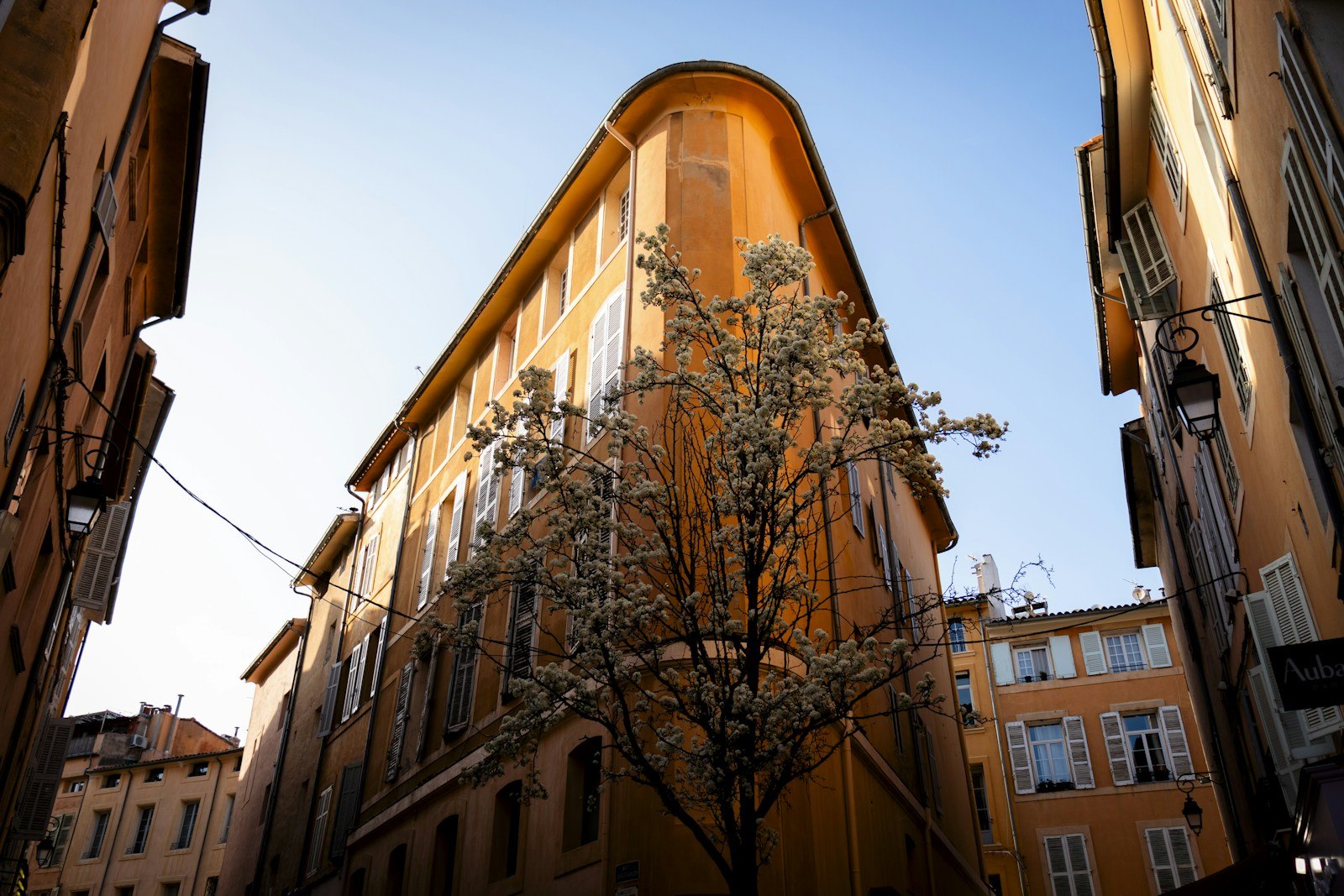
Most people who dream of living in France have had that fantasy moment — stepping out into the morning air with a café crème in hand, bread under one arm, absolutely nowhere to be. As a tourist, that feeling is wonderful. As a resident, your first morning is something else entirely.
It is not worse. In many ways it is better. But it is different — because you are not pretending. You live here now.
Here is what that first morning actually looks like, and what to do with it.
The Alarm Goes Off — and Everything Has Changed
The first thing you will notice, likely within minutes of waking up on your first real morning as a French resident, is silence. Not the silence of a hotel room, but the particular quiet of a place that knows you are staying.
There is no checkout. No group transfer. No schedule imposed by a travel itinerary. If you have chosen a village in Provence or the Dordogne, you might hear church bells. If you have moved to a mid-sized city like Nantes or Montpellier, you will hear delivery vans on narrow streets and the clatter of café chairs being set out on terraces.
Whatever you hear, it now belongs to your morning. That is the difference.
Go to the Boulangerie — and Learn How It Works
Your first task is simple. Go and buy bread.
Not because it is a charming tourist ritual — but because it is how France actually functions. The boulangerie is the centre of local morning life. Every village and neighbourhood has one, and it will likely be open from around 7am. Queues are normal. Conversations are quick and polite. And this is where you begin to understand your local community.
Do not rush. Say bonjour when you walk in. Say au revoir when you leave. These are not optional. Failing to greet people in a French shop or office is considered rude, not neutral. Get comfortable with it on day one and it will make every interaction easier for years to come.
Order a baguette tradition if you are unsure what to ask for — it is the standard. It costs roughly €1.10 to €1.40 depending on the region. Eat it that same morning. It goes stale by the afternoon.
Understand How the French Day Moves
France runs on a rhythm that is unlike Britain, Ireland, or the United States. Shops — especially smaller independent ones — often close between midday and 2pm. Banks may not open until 9am. La Poste has hours that vary sharply by branch. The mairie (your town hall) is essential for residency admin and has limited public reception hours, often just two or three mornings per week in smaller communes.
On your first morning, one of the most useful things you can do is simply walk around and note what is open, what hours are posted on doors, and where things are. Most French towns display the mairie’s opening hours on the front entrance. Check the local council website as well — many publish schedules and forms online.
Knowing these rhythms in the first week will save you a great deal of frustration later, especially when you are trying to deal with administrative tasks under time pressure.
Find Out When Your Local Market Runs
Most French towns have a weekly market. Some have two or three. These are genuine food markets, not tourist craft fairs. You will find cheese vendors, farmers selling eggs and vegetables, fishmongers, charcutiers, olive sellers, and often a rotisserie van with chickens turning over charcoal from early morning.
The market is where French people genuinely shop for food — particularly retirees and families with strong ties to local produce culture. Finding out which day your local market runs, and going, will tell you more about the town you have moved to than any property listing ever could.
Ask at the boulangerie, or check the mairie’s noticeboard. Market days vary widely by commune, and some towns have a smaller weekday market in addition to a larger Saturday one.
Join thousands of France lovers who receive our weekly guide to the country — practical, honest, and full of the details travel blogs leave out. Subscribe free here.
Learn Where the Mairie Is and What It Does
The mairie is the local town hall. It is also one of the most important buildings in your life as a French resident.
You will need to visit it to register your presence in the commune — commune being the French term for a local administrative area, which may be a village, town, or district. The mairie handles local residency documentation, issues certificates of residence (attestation de domicile), and can direct you to the relevant services for social security registration via the CPAM (the national health insurance fund), driving licence exchange, and local school enrolment if applicable.
You do not need to do all of this on day one. But you should find out where it is and note the public reception hours. Many mairies in rural France are staffed only part-time for public queries, sometimes just two or three mornings per week. Knowing this in advance avoids wasted journeys at the worst possible moment.
Open a French Bank Account Early
Banking is, for many new residents, one of the most immediately practical tasks to address. Without a French bank account, paying utilities, setting up a mobile contract, or receiving French income becomes difficult or impossible.
The main high-street banks are BNP Paribas, Crédit Agricole, Société Générale, and La Banque Postale (via La Poste). Some new residents start with an online bank such as Boursorama or Fortuneo while their residency paperwork is still in progress, as the documentation requirements tend to be lighter and the process can be done remotely.
For a standard high-street account, you will typically need: proof of address (even a temporary rental agreement or landlord letter counts), your passport, and proof of income or employment if available. Call ahead or book an appointment online — French banks rarely accept walk-ins for account opening, and some branches require an appointment several days in advance.
The Bonjour Rule Applies Everywhere
If there is one thing that will determine how quickly you feel at home, and how warmly your neighbours respond to you, it is this: say bonjour to people. Every time. Every context.
In the lift of your apartment building. Entering any shop. When the letter carrier arrives. When a neighbour is at their gate. At the petrol station. In France, failing to acknowledge people you encounter — especially in small communities — is read as coldness or arrogance, not as neutral or introverted behaviour. The expectation is universal.
You do not need to make conversation. Bonjour and a brief nod is sufficient. But it must happen. Get used to initiating it from day one and it becomes automatic within a week. Ignore it and you will find local life noticeably harder to navigate.
Your First Morning Is Just the Beginning
The first morning as a French resident is not really about ticking a list, though having a practical sense of what to do helps. It is about beginning to see the place differently — not as somewhere you are visiting, but somewhere you belong.
The bread, the market day, the bonjour — these are not customs you observe as an outsider looking in. They are the shape of daily life, and now they are your daily life.
Take the morning slowly. Walk somewhere without a specific purpose. Notice what is around you. The admin will come. The paperwork will come. The bureaucracy will absolutely come — France is well known for it, and that is not a myth. But on the first morning, what matters most is simply beginning to live there, rather than just staying there.
That shift in perspective is the whole point.
Planning your move to France, or just in love with the country? Our weekly newsletter covers the France most visitors never see — practical guides, local stories, and honest advice. Subscribe free at lovetovisitfrance.substack.com.
Tours & experiences you might love


Powered by Viator. Some links are affiliate links — we may earn a small commission at no extra cost to you.

Leave a Reply