
France invented the art of the formal garden. The French have a word for their garden style: le jardin à la française. It changed how the world grows things.
Walk through any French town and you will see it. Public squares are clipped and symmetrical. Village parks have neat hedges and straight paths. Even private gardens tend toward order.
But the French garden story is more than symmetry. It stretches from the Palace of Versailles to Monet’s water lily pond at Giverny. It runs from grand royal estates down to the humble potager — the kitchen garden behind every French farmhouse.
André Le Nôtre and the Birth of the French Garden
One man changed garden design forever. His name was André Le Nôtre, and he worked for King Louis XIV of France.
In 1661, Louis XIV ordered a new garden at Versailles. He wanted the most impressive park in the world. Le Nôtre gave him exactly that.
Le Nôtre’s approach was clear. He used straight lines, shaped hedges, and long views to the horizon. He placed fountains to draw the eye outward. Every path had a purpose. Every hedge had a reason.
He called his approach “imposing order on nature.” The formal French garden was born. By 1700, every royal court in Europe wanted a garden in the same style.
Le Nôtre went on to design the gardens at Chantilly, Vaux-le-Vicomte, and Saint-Germain-en-Laye. But Versailles remained his masterpiece. It still does today.
Versailles — The Greatest Garden in the World
The Gardens of Versailles cover 800 hectares. That is roughly 2,000 acres of precision-cut lawns, shaped hedges, and magnificent fountains.
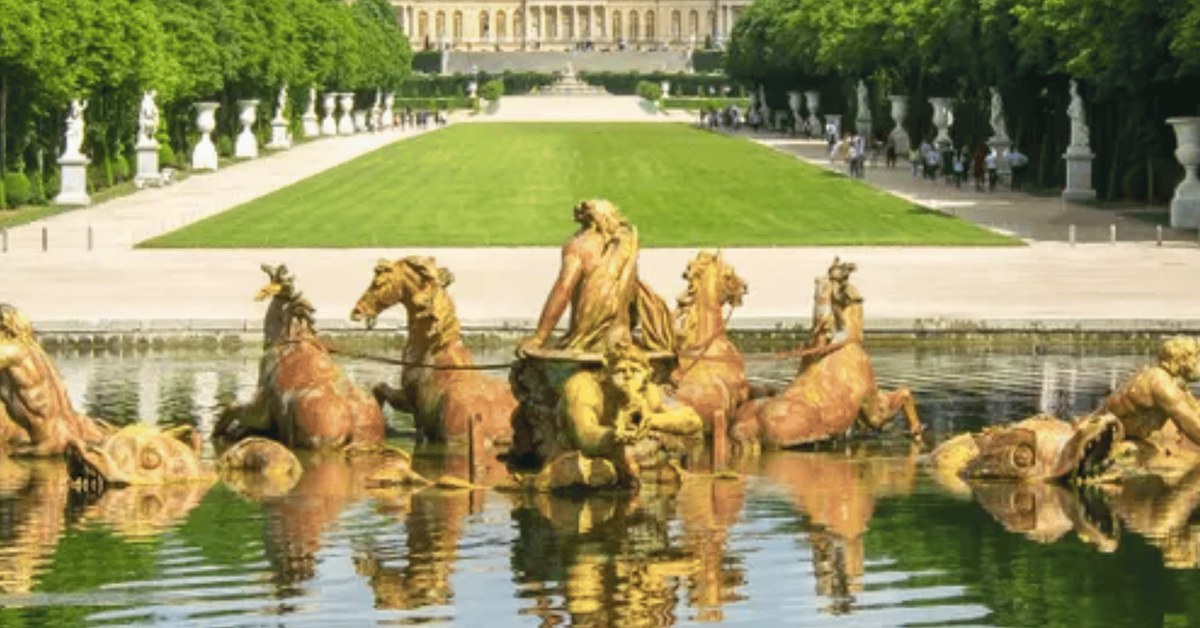
The Apollo Fountain is the centrepiece. A golden sun god rises from the water on a chariot of horses. Behind him, the palace stretches across the horizon. It is one of the finest views in France.
On summer weekends, the fountains play to music. This is the Grandes Eaux Musicales. Baroque music fills the air as 50 fountains shoot water into the sky. It is one of the finest outdoor experiences in Europe.
You can reach Versailles from Paris in under an hour. Take the RER C train to the Versailles–Château–Rive Gauche stop. The gardens are open year-round, and the basic garden admission is free in winter.
The gardens have changed very little since Le Nôtre designed them. The geometry, the long allées, and the symmetry remain as he planned them. Walking through Versailles is walking through his vision.
Giverny — Where Monet Painted His Garden
Claude Monet was a gardener first and a painter second. He bought his house at Giverny in 1883. Then he spent 43 years designing a garden worth painting.
He dug a pond, then filled it with water lilies. He built a Japanese-style wooden bridge. He planted thousands of irises, wisteria, and roses along every path.
The result was one of the most beautiful gardens in France. Monet painted it more than 250 times. His series of Nymphéas — the water lilies — now hangs in museums around the world.
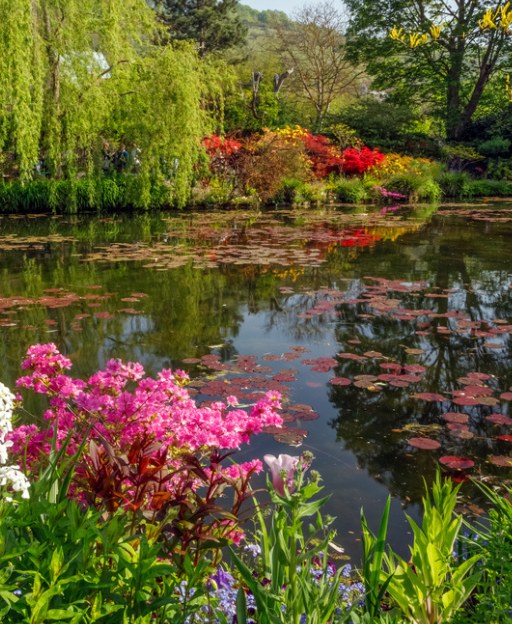
You can visit Giverny from April to November. May and June are the best months. The wisteria and irises are in full bloom. The garden looks exactly as it appears in Monet’s paintings.
Giverny sits in the heart of Normandy, 90 kilometres from Paris. It pairs well with a visit to Rouen or the Normandy coast. The village itself is small and charming.
🇫🇷 Enjoying this? 7,000 France lovers get stories like this every week. Subscribe free →
The Potager du Roi — France’s Royal Kitchen Garden
Most visitors to Versailles miss one of its finest secrets. Behind the main palace lies the Potager du Roi — the King’s Vegetable Garden.
Jean-Baptiste de La Quintinie built it for Louis XIV in 1683. It covers 9 hectares. It still produces 50 tonnes of fruit and vegetables each year. The produce goes to local markets and the Versailles area.
La Quintinie was a genius of his trade. He grew figs, asparagus, and strawberries out of season for the royal table. He developed new techniques for training fruit trees along south-facing walls.
You can visit the Potager today. A separate ticket from the main palace gardens is required. It is one of the finest examples of the French kitchen garden tradition in the world.
The Village Potager — A French Way of Life
Not everyone gardens on a royal scale. But across France, the humble potager remains a deeply loved national tradition.
The word comes from “pot” — what you cook in. The potager grows what goes into the soup. Tomatoes, courgettes, French beans, leeks, and herbs. Simple things, grown with care.
Walk through any French village in summer. Behind garden gates, you will find neat rows of vegetables. The French do not separate the useful from the beautiful. A well-grown row of beans is as satisfying as a flower border.
This love of the potager connects to French food culture. The French prefer seasonal, local ingredients. Growing your own is the deepest expression of that value. It is also one of the reasons the French spend their Sundays the way they do — in the garden, at the market, or at the table.
The French Garden vs the English Garden
The French formal garden and the English garden are opposites. Both are great traditions. They simply see nature differently.
The French garden imposes order. Geometry, symmetry, and straight paths take precedence. Nature is shaped to match a human idea of beauty. The garden is part of an architectural plan.
The English garden celebrates natural forms. Curving paths replace straight ones. Informal planting replaces clipped hedges. The goal is to make a garden look as if nature designed it herself.
Both styles spread across Europe in the 18th century. France and Britain competed to influence garden fashion just as they competed in politics. Today, the French formal garden remains one of the most recognised art forms in the world.
Three More French Gardens Worth Visiting
Château de Villandry, Loire Valley
Villandry has the finest Renaissance garden in France. Three levels of gardens rise above the Loire Valley, including an extraordinary ornamental kitchen garden. Forty thousand plants cover 1.2 hectares in coloured geometric patterns. It is unlike anything else in France.
Palais Royal, Paris
In central Paris, the Palais Royal garden is free to enter. Clipped lime trees form a green canopy above the colonnades. It is a quiet retreat from the city — and one of the most elegant formal gardens in France.
Jardins de la Fontaine, Nîmes
Built around a Roman spring in the 18th century, these gardens combine a formal French layout with ancient ruins. The Canal de la Fontaine runs through the centre. It is one of the oldest public gardens in France, and free to visit.
Frequently Asked Questions About French Gardens
What is a jardin à la française?
A jardin à la française is the French formal garden style. It uses symmetry, straight paths, geometric shapes, and long views to the horizon. André Le Nôtre created the finest examples at Versailles in the 1660s and 1670s.
When is the best time to visit the Gardens of Versailles?
Spring and early summer (April to June) bring the gardens into full colour. Summer weekends feature the Grandes Eaux Musicales, when the fountains play to Baroque music. In winter, the gardens are quieter and admission to the basic garden is free.
Can you visit Monet’s garden at Giverny?
Yes. Monet’s garden at Giverny is open from April to November each year. The water lily pond and Japanese bridge are the main highlights. May and June are the finest months, when the wisteria, irises, and roses are all in bloom at once.
What is a potager in French culture?
A potager is a French kitchen garden. The word comes from “pot” — what you cook in. It grows the vegetables and herbs for the household table. The French tradition of the potager goes back centuries. The finest example is the Potager du Roi at Versailles, built in 1683.
How far is Giverny from Paris?
Giverny is about 90 kilometres from Paris. By train to Vernon and then shuttle bus, the journey takes roughly 90 minutes each way. You can also drive via the A13 motorway. Many visitors combine Giverny with a visit to Rouen or the Normandy coast.
You Might Also Enjoy
- Louis XIV and Versailles: How the Sun King Shaped France
- The French Renaissance: How Italy Transformed France
- The Loire Valley Châteaux: How France’s Kings Built a Royal Playground
Plan Your France Trip
Ready to explore France’s greatest gardens? Start here — our complete France planning guide has everything you need, from where to stay near Versailles to the best time to visit Giverny.
Join 7,000+ France Lovers
Every week, get France’s hidden gems, seasonal guides, local stories, and the art of la vie française — straight to your inbox.
Subscribe free — enter your email:
Free forever · One email per week · Unsubscribe anytime
Tours & experiences you might love


Powered by Viator. Some links are affiliate links — we may earn a small commission at no extra cost to you.

Leave a Reply