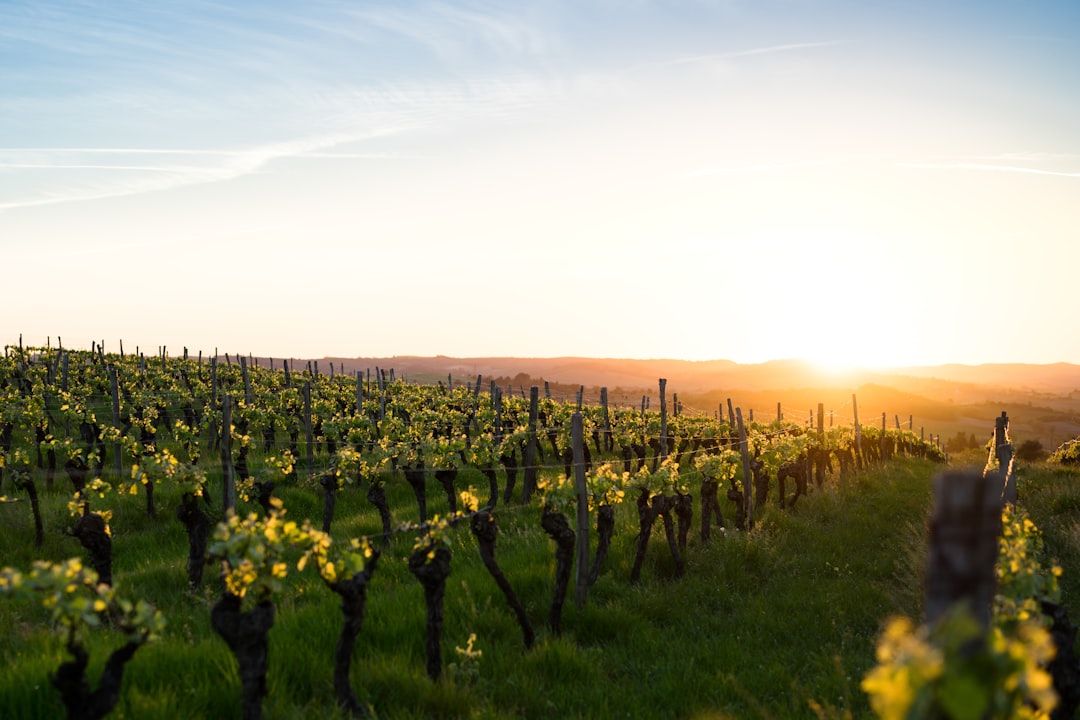
Pour two glasses of Chardonnay grown a few hundred metres apart on the slopes of Burgundy and they can taste noticeably different — one leaner and flinty, the other rounder and riper. That difference, and the French conviction that it matters enormously, is the whole idea behind terroir: the notion that a wine should taste of the specific place it came from. This is Guide № 004 in The Love France Guide series.
Get the Full Collectible Guide (Free PDF)
French Wine & Terroir — in a beautifully designed, printable booklet. The Love France Guide № 004.
What Terroir Actually Means
Terroir has no clean English translation, which is part of why it stays a French word. It bundles together the soil and subsoil, the local climate, the slope and drainage of the land, and the sun exposure of a given plot — plus, many growers would add, generations of human decisions about which grapes to plant and how. The claim is not that geology tastes like anything on its own, but that the same grape variety, farmed the same way, will express itself differently from one site to the next.
This is why Burgundy is divided into hundreds of named plots called climats, some no larger than a garden, each with its own reputation. In 2015 the climats of Burgundy were added to UNESCO’s World Heritage list, recognition of a mapping of vineyard land that has been refined over roughly a thousand years, much of it originally by monastic orders.
How French Labels Are Built
Newcomers often expect a French bottle to shout its grape variety the way many New World wines do. Instead, most French labels lead with the place — Chablis, Sancerre, Châteauneuf-du-Pape — because the appellation is meant to tell you both the region and, by regulation, which grapes are permitted there. A bottle marked Chablis is Chardonnay; a Sancerre is almost always Sauvignon Blanc. The place name does the work the grape name does elsewhere.
This is governed by the Appellation d’Origine Contrôlée system, formalised in 1935 and overseen today by the INAO. It sets rules for a given appellation covering permitted grape varieties, yields, minimum ripeness and often winemaking methods. Under EU labelling the term now frequently appears as AOP (Appellation d’Origine Protégée), but the older AOC wording remains widely used on French bottles.
The Great Regions in Brief
Bordeaux, in the southwest, is built on blends: the gravel soils of the Left Bank favour Cabernet Sauvignon, while the Right Bank around Saint-Émilion and Pomerol leans on Merlot. Burgundy, by contrast, is largely a tale of two single grapes — Pinot Noir for its reds and Chardonnay for its whites — expressed through those tightly drawn climats. The Rhône Valley runs from Syrah in the north to Grenache-led blends such as Châteauneuf-du-Pape in the south, while the Loire stretches across Sauvignon Blanc, Chenin Blanc and Cabernet Franc as it follows the river.
Champagne sits far to the northeast, where a cool climate and chalky subsoil suit the three main grapes of the region: Chardonnay, Pinot Noir and Pinot Meunier. Alsace, along the German border, is unusual for France in that it does routinely name the grape on the label — Riesling, Gewürztraminer and Pinot Gris among them.
How Champagne Gets Its Bubbles
The sparkle in true Champagne comes from a second fermentation that happens inside the sealed bottle, a process often called the méthode traditionnelle. A still base wine is bottled with a small amount of yeast and sugar; the yeast ferments, produces carbon dioxide with no way to escape, and the gas dissolves into the wine as pressure. The spent yeast is later worked down to the neck and removed, and the bottle is topped up before its final cork goes in.
Only sparkling wine made in the delimited Champagne region may legally use the name in the EU. Sparkling wines made the same way elsewhere in France are usually labelled Crémant — Crémant de Loire or Crémant d’Alsace, for example — which is a useful signal of method and often gentler on the wallet.
The Vines Almost Died
French vineyards are not as unbroken a tradition as they can appear. In the second half of the 19th century a sap-sucking insect called phylloxera, accidentally introduced from North America, devastated vineyards across France and much of Europe, killing vines by attacking their roots. The solution that eventually saved the industry was to graft European grape varieties onto resistant American rootstock — a practice still standard almost everywhere in France today. So while the grape above ground is unmistakably French, the roots below it are very often American.
Myths Worth Retiring
Myth: Dom Pérignon invented sparkling Champagne. He was a real Benedictine monk and cellar master who made genuine improvements to blending and winemaking, but bubbly wine was not a single person’s invention, and some of the earliest documentation of deliberately sparkling wine comes from English writers of the period.
Myth: older and pricier always means better. Most wine made in the world is intended to be drunk young, and only a minority of bottles genuinely improve with long ageing. A well-made village Burgundy drunk at the right moment can give more pleasure than a grand bottle opened a decade too late.
Myth: red with meat, white with fish, no exceptions. It is a rough guide, not a law. A light chilled red can pair happily with fish, and many classic French matches — Sancerre with goat’s cheese, Sauternes with foie gras — cut straight across the old rule.
Frequently Asked Questions
Do I need to know the grape variety to buy French wine well?
It helps, but the faster route is learning a handful of appellations you enjoy. Because French labels lead with place, remembering that Chablis means crisp Chardonnay or that Sancerre means Sauvignon Blanc will steer you more reliably than scanning for grape names that often are not printed at all.
What is the difference between Champagne and Crémant?
Both are typically made by the same in-bottle method, but Champagne comes only from the Champagne region and its designated grapes, while Crémant is the name for that style made in other French regions such as the Loire, Alsace or Burgundy. Crémant is often more affordable and worth seeking out.
Can we visit French wineries and taste without an appointment?
In some regions, yes, but it varies. Larger houses and cooperatives in areas like Champagne and Alsace often welcome walk-ins or run scheduled tours, while smaller family domaines in Burgundy and Bordeaux frequently prefer that you book ahead. When in doubt, we suggest emailing in advance — it is also the surest way to be received by someone who can actually talk you through the wines.
More The Love France Guides
The Love France Guide is a numbered series — one tightly focused subject at a time, each with its own downloadable collectible edition. Guide № 001 is The Croissant, Guide № 002 is Bastille Day, Guide № 003 is The Béret, This is Guide № 004. More editions are on the way.
🇫🇷 Join 7,000+ France Lovers
Every week, get hidden stories, local secrets, and travel inspiration from people who live and love it.
Subscribe free — enter your email:


Leave a Reply
