
French Riviera Travel Guide: Everything You Need to Plan Your Côte d’Azur Trip
The French Riviera — or Côte d’Azur — is one of the most dazzling stretches of coastline in Europe. From the chic boulevards of Nice to the glittering harbours of Cannes and the legendary beaches of Saint-Tropez, this sun-soaked strip of southern France has captivated travellers for over a century. Whether you’re planning your first visit or finally making that dream trip a reality, this French Riviera travel guide covers everything you need to know — where to go, when to visit, what to eat, and how to make the most of every single day.
Love France? Get the weekly guide.
Join thousands of France lovers who receive our free weekly newsletter — packed with travel inspiration, regional guides, food discoveries and planning tips straight to your inbox.
Subscribe Free →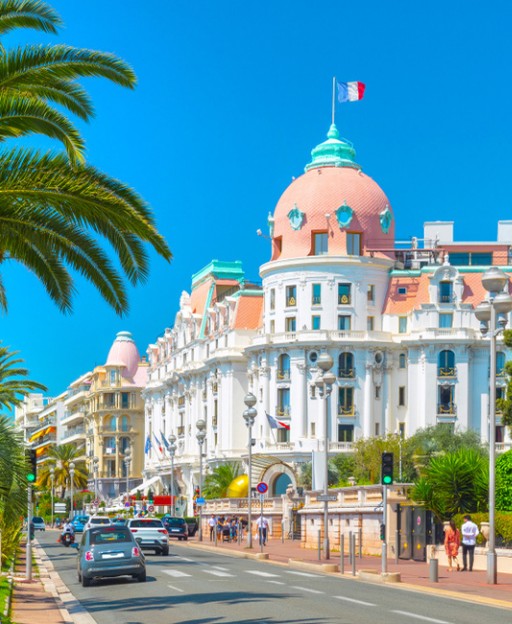
🗺️ Planning a road trip along the Côte d’Azur?
Download our free France Road Trip Guide — packed with scenic routes, village stops, and practical driving tips for exploring the south of France at your own pace.
Get the Free Road Trip Guide →
Why Visit the French Riviera?
The French Riviera stretches roughly 115 miles along the Mediterranean coast from Menton (near the Italian border) west to Cassis, near Marseille. It is famous for its deep blue sea, mild climate, and extraordinary concentration of art, culture, and glamour. But beyond the celebrity associations and luxury yachts, the region rewards curious travellers who look beyond the obvious — medieval hill villages, Roman ruins, world-class art museums, and markets piled high with local produce are all within easy reach.
Most visitors base themselves in Nice, which has an international airport, excellent train connections, and an extraordinary old town (Vieux-Nice) that genuinely rivals anything in Italy for colour and character. From there, the entire coast is accessible by a remarkably affordable and scenic rail line that hugs the cliffs above the sea.
The Best Time to Visit the French Riviera
The French Riviera enjoys over 300 days of sunshine per year, making it one of the most reliably sunny destinations in Europe. That said, timing your visit well makes a significant difference to the experience.
- May and June: Arguably the finest time to visit. The weather is warm (24–27°C), the sea is beginning to warm up, and the crowds haven’t yet peaked. The Cannes Film Festival takes place in May — fantastic for atmosphere if you plan ahead, though hotel prices spike sharply.
- July and August: Peak season. Temperatures regularly exceed 30°C, the beaches are packed, and prices are at their highest. The region is buzzing with energy, but book everything well in advance — accommodation, restaurants, and even parking.
- September and October: Our favourite time to visit. The summer crowds thin out, the sea remains warm enough for swimming well into October, and hotels drop their prices noticeably. The quality of light in autumn is exceptional for photographers.
- November to March: The quietest period. Many beach restaurants and smaller hotels close. But Nice remains a fully functioning city year-round, the Nice Carnival takes place in February, and the Riviera’s markets, museums, and hill towns are pleasantly uncrowded.
For a deeper look at seasonal planning across all of France, see our complete guide to the best time to visit France.
French Riviera Travel Guide: The Key Destinations
Nice: The Riviera’s Capital
Nice is where most visitors base themselves, and for good reason. The city combines genuine French urban life with a Mediterranean temperament — you’ll hear as much Niçard dialect and Italian as French in the old town. The Promenade des Anglais is the famous 7-kilometre seafront boulevard, ideal for morning walks or cycling. Vieux-Nice is a labyrinth of ochre and terracotta buildings, filled with independent restaurants, artisan workshops, and the marvellous Cours Saleya flower and food market.
Don’t miss the Matisse Museum (set in a 17th-century Genoese villa in the Cimiez neighbourhood) and the Chagall Museum, two of the finest artist museums in France. Allow at least two full days in Nice before exploring further along the coast.
Cannes: More Than the Film Festival
Cannes has a reputation as a playground for the ultra-wealthy, but the reality is more accessible than the image suggests. The old port area (Le Suquet) is charming and relaxed, with excellent restaurants serving local fish. The Boulevard de la Croisette is the famous seafront promenade flanked by grand hotels, but the beach clubs behind them charge a premium — free public beaches are available at the western end of the promenade and around the Pointe de la Croisette.
From Cannes, take the short boat trip to the Îles de Lérins — two small islands just offshore. The Île Sainte-Marguerite is largely forested and tranquil, with a fascinating fortress that once held the mysterious prisoner known as the Man in the Iron Mask.
Saint-Tropez: The Legend and the Reality
Saint-Tropez is simultaneously overrated and genuinely magical. In July and August, the traffic jams approaching the town are legendary (arrive by boat from Saint-Raphaël or Sainte-Maxime if possible). But in May, June, or September, the village is strikingly beautiful — a pastel-painted fishing port with a wonderful citadel, a market that takes over the Place des Lices twice a week, and beaches like Pampelonne that justify the hype.
Èze: The Hill Village Above the Sea
Between Nice and Monaco, the medieval village of Èze perches on a rocky outcrop 427 metres above the Mediterranean. The views from the top — across the coastline in both directions — are among the finest on the entire Riviera. The village itself is tiny, beautifully preserved, and inevitably busy with day-trippers. Arrive early in the morning or in the late afternoon for a far more atmospheric experience. The perfumery Fragonard has an outpost here; the exotic garden at the summit is worth the entrance fee.
Antibes and Juan-les-Pins
Antibes is often overlooked in favour of its more famous neighbours, but it’s one of the most appealing towns on the Riviera. The old town is enclosed by 16th-century ramparts, and the Picasso Museum — housed in the Château Grimaldi where Picasso worked in 1946 — is a genuine highlight. The Marché Provençal is one of the best food markets on the coast. Juan-les-Pins, immediately to the south, is famous for its jazz festival each July.
Getting Around the French Riviera
The French Riviera is unusually well-served by public transport for a coastal region. The main rail line between Nice and Menton (via Monaco, Èze, Beaulieu-sur-Mer, and Villefranche-sur-Mer) is one of the most scenic in France — and tickets cost just a few euros. The same line runs west to Antibes, Cannes, and beyond to Saint-Raphaël.
For reaching inland villages, a car is useful but not essential — local bus services connect many hill villages with the coast. If you do hire a car, avoid driving along the coast in July and August; traffic on the Corniche routes (the three cliff roads between Nice and Monaco) can be severe.
France’s high-speed TGV network connects Paris to Nice in around 5 hours 30 minutes, making the Riviera surprisingly accessible from the capital. For regional travel planning, see our guide to travelling France by train.
French Riviera Food: What to Eat
The cuisine of the French Riviera reflects the region’s geography — Mediterranean, with strong Italian and Provençal influences. These are the dishes to seek out:
- Socca: A large, thin chickpea flour pancake cooked in a wood-fired oven and served hot, sprinkled with black pepper. The best in Nice comes from the stalls in the Cours Saleya market.
- Salade Niçoise: The authentic version — prepared in Nice itself — contains tuna, anchovies, hard-boiled eggs, tomatoes, olives, and green beans, but never cooked vegetables or pasta. Order it confidently in any brasserie.
- Pan Bagnat: A round bread roll stuffed with salade Niçoise ingredients, pressed together and eaten as a sandwich. Perfect for a picnic on the beach.
- Pissaladière: A Niçoise flatbread topped with caramelised onions, anchovies, and olives. Found in bakeries throughout the old town.
- Bouillabaisse: Although the authentic home of this famous fish stew is Marseille (slightly further west), good versions are served in seafood restaurants across the Riviera.
- Rosé wine: The Provence rosé produced just inland from the coast is the default drink of the Riviera in summer. Look for wines from Bandol and Les Baux-de-Provence for the finest examples.
France Travel Budget: What Does the French Riviera Cost?
The French Riviera has a well-deserved reputation for being expensive — but the cost largely depends on when you visit, where you stay, and how you eat. Accommodation in Nice ranges from around £70–100/night for a comfortable mid-range hotel in high season; in shoulder season (May–June or September–October) the same hotel may cost £50–70/night.
Food costs are manageable if you avoid the most tourist-heavy restaurants. A three-course lunch menu (the formule) at a local restaurant typically costs £18–28 per person including a glass of wine. The markets — Cours Saleya in Nice, the Marché Provençal in Antibes — are excellent for picking up lunch supplies cheaply. Transport by train between towns is genuinely inexpensive (Nice to Cannes costs around £6–8 each way).
For a full breakdown of France travel costs, see our France travel budget guide.
Where to Stay on the French Riviera
Nice makes the best base for most visitors — it has the widest range of accommodation across all budgets, excellent transport links, and a vibrant city life that continues year-round. The area around the old town and the port is particularly appealing.
Cannes suits visitors who want a more glamorous atmosphere with easy access to the best beaches. Antibes is ideal for those who want a more genuinely local experience — it’s less touristy than Cannes or Nice while still being excellently positioned. For a quieter alternative, consider Menton at the Italian border: smaller, less crowded, and with some of the most beautiful architecture on the coast.
Those travelling with a car have the option of staying in inland villages like Vence or Saint-Paul-de-Vence — charming Provençal towns that offer easy access to the coast while keeping clear of the coastal crowds at night.
Planning Your French Riviera Itinerary
Here’s a suggested framework for different trip lengths:
- 3–4 days: Focus on Nice (2 nights) — old town, markets, Promenade des Anglais, Matisse and Chagall museums — plus a day trip to Èze and Monaco, and a half-day in Villefranche-sur-Mer.
- 5–7 days: Add Antibes (1 night) for the Picasso Museum and market, plus Cannes (1 night) and the Îles de Lérins boat trip. Use the remaining days to explore hill villages like Vence and Saint-Paul-de-Vence.
- 10 days or more: Combine the above with Saint-Tropez (requires a car or boat), the perfume capital of Grasse, and a day trip to Menton with its extraordinary Belle Époque architecture and Jean Cocteau museum.
Frequently Asked Questions About the French Riviera
What is the difference between the French Riviera and the Côte d’Azur?
There is no meaningful difference — the terms refer to the same stretch of Mediterranean coastline in southern France. “Côte d’Azur” (meaning “Azure Coast”) is the French name; “French Riviera” is the English equivalent, widely used in tourism and travel writing. Both names are used interchangeably, and locals tend to use “Côte d’Azur” in everyday French conversation.
Is the French Riviera suitable for families with children?
Yes, very much so — particularly in June, early July, or September when the heat is more manageable for young children. Nice’s beaches are pebbly rather than sandy, which some children find less appealing; families often prefer Antibes (which has some sandy beaches) or Fréjus and Saint-Raphaël further west, where the beaches are sandy and the towns less hectic. The boat trips to the Îles de Lérins and the medieval fortresses at Antibes and Saint-Tropez are perennial hits with younger travellers.
Do I need to speak French to visit the French Riviera?
Not strictly, but making the effort is always warmly received. The Riviera is one of the most visited regions in France and staff in hotels, major restaurants, and tourist attractions speak English reliably. Away from the main tourist trail — in village markets, smaller brasseries, or when catching local buses — some basic French phrases will smooth the experience considerably. A confident “Bonjour” and “Merci” go a long way.
Can I visit the French Riviera without a car?
Absolutely. The coastal rail line between Nice and Menton — one of the most scenic train journeys in France — connects all the major towns efficiently and cheaply. Bus services reach many hill villages. The only destinations that require a car are Saint-Tropez (best reached by boat from the coast) and some of the more remote inland villages. For most first-time visitors, a car-free Riviera holiday centred on Nice is entirely practical and considerably less stressful than driving in summer traffic.
How many days do I need on the French Riviera?
A minimum of four to five days allows you to explore Nice properly and make at least two or three day trips along the coast. A week gives a more relaxed pace with time to venture inland. Ten days or more allows you to combine the Riviera with neighbouring Provence — a natural extension that many visitors make, combining the coast with the lavender fields, Roman ruins, and market towns of the Provençal interior.
You Might Also Enjoy
- Provence Travel Guide: The Complete Visitor’s Guide to Southern France
- France Travel Budget: How Much Does a Trip to France Actually Cost?
- How to Travel France by Train: The Complete Guide for American Visitors
Plan Your France Trip
Ready to start planning? Visit our France Trip Planning Hub for step-by-step guides, regional itineraries, packing lists, and everything you need to make your France trip a success.
Never miss a thing on the Côte d’Azur
Join our free weekly newsletter for travel inspiration, regional deep-dives, seasonal guides, and insider tips for planning your perfect French Riviera trip — delivered straight to your inbox.
Subscribe Free — No Spam, Ever →Tours & experiences you might love


Powered by Viator. Some links are affiliate links — we may earn a small commission at no extra cost to you.

Leave a Reply