
Few regions of France carry the weight that Normandy does for American travellers. The Normandy France travel guide you need begins not with logistics, but with landscape — white chalk cliffs dropping into the Channel, quiet market towns where time has barely moved, and beaches where history changed the world in June 1944. Whether you’re coming for the D-Day memorials, the medieval port of Honfleur, or the timeless beauty of Mont Saint-Michel, Normandy rewards every visitor who takes the time to look beyond Paris.
Love France? Join 7,000+ readers on our free newsletter → lovetovisitfrance.substack.com
Why Normandy Draws American Travellers
The connection between the United States and Normandy runs deeper than most travel relationships. On 6 June 1944, more than 156,000 Allied troops — the majority of them American — landed on five beaches along this coastline. The Normandy American Cemetery at Colleville-sur-Mer holds 9,388 graves. Visiting these sites is unlike visiting any other memorial. You stand in the actual place. You walk the actual sand. That changes things.
But Normandy is also one of France’s finest and most undervisited regions. The apple orchards, the half-timbered market towns, the seafood, the dramatic coastline — these make it worth coming even without the historical dimension.
The D-Day Beaches: Planning Your Visit
The five D-Day beaches — Utah, Omaha, Gold, Juno, and Sword — stretch along a 50-mile section of the Normandy coast. For most American visitors, Omaha Beach and Utah Beach are the essential stops.
Omaha Beach
Omaha is the beach most Americans recognise from films and photographs. It’s wider and flatter than you expect, and quieter than you’d imagine for such a significant site. Walk the shore at low tide. The bluffs above give you an immediate sense of what those soldiers climbed toward in the dark of the morning tide.
The American Cemetery at Colleville-sur-Mer
The American Cemetery sits on the bluffs directly above Omaha Beach. The rows of white crosses and Stars of David extend across 70 acres, maintained under the care of the American Battle Monuments Commission. Allow two hours here. The visitor centre is well-designed and worth your time before you walk the grounds. Entry is free and no booking is required, though a morning visit avoids the midday crowds.
Pointe du Hoc
Six miles west of Omaha, Pointe du Hoc is where US Army Rangers scaled 30-metre cliffs under fire to destroy German gun positions. The ground is still scarred with shell craters from the pre-invasion bombardment. Standing here, the physical reality of the operation — and its cost — becomes clear in a way that books simply cannot replicate.
Beyond the Beaches: The Rest of Normandy
Many visitors treat Normandy purely as a D-Day pilgrimage and miss the rest of what the region offers. Once you’ve paid your respects on the beaches, give yourself time for the towns, the coast, and the countryside.
Mont Saint-Michel
Technically just inside Normandy’s border with Brittany, Mont Saint-Michel is one of the most photographed places in France. The tidal island and its Gothic abbey rise from the bay in a way that stops you in your tracks. It’s busy in summer — arrive early or visit in the late afternoon once the coach parties have left. If you’re combining Normandy with a trip west, our guide to why Brittany feels like a country within a country will help you plan the next stage.
The Étretat Cliffs
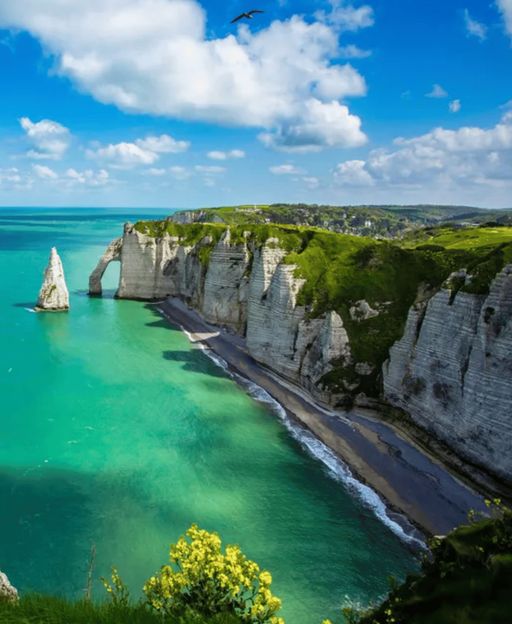
The chalk cliffs at Étretat, north of Le Havre, are among the most dramatic on the French coastline. Two natural arches frame the view along the shore. Claude Monet painted this stretch obsessively in the 1880s. Walk the clifftop paths for the best perspectives, and allow a couple of hours to explore the small town at the base of the cliffs as well.
Rouen: Joan of Arc’s City
Normandy’s capital is one of the finest medieval cities in northern France. The half-timbered streets around the cathedral look much as they did centuries ago. Rouen is where Joan of Arc was tried and burned at the stake in 1431 — the site is marked by a striking modern church in the old market square. Allow a full day here. The cathedral alone, painted dozens of times by Monet, deserves an hour.
Honfleur
Honfleur, at the mouth of the Seine, is one of the most beautiful small ports in France. The old harbour is lined with tall, narrow houses reflected in the water below. It draws weekend visitors from Paris, so aim for a weekday if possible. The light here — the same light that attracted Boudin, Monet, and the Impressionists — is exceptional in the early morning.
Planning a trip to France? Join 7,000+ travellers who get weekly France travel inspiration, hidden gems, and practical advice — free. Subscribe to the newsletter →
How to Get to Normandy From Paris
Normandy is one of the easiest French regions to reach from Paris. If you’re using our two-week France itinerary as a planning guide, Normandy slots naturally at the start or end of a longer trip.
- By train: Direct trains from Paris Saint-Lazare to Rouen take around 70 minutes. Caen is about two hours. From Caen, the D-Day beaches are 20–30 minutes by car.
- By car: Rouen is roughly 140 km from Paris — under two hours. Hire a car if you plan to move between sites independently. Public transport between the beach sites is limited.
- As a day trip from Paris: The D-Day beaches are technically possible as a day trip, but they deserve more time. See our guide to best day trips from Paris for logistics if that’s your plan.
Where to Stay in Normandy
Bayeux is the most practical base for the D-Day beaches. It’s a charming medieval town in its own right — home to the famous Bayeux Tapestry — and all the major memorial sites are within 30 minutes by car.
Caen is larger and has more hotel options. Its Memorial Museum is among the best museums in France dedicated to the Second World War. It’s slightly further from the beaches but better connected by rail from Paris.
Honfleur and Étretat suit travellers whose priority is the Norman coast rather than the war sites. Both towns have hotels and chambres d’hôtes across a range of budgets.
Best Time to Visit Normandy
Normandy is mild but often overcast. The driest and warmest months are June, July, and August, which is also peak season. For the D-Day sites without the crowds, late April, May, or September are ideal. See our full guide to when to visit France for a month-by-month picture across all regions.
The 6th of June — the D-Day anniversary — is a deeply meaningful date to visit. Ceremonies take place at the beaches and the American Cemetery. Book accommodation many months ahead if you plan to be there on or around that date.
Frequently Asked Questions About Visiting Normandy
Is Normandy worth visiting if I’m not interested in military history?
Yes. Normandy has exceptional coastline, medieval architecture, and food culture quite apart from the D-Day sites. Camembert, Calvados apple brandy, fresh oysters, and some of the best butter in France all come from this region. The coast at Étretat and the harbour at Honfleur are reason enough to visit.
How far is Normandy from Paris?
Rouen is about 140 km from Paris — roughly 70 minutes by train from Paris Saint-Lazare. The D-Day beaches near Bayeux are around 250 km from Paris, or two to two and a half hours by car. A hire car makes the most sense if you want to explore the beach sites at your own pace.
Do I need a hire car to visit the D-Day beaches?
A car makes visiting the beaches much easier, as they are spread over 50 miles with limited public transport between them. If you prefer not to drive, guided coach tours leave daily from Bayeux and Caen and are a well-organised alternative with expert commentary included.
What is the best time of year to visit Normandy, France?
May and September offer the best mix of reasonable weather and manageable visitor numbers. June is historically significant and the driest month, with D-Day ceremonies on the 6th. July and August are busy and warm. Winter is quiet but often grey and wet.
You Might Also Enjoy
- Best Day Trips from Paris — including Normandy logistics and other northern France escapes
- Why Brittany Feels Like a Country Within a Country — the Celtic region just west of Normandy
- Joan of Arc: Why France’s National Hero Still Matters — the story behind Rouen’s most famous landmark
Plan Your France Trip
Ready to go further? Our France Trip Planning Hub covers everything from visas and budgets to transport and regions — everything you need to plan a trip that goes well beyond the obvious.
Join 7,000+ France Lovers
Every week, get France’s hidden gems, local recipes, and travel inspiration — the kind you won’t find in any guidebook.
Subscribe free — enter your email:
🇫🇷 Discover the France Most Tourists Never Find
Get our free guide to 25 hidden villages of France — then join 7,000+ readers for weekly stories about places most guidebooks never mention.
Get Your Free Village Guide →Love more?
Thinking about it for retirement?
If you’ve started thinking seriously about retiring there, our complete our full Retire in France guide covers the visa, healthcare, cost-of-living, and the regions worth shortlisting.
Free forever · One email per week · Unsubscribe anytime
Tours & experiences you might love


Powered by Viator. Some links are affiliate links — we may earn a small commission at no extra cost to you.

Leave a Reply