A Frenchman from Lyon boards a train and settles in next to a farmer from the Ariège, deep in the south. Both are speaking French. But somewhere in the conversation, they begin to slow down, repeat themselves, lean in. Neither would admit it. But they are not entirely following each other.
France has one official language — but it has never had one voice. The country is too long, too old, and too stubborn for that.
France Is Not One Voice
From the flat north, where vowels barely open, to Marseille, where every syllable lands like sunshine, French sounds different depending on where you stand.
Linguists divide the country broadly into two ancient zones — the langue d’oïl in the north and the langue d’oc in the south. The south’s accent carries echoes of Occitan, the old regional tongue, in every stretched vowel and rolled consonant.
This isn’t just history. It is alive. Catch a conversation between a Parisian and someone from Toulouse, and you will hear the gap immediately.
The Marseille Accent — and Why Everyone Has an Opinion
In Marseille, the letter ‘a’ sounds wider, more open. Syllables stretch. Final consonants — often swallowed in Paris — ring out clearly. The whole effect is warmer, more musical. You feel like the words have more room.
Northerners sometimes mock it. Southerners consider it the more natural French — the one that lets the language breathe. Marseillais will tell you their accent isn’t regional. It is just honest.
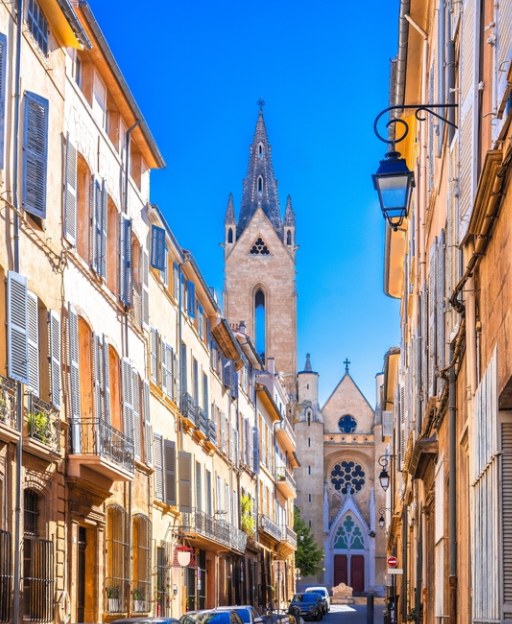
The accent extends across the Midi — through Montpellier, Nîmes, and into Provence. Walk through a morning market in Aix-en-Provence and you’ll hear it in every stall.
Where the Numbers Tell You Everything
One of the clearest signs of regional identity in France isn’t pronunciation. It’s arithmetic.
In Paris, 80 is “quatre-vingts” (four-twenties) and 90 is “quatre-vingt-dix” (four-twenty-ten). Cross into Belgium, Switzerland, or some French border valleys and people say “octante” for 80 and “nonante” for 90 — older, simpler forms that never quite disappeared.
In Normandy, some older speakers still use “septante” for 70. To a Parisian, it sounds almost foreign.
Enjoying this? 7,000 France lovers get stories like this every week. Subscribe free →
Alsace — Where French Sounds Like Something Else
Of all French accents, the Alsatian is the most distinctive. It carries weight, rhythm, and something that sounds, to an untrained ear, unmistakably German.
That is not a coincidence. Alsace changed nationality four times in the 20th century — French, German, French, German, French again. The regional dialect, Alsacien, is still spoken by older residents. And even when people speak standard French, the Germanic cadences linger in the vowels and harder consonants.
Spend an afternoon in Strasbourg’s market and you will hear it — French, but shaped by centuries of something else. The effect is extraordinary.
If you want to explore the region that produced this singular accent, our Alsace travel guide has everything you need to plan a visit.
Paris — The Accent That Thinks It Has No Accent
Parisians often believe they speak neutral French — a standard, accentless version. They do not.
The Parisian accent has its own signature: nasal vowels pushed forward, final consonants swallowed, and a tendency to run syllables together. “Tu as” becomes “t’as”. “Il y a” collapses into “y’a”. A phrase that takes three seconds to say formally takes one in a Paris café.
Visitors who learn French from recordings often arrive in the city feeling fluent — then spend the first day asking people to repeat themselves.
What This Means When You Travel
The reassuring truth is that the French are not unkind about foreign accents. They notice them — but an effort to speak French, even imperfectly, is almost always met with warmth.
Confidence matters more than perfection. A stumbling “Bonjour, je ne parle pas très bien français” opens more doors than silence. Try, and people will meet you halfway.
If you are planning your trip to France, it is worth knowing that the French you encounter will shift as you travel south. And if the language itself has caught your curiosity, our guide to French words that have no English translation is a good place to explore further.
France is not one voice. It never has been. Every accent you hear on your travels is a layer of history, geography, and pride — the sound of a place that still knows exactly who it is.
Join 7,000+ France Lovers
Every week, get France’s hidden gems, seasonal guides, local stories, and the art of la vie française — straight to your inbox.
Love more? Join 65,000 Ireland lovers → · Join 43,000 Scotland lovers → · Join 30,000 Italy lovers →
Free forever · One email per week · Unsubscribe anytime
Leave a Reply