
A royal mistress and a queen. One château spanning a river. A rivalry that shaped the most visited private château in France.
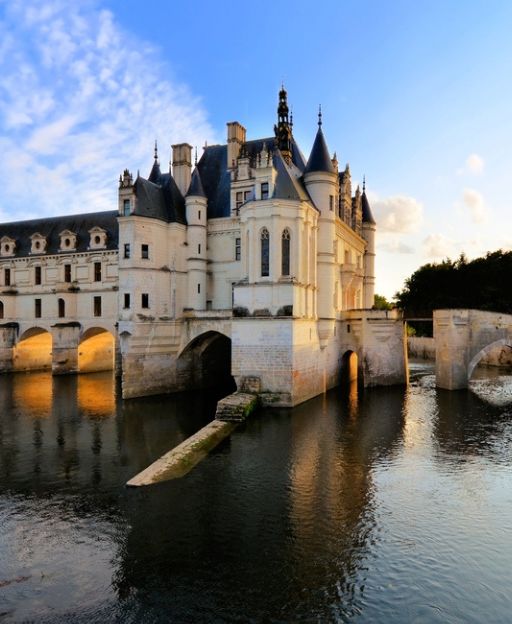
Château de Chenonceau doesn’t just sit in the Loire Valley — it straddles the River Cher on five stone arches, as if refusing to choose a side. That tension is exactly the point.
Diane Got It First
King Henri II gave Chenonceau to his mistress, Diane de Poitiers, in 1547. She was 47 years old. He was 28.
The gift wasn’t subtle — and Diane didn’t just accept it. She drained the marshes around the estate. New formal gardens took shape on the riverbank. She commissioned the bridge that became Chenonceau’s defining feature: five stone arches reaching across the Cher.
For twelve years, Diane ruled Chenonceau. Queen Catherine de Medici — Henri’s actual wife — watched from across the valley and said nothing.
When the King Died, Everything Changed
In 1559, a lance shattered through Henri’s visor during a jousting tournament. He died ten days later.
Catherine waited exactly one day. Then she sent a message to Diane: return Chenonceau immediately, or lose something far worse.
Diane handed back the keys.
Catherine moved in and extended what Diane had started. She built a two-storey gallery across the bridge Diane had commissioned — turning a practical river crossing into the longest private ballroom in France. The east wing came next, then redesigned gardens and legendary parties.
The most famous: the welcome reception for her son King Francis II and his young wife — a 16-year-old Mary Queen of Scots.
The Two Gardens Tell the Whole Story
Here’s where the rivalry becomes visible.
Diane’s garden sits on the west bank — formal, controlled, with geometric beds of lavender, roses, and box hedging. Catherine’s garden mirrors it on the east, deliberately larger.
Two women. Two gardens. Both still there, four and a half centuries later.
Visitors walk through them without knowing what they’re really looking at. Guides rarely explain it. Stand at the right spot and you can see both gardens at once — a silent argument frozen in topiary.
Enjoying this? 7,000 France lovers get stories like this every week.
Thinking about it for retirement? If you’ve started thinking seriously about retiring there, our complete our full Retire in France guide covers the visa, healthcare, cost-of-living, and the regions worth shortlisting.
The Bridge That Changed History Twice
Diane built the bridge to reach her hunting grounds on the far bank. It served a purpose.
Catherine made it something else entirely. The ballroom she built on top hosted kings, queens, and the most powerful families in France. Music carried across the Cher on summer evenings.
Then, in 1940, Chenonceau’s bridge mattered again. The château sat precisely on the demarcation line between Nazi-occupied France and the free zone to the south. Resistance fighters and Jewish families used it to cross when every other route was watched.
The tour guides talk about Catherine de Medici. They often skip this part.
Visiting Château de Chenonceau
Chenonceau sits 35 km east of Tours, just outside the village of Chenonceaux. Note the spelling: the village gets an extra ‘x’ at the end; the château doesn’t. It’s a local quirk that catches visitors out.
The château opens every day of the year, including Christmas Day. Arrive before 10am to beat the coach tours — by midday the gallery fills quickly. Spring brings the gardens at their best: tulips in April, roses by May. Early autumn is quieter, and late afternoon light turns golden on the pale stonework.
If you’re exploring the wider valley, the Loire Valley travel guide covers the best châteaux, wine villages, and road trip routes. For the full story of why French royalty kept returning here, read why French kings fled Paris for the Loire Valley.
Planning a wider France trip? Start with the France travel planning guide.
When is the best time to visit Château de Chenonceau?
April and May offer the best mix of good weather and blooming gardens, with lighter crowds than peak summer. September is also excellent — quieter, with warm afternoons and softer golden light on the stone.
How do I get to Château de Chenonceau from Paris?
Take the TGV from Paris Montparnasse to Tours (about 1 hour), then a regional train to Chenonceaux station (30 minutes). The château is a short walk from the station. By car, allow roughly 2.5 hours from Paris via the A10.
Do you need to book Chenonceau tickets in advance?
Booking online ahead of your visit saves time and guarantees entry during busy periods. Chenonceau ranks as France’s second most-visited château after Versailles — summer weekends sell out. Buy tickets on the official Chenonceau website before you travel.
What else is near Château de Chenonceau?
Amboise lies just 12 km away and holds the Château d’Amboise plus the Clos Lucé — Leonardo da Vinci’s home for his final years. Château de Chambord sits about 45 km to the north and makes a natural pairing for a two-château day.
Stand on the gallery bridge and look down at the Cher. The river doesn’t care about mistresses or queens. But the stone arches it flows through exist because one woman wanted to leave her mark — and the ballroom above them exists because another refused to let that mark stand alone.
Both succeeded. The château belongs to neither of them now. It belongs to everyone who crosses that bridge.
Join 7,000+ France Lovers
Three times a week, get France’s hidden gems, seasonal guides, local stories, and the art of la vie française — straight to your inbox.
Subscribe free — enter your email:
📲 Know someone who’d love this? Share on WhatsApp →
Love more? Join 65,000 Ireland lovers → · Join 43,000 Scotland lovers → · Join 29,000+ Italy lovers →
Free forever · Unsubscribe anytime
Frequently Asked Questions
Who built the famous bridge at Château de Chenonceau?
Diane de Poitiers commissioned the five-stone arch bridge across the River Cher in the 1550s, which became the château's defining feature. Queen Catherine de Medici later built a two-storey gallery on top of it, transforming it into the longest private ballroom in France.
Can you see both women's contributions to the château today?
Yes—Diane's formal garden with geometric lavender and rose beds remains on the west bank, while Catherine's deliberately larger mirror garden sits on the east bank, showing the full scope of both women's visions.
How did the château change hands between Diane and Catherine?
King Henri II gave the château to his mistress Diane in 1547, but when he died in 1559 from a jousting accident, his wife Queen Catherine de Medici immediately demanded it back—and Diane complied within a day.
What makes Château de Chenonceau architecturally unique?
The château straddles the River Cher on five stone arches rather than sitting beside it, an unusual design that creates the building's signature appearance and sets it apart from other Loire Valley properties.
🇫🇷 You Might Also Love
Tours & experiences you might love


Powered by Viator. Some links are affiliate links — we may earn a small commission at no extra cost to you.

Leave a Reply