
The boat leaves the oyster beds just after six in the morning. Mist hangs over the water, the engine ticks quietly, and the Dune du Pilat rises from the tree line like something dropped from another continent. This is the Bassin d’Arcachon — a sheltered lagoon on France’s Atlantic coast — and it operates entirely on its own terms.
A Lagoon Hidden Behind a Dune
Most travellers drive straight past on their way to Biarritz or Spain. The motorway runs inland, and the signage does nothing to hint at what lies beyond the pine forests. But those who turn off find one of the most distinctive coastal landscapes in France.
The Bassin d’Arcachon covers roughly 150 square kilometres of tidal water, sheltered from the Atlantic by a thin peninsula called Cap Ferret. On the ocean side of that peninsula stands the Dune du Pilat — the tallest sand dune in Europe, climbing to over 100 metres and shifting slightly every year. It blocks the wind, calms the water, and creates the conditions that make the basin so remarkable.
Cold, nutrient-rich Atlantic currents push in through the narrow channel between Cap Ferret and the town of Arcachon. The water temperature fluctuates with the tides. The result is an extraordinarily productive ecosystem — and one of France’s most important oyster-growing regions. The French know this. They have kept coming here quietly for generations.
The Oyster Farmers of the Basin
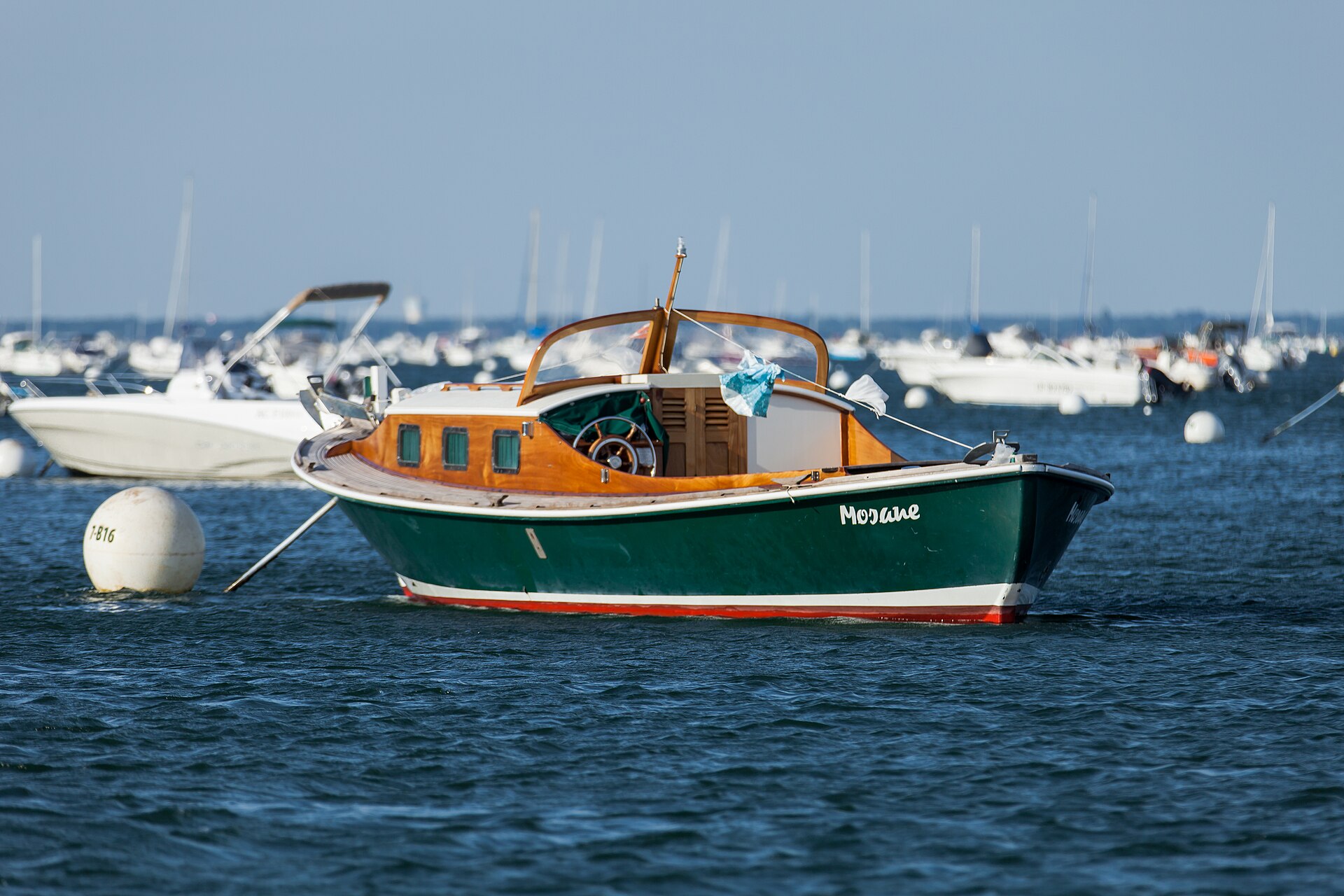
About 350 ostréiculteurs — oyster farmers — work the basin today. They rise before dawn, pull on rubber boots, and head out to the tidal flats in flat-bottomed boats called pinasses. The pinasse is the emblem of the basin: long, low, painted in vivid colours, and designed specifically for the shallow, sandbar-riddled waters here.
Each farmer tends metal cages stacked in rows across the mudflats. An oyster takes three to four years to reach market size. The farmer turns the cages regularly to expose the oysters to different tidal flows, which affects the flavour. They scrape off barnacles, move the stock to different depths, and watch the weather carefully. This is craft, not industry.
The oysters leave the basin labelled simply as Arcachon. In Paris restaurants and London fish counters, they carry a premium. Back here, a dozen costs a few euros at a roadside stall, eaten with a squeeze of lemon over the tailgate of a van, the lagoon glittering fifty metres away.
Enjoying this? 7,000 France lovers get stories like this every week.
Thinking about it for retirement? If you’ve started thinking seriously about retiring there, our complete our full Retire in France guide covers the visa, healthcare, cost-of-living, and the regions worth shortlisting.
The Bird Island at the Heart of the Basin
At low tide, the basin reveals itself. Mudflats stretch for kilometres, broken by channels and sandbars. Egrets stalk the edges. Oystercatchers work the shallows in low, skimming arcs. At the centre of the basin sits the Île aux Oiseaux — the Bird Island — a flat, grassy mound that floods completely at high tide.
Two tchanquées cabins stand on stilts in the water near the island. Locals built them decades ago as hunting shelters. Now they appear on every postcard and in every photograph taken from the Arcachon seafront promenade. Nobody lives there. The water rises around them twice a day, and twice a day it retreats, leaving the cabins standing in gleaming mud.
Boat trips depart from the Arcachon jetty throughout the day. The captains slow down near the cabins for photographs, then push on to Cap Ferret, where you can eat lunch at a waterfront restaurant and take the ferry back. The whole journey takes three hours, and it feels nothing like tourism. It feels like being shown something private.
Cap Ferret — The Other Side
Cap Ferret runs for twenty kilometres along the western edge of the basin. Narrow lanes wind through pine trees past beach houses belonging to Parisian architects, chefs, and film-makers who discovered the place in the 1990s and told nobody. The village at the tip has one main street, a handful of oyster bars, and a lighthouse you can climb for a view across both the basin and the open Atlantic simultaneously.
The Atlantic side of Cap Ferret bears no resemblance to the lagoon side. Waves break hard on an exposed beach that runs for miles without a single building. Surfers paddle out in early morning. Dogs run loose on the sand. The contrast between the two sides of the peninsula — the calm basin and the raw ocean — captures something essential about this stretch of coast.
For a broader sense of this part of France, the Bordeaux travel guide covers the south-west region in full — the basin sits less than an hour from the city by road. And if you want to understand the wider Atlantic coast, the piece on France’s forgotten Atlantic coast traces the landscape from the Vendée all the way south through the pine forests of the Landes.
For planning your visit more broadly, the France trip planning guide covers everything you need to know before you go.
What to Know Before You Go
Arcachon town sits on the southern shore and handles most of the tourism. The Ville d’Été — the summer town — fills up in July and August with Parisian families and campervans. Come in May, September, or October and the basin returns to something close to its natural rhythm. The oyster stalls still open. The boat trips still run. The egrets do not care what month it is.
The basin is tidal, which means the landscape changes every six hours. Low tide exposes a vast mudflat world. High tide submerges it entirely. Plan your visit around the tidal schedule if you want to walk the sandbanks — the tourist office in Arcachon provides a tidal chart on request. Getting caught by a rising tide on the mudflats is not unusual and not dangerous, but it is inconvenient and cold.
Frequently Asked Questions
What is the best time to visit the Bassin d’Arcachon?
May, June, September, and October offer the best conditions. The weather stays warm, the tourist crowds thin out, and the oyster bars remain open. July and August bring heavy traffic and inflated prices, though the basin itself remains beautiful. Winter visits reward the patient traveller — the light on the water in December is extraordinary, and the basin is almost entirely yours.
How do you get from Bordeaux to the Bassin d’Arcachon?
Trains run from Bordeaux Saint-Jean station to Arcachon town roughly every hour. The journey takes under an hour. Driving takes about 50 minutes via the A63 motorway. Once in Arcachon, ferries cross to Cap Ferret regularly throughout the day — the crossing takes around 25 minutes and costs a few euros each way. A car helps for exploring Cap Ferret independently, but many visitors manage the entire visit by train and ferry.
Are the oysters from Arcachon really that good?
The short answer is yes, and the longer answer is that they taste noticeably different from Breton oysters. Arcachon oysters tend to have a creamier texture and a slightly more mineral, iodine-forward flavour, shaped by the warm, sheltered waters of the basin. The local classification runs from grade 0 (the largest) to grade 5 (the smallest). Grade 3 is the most common and works well for first-timers. Eat them cold, with a squeeze of lemon or a splash of shallot vinegar, within an hour of purchase.
Join 7,000+ France Lovers
Three times a week, get France’s hidden gems, seasonal guides, local stories, and the art of la vie française — straight to your inbox.
Subscribe free — enter your email:
📲 Know someone who’d love this? Share on WhatsApp →
Love more? Join 65,000 Ireland lovers → · Join 43,000 Scotland lovers → · Join 29,000+ Italy lovers →
Free forever · Unsubscribe anytime
🇫🇷 You Might Also Love
Tours & experiences you might love


Powered by Viator. Some links are affiliate links — we may earn a small commission at no extra cost to you.

Leave a Reply