
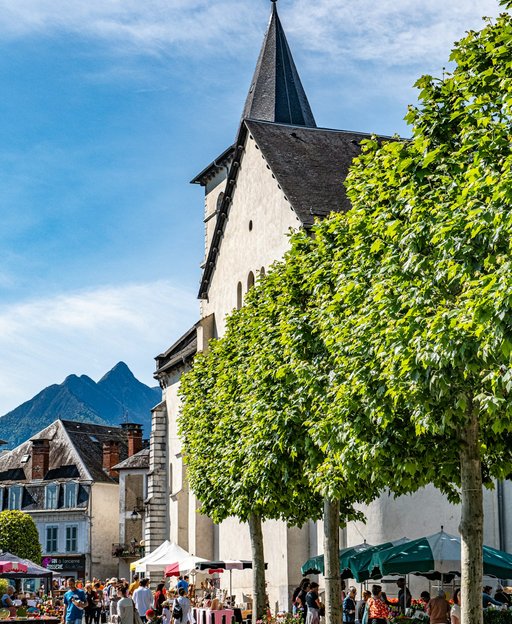
On a Thursday morning in Mirepoix, the wooden gallery above the market square still carries the same smells it has carried for seven centuries. Cheese, garlic, dried herbs, and something animal. Sellers arrange their stalls under carved medieval beams. The market has never moved. It has never really changed.
What a Bastide Actually Is
Between 1220 and 1400, English and French kings built a chain of planned towns across the southwest of France. Each one followed the same blueprint: a central square with a covered market hall at its heart, arcaded ground-floor walkways on all sides, and streets running out in a grid. These are the bastides.
Gaston Fébus, Count of Foix, founded dozens across what is now the Ariège and Gascony. English King Edward I ordered others across the Gascony he controlled. French King Louis IX built Aigues-Mortes as his Mediterranean base. Each bastide had a charter that guaranteed market rights from day one.
The market was not an afterthought. It was the point. You built the halle first, granted the charter, and people came. The town grew around the commerce, not the other way around.
The Wooden Halles That Have Survived Everything
The covered market hall — the halle — sits at the centre of every bastide. Some are stone. Most are timber: great frameworks of oak or chestnut, raised on stone pillars, open on all sides so air and light could reach the produce.
The halle at Mirepoix dates to the 13th and 14th centuries. The wooden arcades around the square — the couverts — are among the oldest surviving medieval market structures in France. Walk beneath them on a market morning and you walk where medieval merchants once argued over prices.
These are not restorations or reconstructions. They are the original buildings, still serving their original purpose. That is the quiet miracle of the bastide market: continuity.
What You Find at the Market
The Pyrenean bastide market sells what the land around it produces. The variety changes by season, but the logic stays constant: everything comes from nearby.
Spring brings strawberries from the plains and white asparagus from the Landes. Summer fills the stalls with courgettes, tomatoes, and peaches. Autumn is the season for cèpes — the great fat porcini mushrooms pulled from Pyrenean forests — and Ossau-Iraty, the firm sheep’s milk cheese of the Béarn, aged on mountain shelves above 1,000 metres.
All year, charcuterie dominates. Jambon de Bayonne. Saucisson from the Ariège. Pâté de foie gras from the Gers. The Bigorre black pig — an ancient breed native to these mountains — appears in cured form across almost every stall. Local honey, walnut oil, river trout, and small-batch mountain wines fill the gaps.
Enjoying this? 7,000 France lovers get stories like this every week.
Thinking about it seriously? If you’ve started actually planning a move, our complete our complete Moving to France guide walks through every step, every cost, and the paperwork that catches most people out.
The Arcaded Squares (Les Couverts)
Every bastide wraps its central square in arcaded walkways at ground level. The couverts — literally “the covered parts” — run continuously around the square. Shops and stalls open directly onto them.
This design was deliberate. In summer, the arcades shade buyers from the sun. In winter, they keep rain off the market. Medieval planners understood what modern shopping centres have spent decades trying to recreate: that commerce works better when people stay comfortable.
Walk the couverts on a market morning and notice how the rhythm changes. You stop at a cheese stall, move three steps, and reach the charcuterie. Conversation drifts between stalls. The square breathes. France’s Saturday market ritual feels particularly alive here — because these spaces were specifically built to hold it.
The Best Bastide Markets to Visit
The bastides stretch from the Ariège to the Gers and across to the Aveyron. Each has its own personality and market day. Our France planning guide covers how to base yourself across the region.
Mirepoix
In the Ariège. Market on Mondays and Thursdays. The wooden arcades here are exceptional — wide, low, carved, and very old. The square feels intimate despite its size. Local producers sell directly from stalls they or their parents have held for decades.
Revel
On the edge of the Montagne Noire, between Toulouse and Carcassonne. The timber halle at Revel dates from 1342 — one of the best-preserved medieval market structures in the southwest. Saturday is market day. The surrounding hills produce excellent honey and chestnut products.
Fleurance
Deep in the Gers, this is foie gras country. The Thursday market overflows with duck and goose products from farms within twenty kilometres. Armagnac brandy appears at almost every stall. The square has all the classic bastide geometry: grid streets, central halle, arcaded sides.
Villefranche-de-Rouergue
In the Aveyron, north of the main Pyrenean axis. A Gothic bastide with a dramatic central square on a slope. Thursday market. The covered halle dominates the upper square. Aveyron producers bring cheese — Ossau-Iraty and local ewes’ milk varieties — alongside wild mushrooms and river fish.
Frequently Asked Questions
What is a bastide town in France?
A bastide is a planned medieval town, built mainly between 1220 and 1400 across southwest France. English and French kings founded hundreds of them across the region, each designed around a central market square with a covered halle and arcaded walkways. Most still hold weekly markets in the same spaces today.
Which are the best bastide market towns to visit in the French Pyrenees?
Mirepoix (Ariège) stands out for its medieval wooden arcades. Revel (Haute-Garonne) has a halle dating from 1342. Fleurance (Gers) is the place for foie gras and Armagnac. Villefranche-de-Rouergue (Aveyron) has one of the most dramatic Gothic bastide squares in France. Each holds a regular weekly market.
When do the bastide markets open in southern France?
Most bastide markets run weekly, on a fixed day — usually Thursday or Saturday. Morning hours only: typically 8am to 1pm. Some larger towns hold two market days per week. Spring to autumn brings the best seasonal produce. Winter markets are smaller but often include Christmas specialities and preserved goods.
The medieval founders put the market at the centre of the bastide because they understood that a town without trade is just a collection of buildings. Seven centuries later, the same logic holds. The halle is still the reason people come. The arcades still fill with sellers and buyers every week. The cheese is still from the valley just beyond the hills. And if you arrive early enough on a market morning, you can still find a table under the couverts and eat breakfast while the town gets on with what it has always done.
Join 7,000+ France Lovers
Three times a week, get France’s hidden gems, seasonal guides, local stories, and the art of la vie française — straight to your inbox.
Subscribe free — enter your email:
📲 Know someone who’d love this? Share on WhatsApp →
Love more? Join 65,000 Ireland lovers → · Join 43,000 Scotland lovers → · Join 29,000+ Italy lovers →
Free forever · Unsubscribe anytime
🇫🇷 You Might Also Love
Tours & experiences you might love


Powered by Viator. Some links are affiliate links — we may earn a small commission at no extra cost to you.

Leave a Reply