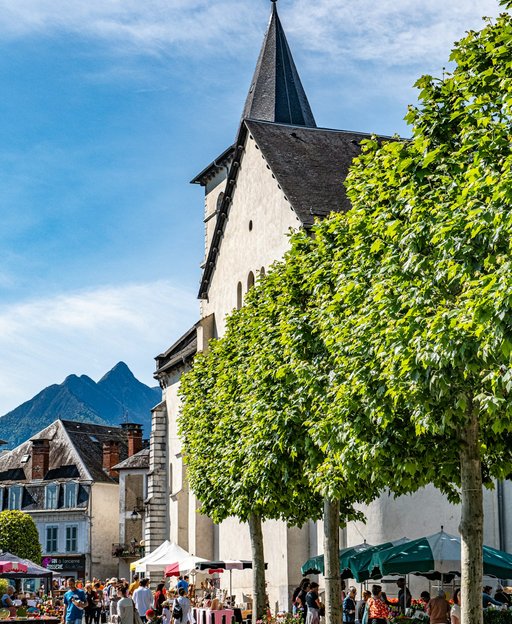
Pick any town in France on a Saturday morning. At 7am, the streets are quiet. By 8:30, they belong to everyone.
The weekly marché is not just a place to buy cheese. It is the heartbeat of French community life — a ritual that has shaped towns, relationships, and the French sense of time for centuries. Most visitors walk past it without understanding what they are really seeing.
The Town Wakes Up Differently
On market morning, the boulangerie runs out of croissants before 9am. Locals know this. They come early, basket in hand, with no particular hurry.
Café tables face outward on market day, not inward. Everyone is watching. The market is theatre as much as commerce, and the audience is always full.
Farmers who live 30 minutes away have been up since 4am. Their vans fill the square before the pigeons do. By the time the first visitor arrives, half the serious business of the morning is already done — the deals made, the regulars served, the best cuts sold.
The French call it la vie de village. The market is where it actually happens.
What People Are Actually Buying
The stalls sell more than food. They sell trust. The same faces appear every week, season after season. You do not buy tomatoes from a stranger here — you buy them from Michel, who grew up three villages over and whose father sold from the same spot for forty years.
A round of cheese wrapped in wax paper. A bunch of lavender tied with string. A handful of walnuts in a brown paper bag. These are not exotic purchases. They are necessities, treated with ceremony.
The haggling is rare. The conversation is not. Time moves differently at a French market. Nobody rushes because everyone understands that rushing is beside the point. You are not here to be efficient. You are here to be present.
The Unwritten Rules
You taste before you buy. You greet the vendor before you look at the produce. You never arrive empty-handed — a basket signals that you mean it.
Taking a photograph of someone’s stall without asking is a quiet offence. Arriving after 11am means the best strawberries are gone, the cheese vendor is packing up, and the olive man is already counting his takings.
Regulars have their rhythm. Visitors wander. Both are welcome. But only one of them truly knows what they are doing — and the difference shows in the quality of what ends up in the bag.
Children carry the basket on market day. This is not practical. It is educational.
Enjoying this? 7,000 France lovers get stories like this every week. Subscribe free →
The Markets Worth Planning Around
Not all marchés are equal. The Saturday market in Sarlat-la-Canéda draws buyers from across three departments. The Tuesday market in Louhans, in Burgundy, has been running continuously for 700 years. The Thursday market in Apt is one of the oldest in Provence — arriving in summer, you will find lavender, melons, goat’s cheese, and a dozen varieties of olive all within a 10-metre walk.
If you are planning your trip to France, try to build your itinerary around at least one market morning. The town barely matters. The rhythm is the same wherever you go: slow, social, and quietly magnificent.
The Dordogne and the Black Gold
The Dordogne region has some of France’s finest market towns. Périgueux, Bergerac, Ribérac — each has its market day, each market its character. But it is winter that reveals the true depth of the French marché tradition.
From November to February, the truffle market in Périgueux runs on Tuesday and Saturday mornings. Buyers arrive before 8am. They speak quietly. Prices are negotiated in low voices between people who have known each other for years.
The black truffle — the Périgord’s underground treasure — is handled with the reverence that wine receives in Burgundy. A single truffle can cost more than a restaurant meal. Nobody seems surprised. Quality, in France, is never a shock.
When the Stalls Pack Up
By noon, the square begins to empty. Vans reverse slowly, stall frames fold, and tablecloths are bundled away. By 12:30, the last crates are loaded. By 1pm, it looks as if the whole morning was a dream — and the only evidence is a scattering of walnut shells and a lingering smell of roasting chicken.
But the cafés are still full. The wine is open. The cheese is on the table. The conversations that started at a market stall continue here, unhurried, for another two hours over rosé and bread.
This is what the market was always for. Not commerce. Community.
You can also discover what happens before the market opens — the hours before dawn when vendors set up and the town belongs only to them.
Every week, in towns across France, these markets remind people of something simple. The best things in life are bought slowly, from someone you know, with nowhere else to be.
Join 7,000+ France Lovers
Every week, get France’s hidden gems, seasonal guides, local stories, and the art of la vie française — straight to your inbox.
Love more? Join 65,000 Ireland lovers → · Join 43,000 Scotland lovers → · Join 30,000 Italy lovers →
Free forever · One email per week · Unsubscribe anytime
Leave a Reply