
Lyon Travel Guide: France’s Gastronomy Capital
Lyon is the city that makes French food lovers weak at the knees. France’s third-largest city sits at the confluence of the Rhône and Saône rivers, two hours south of Paris by TGV, and it earns its reputation as the gastronomy capital of France with extraordinary ease. A Lyon travel guide needs to cover far more than restaurants, though. The city has a Unesco-listed old town, a Roman amphitheatre still used for concerts, a network of secret passageways called traboules, and a festival of lights that draws millions of visitors every December. Whether you are planning a long weekend or adding Lyon to a wider France trip, this guide covers everything you need to know.
Love France? Join 7,000+ readers on our free newsletter → lovetovisitfrance.substack.com
Getting to Lyon from the US
Most American travellers fly into Paris Charles de Gaulle or Lyon Saint-Exupéry Airport directly. Lyon’s own airport handles flights from London, Amsterdam, and several other European hubs, so connecting through a European gateway is straightforward.
The fastest option from Paris is the TGV high-speed train. Trains depart Paris Gare de Lyon every hour or so and arrive at Lyon Part-Dieu station in just under two hours. The journey is smooth, the scenery pleasant, and the fares reasonable when booked in advance. If you plan to travel France by train, Lyon makes an easy first stop after Paris before heading further south to Provence or the Riviera.
Lyon’s Old Town: Vieux-Lyon and the Traboules
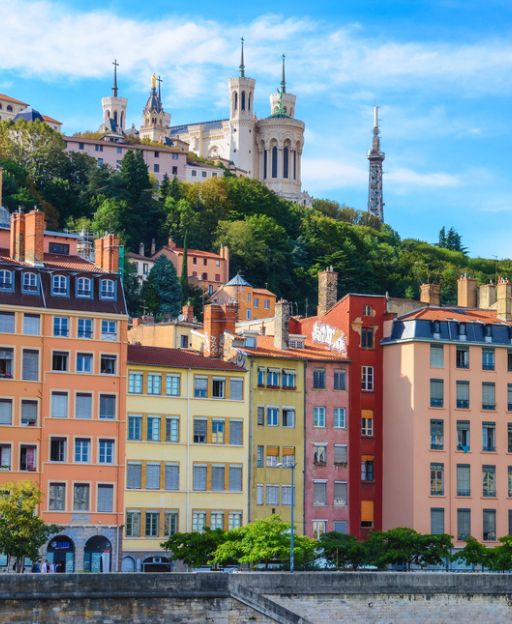
Vieux-Lyon is one of the largest Renaissance neighbourhoods in Europe. The streets are lined with ochre and rose-coloured buildings, carved stone doorways, and narrow lanes that twist unexpectedly. Spend a morning just wandering — the quarter rewards slow exploration.
What Are Traboules?
Traboules are Lyon’s secret weapon. These covered passageways cut through the interior courtyards of Renaissance buildings, connecting one street to another through the block. Silk workers used them to transport cloth without getting it wet. During the Second World War, the French Resistance used them to move between streets without being seen.
Around 40 traboules are open to the public today. Many are easy to miss — look for small plaques beside doorways that say traboule. Push the door and you step into a different world. The best concentration runs through the streets around Place du Change and the Cathedral of Saint-Jean-Baptiste.
Saint-Jean-Baptiste Cathedral
Lyon’s cathedral stands at the southern end of Vieux-Lyon and dates from the 12th century. The interior is dark, cool, and grand. The astronomical clock in the north transept still chimes at noon, 2pm, 3pm, and 4pm, with mechanical figures emerging to mark the hour. It draws a small crowd every time.
Fourvière Hill: Lyon’s Sacred High Point
Above Vieux-Lyon, the hill of Fourvière rises steeply. At the top stands the Basilica of Notre-Dame de Fourvière, an extravagant white church finished in 1896 and visible from almost anywhere in the city below. The views from the esplanade in front of the basilica are remarkable — the red rooftops of Vieux-Lyon, the two rivers, and on a clear day, the Alps in the distance.
Take the funicular from the old town to avoid the climb. It runs every few minutes and drops you right at the basilica. Just below the top station, you will find the ancient Roman theatres of Fourvière — two amphitheatres carved into the hillside that date back to the 1st century BC and still host the Nuits de Fourvière festival each summer.
Lyon Travel Guide: Food and the Bouchon Tradition
You cannot write a Lyon travel guide without spending serious time on the food. Lyonnais cuisine is hearty, precise, and deeply local. The city gave the world Paul Bocuse, who ran his restaurant north of the city for more than 50 years and won three Michelin stars that he never lost. His legacy shapes the entire food culture here.
What Is a Bouchon?
A bouchon is the traditional Lyonnais restaurant. These are small, unpretentious, family-run places that serve the cooking of the mères lyonnaises — the women who built Lyon’s gastronomic reputation in the early 20th century. The menu rarely changes. Expect quenelles (delicate dumplings), andouillette (a strong-flavoured sausage), cervelle de canut (herbed fresh cheese), pike in cream sauce, and oeuf en meurette (eggs poached in red wine).
For the most authentic experience, look for the official bouchon sign approved by the Authentiques Bouchons Lyonnais association. There are around 20 certified bouchons in the city, mostly in Vieux-Lyon and the Presqu’île district. Book ahead — tables go fast.
Les Halles Paul Bocuse
The covered market at Les Halles Paul Bocuse on Cours Lafayette is Lyon’s great food cathedral. Open Tuesday to Sunday mornings, it houses around 60 stalls selling cheese, charcuterie, oysters, pastries, prepared dishes, and wine. Even if you are not cooking, it is worth a visit just to watch the Lyonnais do their shopping. Arrive early — by 11am on a Saturday, the crowds are dense.
The Presqu’île: Shops, Squares, and City Life
Between the two rivers lies the Presqu’île, Lyon’s central peninsula and the hub of everyday city life. The main shopping street, Rue de la République, runs north to south through the heart of it. At the northern end, the vast Place Bellecour is one of the largest pedestrian squares in Europe — from here you can see Fourvière in one direction and the towers of the Part-Dieu district in the other.
The Presqu’île is also where you will find many of Lyon’s best restaurants, the opera house, several important museums, and a dense grid of streets that reward wandering in the evenings. The neighbourhood south of Place Carnot, towards Confluence, has seen significant regeneration in the past decade and now has a modern museum, a shopping centre, and waterside cafés where the two rivers meet.
Croix-Rousse: The Silk Weavers’ Quarter
Croix-Rousse climbs the hill north of the Presqu’île and was once home to Lyon’s silk-weaving industry. The neighbourhood has a distinct character — slightly bohemian, full of independent cafés and food shops, and home to a great market on the Boulevard de la Croix-Rousse every Tuesday to Sunday morning.
The Maison des Canuts museum explains the history of silk weaving in Lyon and demonstrates the Jacquard loom. It is small but well done, and gives context to the neighbourhood’s geography — the buildings here were designed with tall ceilings to accommodate the looms that once filled every apartment.
Planning Your Visit: Practical Information
Lyon is a year-round destination, though the food scene and festivals make spring and early autumn the most enjoyable times to visit. Summer can be hot, and August sees many locals head away on holiday, which thins the crowds but closes some local restaurants.
The Fête des Lumières in early December transforms the entire city. For four nights, the buildings, squares, and river banks become canvases for elaborate light installations. It draws around 2 million visitors and is entirely free to walk around. Book hotels months in advance if you want to attend — accommodation sells out quickly.
For France travel budget planning, Lyon is generally cheaper than Paris for accommodation and dining. A bouchon lunch with wine will cost around €25–35 per person. A night in a well-located three-star hotel runs €100–150. The Lyon City Card covers unlimited use of the Metro, trams, buses, and funiculars, plus free entry to around 23 museums — good value if you plan to visit several attractions.
Read about the best regions of France to help you decide where Lyon fits into a longer itinerary. The city pairs naturally with a few days in Provence to the south, a detour to Burgundy’s wine villages to the north, or a loop down to the French Riviera.
Where to Stay in Lyon
Vieux-Lyon is the atmospheric choice — you step out of your hotel into medieval streets. It is also the busiest and noisiest on weekend nights. The Presqu’île offers more options across a wider price range and puts you close to restaurants, transport, and the main sights. Croix-Rousse suits travellers who prefer a quieter, local feel with good café culture on the doorstep.
Lyon is compact enough that almost any central neighbourhood is walkable. The Metro is clean, reliable, and runs until midnight, making it easy to move between districts without a taxi.
Frequently Asked Questions About Visiting Lyon
Is Lyon worth visiting for US travellers?
Absolutely. Lyon is one of France’s most rewarding cities for American visitors. It is less crowded than Paris, easier to navigate, genuinely affordable, and offers a depth of food culture that few cities anywhere can match. Two to three days is the sweet spot for a first visit.
What is the best time to visit Lyon, France?
April to June and September to November offer the best combination of mild weather, open restaurants, and manageable crowds. December is spectacular during the Fête des Lumières but requires advance planning for accommodation. July and August are warm and busy, with some local restaurants closed for summer.
How do I get from Paris to Lyon?
The TGV high-speed train from Paris Gare de Lyon to Lyon Part-Dieu takes around 1 hour 55 minutes and departs frequently throughout the day. Book in advance via SNCF Connect or Trainline for the best fares. Direct flights from Lyon Saint-Exupéry Airport also connect to several European hubs for those arriving from the US via London, Amsterdam, or Frankfurt.
What should I eat first in Lyon?
Start with a bouchon lunch and order the quenelles de brochet — pike dumplings in cream sauce — which are Lyon’s most iconic dish. Follow that with cervelle de canut, the herbed fresh cheese that every table seems to finish with. For the full experience, wash it all down with a glass of Beaujolais or Côtes du Rhône, both produced within easy reach of the city.
You Might Also Enjoy
- How to Travel France by Train: A Practical Planning Guide
- France Travel Budget: What a Trip Really Costs in 2026
- The Best Regions to Visit in France (and How to Choose)
Plan Your France Trip
Ready to go beyond Lyon and plan your full France adventure? Our France trip planning hub covers everything from the best regions to visit and when to go, to budgeting, getting around, and building an itinerary that suits your pace.
Join 7,000+ France Lovers
Every week, get France’s hidden gems, local recipes, and travel inspiration — the kind you won’t find in any guidebook.
Subscribe free — enter your email:
🇫🇷 Discover the France Most Tourists Never Find
Get our free guide to 25 hidden villages of France — then join 7,000+ readers for weekly stories about places most guidebooks never mention.
Get Your Free Village Guide →Love more? Join 64,000 Ireland lovers → · Join 43,000 Scotland lovers → · Join 30,000 Italy lovers →
Free forever · One email per week · Unsubscribe anytime
Thinking about it seriously?
If you’ve started actually planning a move, our complete our complete Moving to France guide walks through every step, every cost, and the paperwork that catches most people out.
Tours & experiences you might love


Powered by Viator. Some links are affiliate links — we may earn a small commission at no extra cost to you.

Leave a Reply