
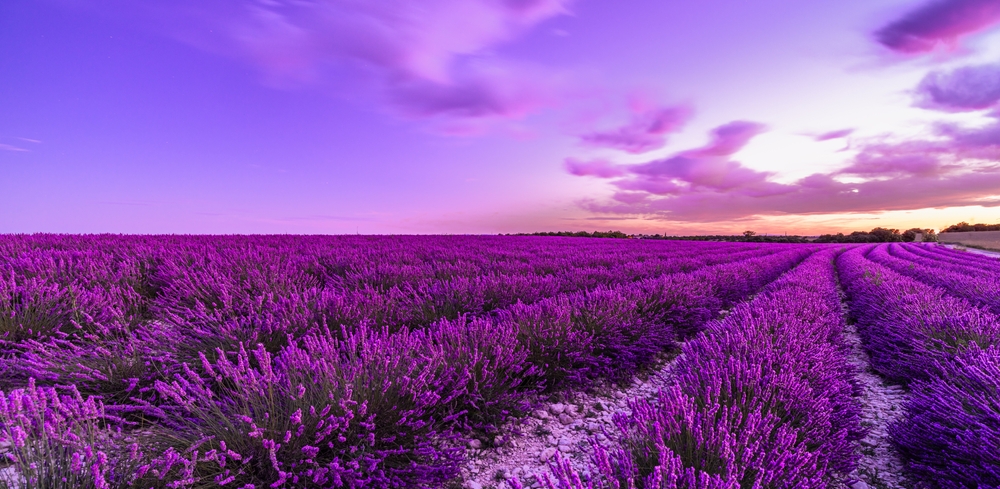
The lavender fields of Valensole in Provence are one of France’s most photographed landscapes — and for good reason. Every summer, the plateau turns a deep shade of purple as thousands of lavender plants come into bloom, stretching across flat farmland under clear blue skies. But beyond the visual spectacle, Valensole offers something genuinely special: a working agricultural landscape that has changed very little in generations.
This guide covers when to go, what to expect when you get there, and how to make the most of your visit without simply pulling over at the roadside for a quick photo.
Where Is Valensole?
Valensole is a small town on the Valensole Plateau in the Alpes-de-Haute-Provence department, roughly 80 kilometres north-east of Marseille and 40 kilometres south of Digne-les-Bains. The plateau sits at around 500 metres above sea level, which gives it the dry, well-drained soil that lavender thrives in.
The nearest large city is Aix-en-Provence, about 80 kilometres to the south-west. From there, the drive takes roughly 1 hour 15 minutes via the D4085 and D6. There is no direct public transport to Valensole itself, so a car is the most practical option. Manosque, 20 kilometres to the west, is the nearest town with rail connections.
When the Lavender Blooms
Timing is everything at Valensole. The fields are only in full bloom for a short window each year — typically from late June through to late July, with peak colour usually arriving in the first two weeks of July. The exact dates shift year to year depending on temperatures and rainfall, so do not book a trip based on fixed calendar dates without checking local forecasts closer to the time.
Early morning visits — before 09:00 — give you the best light for photography and the quietest experience. By mid-morning, coach tours begin arriving and the roadside spots can become crowded. Late afternoon, from around 17:00 onwards, is also a good time as the light softens and visitor numbers drop.
Outside of bloom season, the plateau is still worth visiting. The almond blossom in February turns the fields white and pink, and the landscape in autumn has its own quieter appeal. But if lavender is your reason for coming, plan for late June to late July.
What to See Around Valensole
The town of Valensole itself sits on a low hill above the plateau. It is a quiet place — a market square, a few cafés, a 12th-century church, and a handful of local shops selling lavender products. The weekly market on Tuesday mornings is a good place to pick up honey, lavender soaps, and dried bunches directly from producers.
The landscape around the town is the real draw. The fields are not confined to one spot — lavender plots are scattered across the plateau for several kilometres in every direction. The road between Valensole and Riez (the D953) passes through some of the densest plantings and is a reliable route for field-spotting.
Riez itself is worth a short stop. It is a small town with Roman ruins — including four standing Corinthian columns from a 1st-century temple — and a Saturday morning market. From Riez, you can continue east towards the Gorges du Verdon, one of Europe’s most dramatic river canyons, which is about 35 kilometres away.
Lavender Distilleries and Farms
Several farms on the plateau welcome visitors during the lavender season. These are working agricultural businesses, not tourist attractions in the conventional sense, but most have a small shop selling essential oils, soaps, and other lavender products, and some offer brief explanations of the distillation process.
Distillation happens quickly after harvest — usually within 24 hours of cutting — so if you visit during harvest time (typically mid-July), you may see both the harvesting equipment in the fields and the stills running at the farm. The smell during distillation is extraordinarily strong. The essential oil extracted from true lavender (Lavandula angustifolia) is valued higher than lavandin, a hybrid species that produces a sharper scent and is more commonly grown at scale on the plateau.
When buying lavender products, look for Lavande de Haute-Provence with the Protected Designation of Origin (PDO) label if you want to be sure you are getting true lavender essential oil from this specific region.
Practical Information
There are no admission charges to visit the lavender fields — the plateau is open farmland and the fields can be seen clearly from the roads. However, walking into the fields uninvited is not acceptable. The plants are a commercial crop. Stick to the road edges and designated viewpoints, and do not pick the flowers.
Parking can be difficult at peak times on the popular stretches near Valensole. Arrive early, park considerately, and walk if you need to. There is no official car park specifically for lavender field viewing.
Accommodation in Valensole itself is limited to a handful of small hotels and bed-and-breakfast options. Manosque has a wider range of hotels and is a practical base for exploring the plateau. Aix-en-Provence is a more comfortable base if you plan to combine Valensole with other parts of Provence, though the extra distance means an earlier start.
Temperatures in July can reach 35°C or above on the plateau. Bring water, sun protection, and a hat. There is very little shade in the fields.
Combining Valensole With Other Provence Highlights
The plateau sits within easy reach of several other well-known Provence destinations. The Gorges du Verdon to the east is a half-day trip from Valensole. The hilltop village of Moustiers-Sainte-Marie, perched above a small gorge at the edge of the Verdon plateau, is about 25 kilometres from Valensole and has a good reputation for restaurants and pottery workshops.
Gréoux-les-Bains, 15 kilometres west of Valensole, is a small spa town known for its thermal baths — a useful stop if you want to combine the lavender fields with a more relaxed afternoon. The Route de la Lavande, a signposted driving route that connects Valensole with other lavender-growing areas including the Drôme Provençale to the north, is worth researching if you plan to spend several days in the region.
Manosque has a twice-weekly market (Wednesday and Saturday mornings) and is the location of the L’Occitane factory and visitor centre — the cosmetics brand sources lavender from this region and offers factory tours and a shop selling products at reduced prices.
A Note on Crowd Management
Valensole has become increasingly popular in recent years, particularly for photography. The fields closest to the main roads see the heaviest foot traffic during peak bloom. To find quieter spots, explore the minor roads north and east of the town rather than sticking to the most-photographed stretches.
Going on a weekday rather than a weekend makes a noticeable difference. If your trip coincides with Bastille Day (14 July), expect higher visitor numbers across the whole region.
The lavender season is short, the plateau is beautiful, and a little planning goes a long way. Get there early, pick up some honey at the market, and take the drive through the fields at your own pace.
Thinking about it for retirement?
If you’ve started thinking seriously about retiring there, our complete our full Retire in France guide covers the visa, healthcare, cost-of-living, and the regions worth shortlisting.
🇫🇷 Discover the France Most Tourists Never Find
Get our free guide to 25 hidden villages of France — then join 7,000+ readers for weekly stories about places most guidebooks never mention.
Get Your Free Village Guide →Tours & experiences you might love


Powered by Viator. Some links are affiliate links — we may earn a small commission at no extra cost to you.

Leave a Reply