
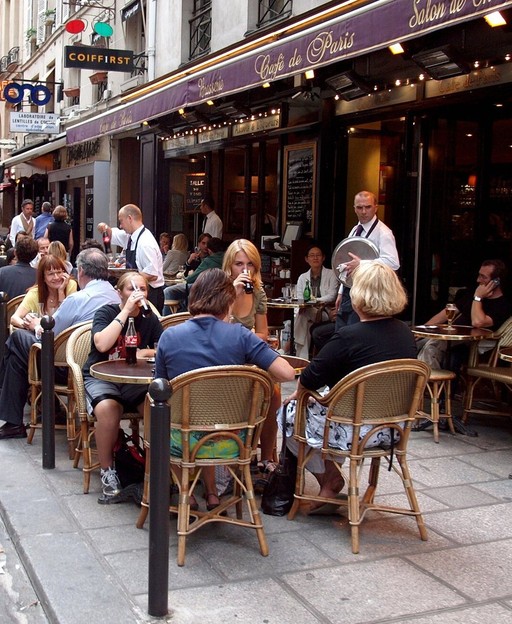
It happens to almost every visitor sooner or later. You pull up outside a village bakery at a quarter past one, hungry, with the car parked and the plan made. The door is locked. A card in the window says the shop reopens in the afternoon. Across the square, the café tables are full, and nobody looks in any hurry at all.
For many Americans, that locked door is the first meeting with French work culture. It can feel odd at first. Then you sit down for lunch yourself, and something starts to make sense. In France, time off is not a reward you earn by working hard enough. Much of it is written into the law. Here is the story behind it, and what it means for your trip, or for a move.
The 35-Hour Week
The best-known piece of the puzzle is the 35-hour week. Article L3121-27 of the French Labour Code (the Code du travail) says it in one line: « La durée légale de travail effectif des salariés à temps complet est fixée à trente-cinq heures par semaine. » In English: the legal working time for full-time employees is set at 35 hours a week. The official Service-Public page adds that this works out to 1,607 hours a year.
That does not mean every French person clocks off after exactly 35 hours. Collective agreements can set a different working week, and plenty of people work longer. What the law does is draw a line. Any hour worked at the employer’s request beyond 35 hours a week is an overtime hour (heure supplémentaire), and, as Service-Public explains, it earns either a higher hourly rate or equivalent time off.
That is where a word you will hear in every French office comes from: RTT, short for réduction du temps de travail. According to Service-Public, RTT gives full or half days of rest to an employee whose working week is longer than 35 hours. So a French friend who works 37 or 38 hours a week may collect those extra hours as days off and take a long weekend in the spring. Ask a colleague in Paris about their plans for a Friday and the answer is often simply, « Je suis en RTT. »
Across the Atlantic, the rule is built differently. The US Department of Labor explains that, unless exempt, employees covered by the Fair Labor Standards Act must receive overtime pay for hours worked over 40 in a workweek, and that the Act sets no limit on the number of hours employees aged 16 and older may work. Both systems reward extra hours; France simply draws its line earlier and turns some of it into days off.
The Right to Switch Off
In 2017, France became famous for something new: the right to disconnect, or droit à la déconnexion. The French Ministry of Labour’s own page on le droit à la déconnexion says that since 1 January 2017, in companies where union sections are set up, the yearly negotiation on working life must cover how employees can fully use their right to disconnect.
Today the rule sits in Article L2242-17 of the Labour Code, which lists among the topics of that negotiation « les modalités du plein exercice par le salarié de son droit à la déconnexion » and tools to regulate digital devices, « en vue d’assurer le respect des temps de repos et de congé ainsi que de la vie personnelle et familiale »: to protect rest time, holidays, and personal and family life. If no agreement is reached, the article says the employer draws up a charter instead.
The law does not switch off anybody’s phone at 6pm. What it does is make the question a formal part of working life. We have learned not to expect a quick answer to a Friday-evening email from a French hotel or a gîte owner. It usually arrives on Monday morning, polite and complete.
Five Weeks of Paid Holiday, and the Empty Month of August
Article L3141-3 of the Labour Code gives every employee « un congé de deux jours et demi ouvrables par mois de travail effectif », two and a half working days of paid leave for each month worked, capped at 30 working days. Service-Public spells out what that adds up to: 30 working days, or five weeks, for a full year, whether the employee works full time or part time. The same page says the leave period always includes 1 May to 31 October, and that an employee must take at least 12 working days, two weeks, in one stretch within that window.
That is why the French talk about les grandes vacances, the big holidays, every summer. Many families take their long break in July or August, and in our experience the change is easy to see in Paris in August: some neighborhood bakeries, butchers and family restaurants pin a notice on the door and close for a few weeks, while the seaside and the countryside fill up.
In the United States there is no federal rule like this. The Department of Labor’s Vacation Leave page says the Fair Labor Standards Act “does not require payment for time not worked, such as vacations, sick leave or federal or other holidays”; these benefits are a matter of agreement between employer and employee.
Lunch Is Not Eaten at the Desk
Back to that locked bakery. The French lunch break has the law behind it too. Article L3121-16 says that once the working day reaches six hours, the employee gets a break of at least 20 consecutive minutes. And Article R4228-19 goes further: « Il est interdit de laisser les travailleurs prendre leur repas dans les locaux affectés au travail. » Employers may not let workers eat their meals in the rooms where they work, with a narrow exception for small workplaces. We tell the whole story in Why Eating at Your Desk Is Against the Law in France.
The contrast is plain on the US side as well: the Department of Labor’s page on breaks and meal periods says, “Federal law does not require lunch or coffee breaks.”
Sundays Belong to Rest
The last piece is Sunday. Article L3132-3 is short: « Dans l’intérêt des salariés, le repos hebdomadaire est donné le dimanche. » In the interest of employees, the weekly rest day is Sunday. Service-Public adds that exceptions exist: food shops can open on Sunday mornings until 1pm, and shops in tourist zones, international tourist zones and some busy railway stations can open in the afternoon too. That is why a Sunday in central Paris feels very different from a Sunday in a country town, where the market or the bakery may be the only thing open, and only until lunch.
Work to Live: What It Feels Like
Put these rules together and you get the rhythm visitors notice: long lunches, quiet Sundays, emptier cities in August, and evenings that belong to family and friends. Neither country has it all figured out, and plenty of Americans love the long opening hours and quick service at home. But many of us who travel to France come home wishing we had kept a little of that rhythm: lunch at a table, a walk after dinner, a phone left in a pocket.
What This Means for Your Visit, or a Move
- Plan around lunch. In small towns, expect many shops, and some museums and tourist offices, to close for a midday break. Do your shopping in the morning, and book or arrive early for lunch: kitchens in many restaurants stop taking orders after the lunch service.
- Treat Sunday as a slow day. Buy picnic food on Saturday, enjoy the Sunday morning market, and check opening times before driving to a shop or attraction.
- Check August before you book. If a particular restaurant or small shop matters to you, look for its summer closing dates (fermeture annuelle or congés d’été) before you go.
- Expect slower replies outside working hours. Email your gîte, guide or hotel early in the week, not on Friday evening.
- Thinking of living here? Start with our Retire or Move to France hub and our list of 10 things to check first. If you plan to work in France, read your contract and collective agreement for your own working hours and leave.
Checked November 2026 against the French Labour Code on the Ministry of Labour’s Code du travail numérique, Service-Public and the US Department of Labor. Laws change: always check the official pages linked below for your own situation.
Frequently Asked Questions
Do the French really work only 35 hours a week?
Thirty-five hours is the legal working week for full-time employees (Labour Code Article L3121-27). Many people work more; hours beyond 35 count as overtime, paid at a higher rate or given back as rest, and longer weeks often earn RTT days off.
How much paid vacation do French employees get?
Two and a half working days per month worked (Article L3141-3), which Service-Public says adds up to 30 working days, or five weeks, for a full year.
What is the right to disconnect in France?
Since 1 January 2017, the yearly workplace negotiation in companies with union sections must cover how employees can switch off from work email and devices, to protect rest, holidays and family life (Article L2242-17). Without an agreement, the employer writes a charter.
Why are French shops closed on Sundays?
Article L3132-3 makes Sunday the weekly rest day for employees. There are exceptions: food shops can open on Sunday mornings, and shops in tourist zones and some busy stations can open all day.
Sources
- French Labour Code, Article L3121-27 (35-hour week): Code du travail numérique
- French Labour Code, Article L2242-17 (right to disconnect): Code du travail numérique
- French Labour Code, Article L3141-3 (paid leave): Code du travail numérique
- French Labour Code, Article L3121-16 (20-minute break): Code du travail numérique
- French Labour Code, Article R4228-19 (no meals at the workstation): Code du travail numérique
- French Labour Code, Article L3132-3 (Sunday rest): Code du travail numérique
- French Ministry of Labour, Le droit à la déconnexion
- Service-Public, Durée légale du travail
- Service-Public, Heures supplémentaires
- Service-Public, Réduction du temps de travail (RTT)
- Service-Public, Congés payés du salarié dans le secteur privé
- Service-Public, Travail le dimanche d’un salarié du secteur privé
- US Department of Labor, Vacation Leave
- US Department of Labor, Breaks and Meal Periods
- US Department of Labor, Overtime Pay
Tours & experiences you might love


Powered by Viator. Some links are affiliate links — we may earn a small commission at no extra cost to you.

Leave a Reply