Bastille Day is the one French holiday most of the world has heard of — and most of what gets repeated about it is at least a little wrong. The building itself held almost nobody. The name isn’t even what the French call it. This is Guide № 002 in The Love France Guide series: what July 14th is actually commemorating, and the traditions that go with it.
Get the Full Collectible Guide (Free PDF)
What actually happened in 1789, why the date really covers two separate events, the parade, the fireworks, and the firefighters’ balls nobody outside France has heard of — in a beautifully designed, printable booklet. The Love France Guide № 002.
Not About a Building Falling — About What It Held
On July 14, 1789, a crowd stormed the Bastille, a fortress-prison in Paris. The building itself held only seven prisoners that day — four forgers, two men held for insanity, and one accused nobleman — nowhere near the mass of political prisoners popular imagination assumes. What made the Bastille worth storming was what else it held: a large stock of gunpowder and weapons, at a moment when Paris was arming itself against the royal troops massing around the city. Its fall mattered as a direct challenge to royal authority, not as a mass prison break, and it became the symbolic starting point of the French Revolution.
Two Different Events, One Date
France’s national holiday actually commemorates two separate events that happen to share a date. The first is the 1789 storming of the Bastille itself. The second is the Fête de la Fédération, held exactly one year later on July 14, 1790 — a huge public celebration of national unity, held on the Champs de Mars, intended to mark reconciliation after a turbulent first year of revolution. Modern Bastille Day draws its tone more from the second event — celebration and unity — than from the violence of the first.
The Military Parade on the Champs-Élysées
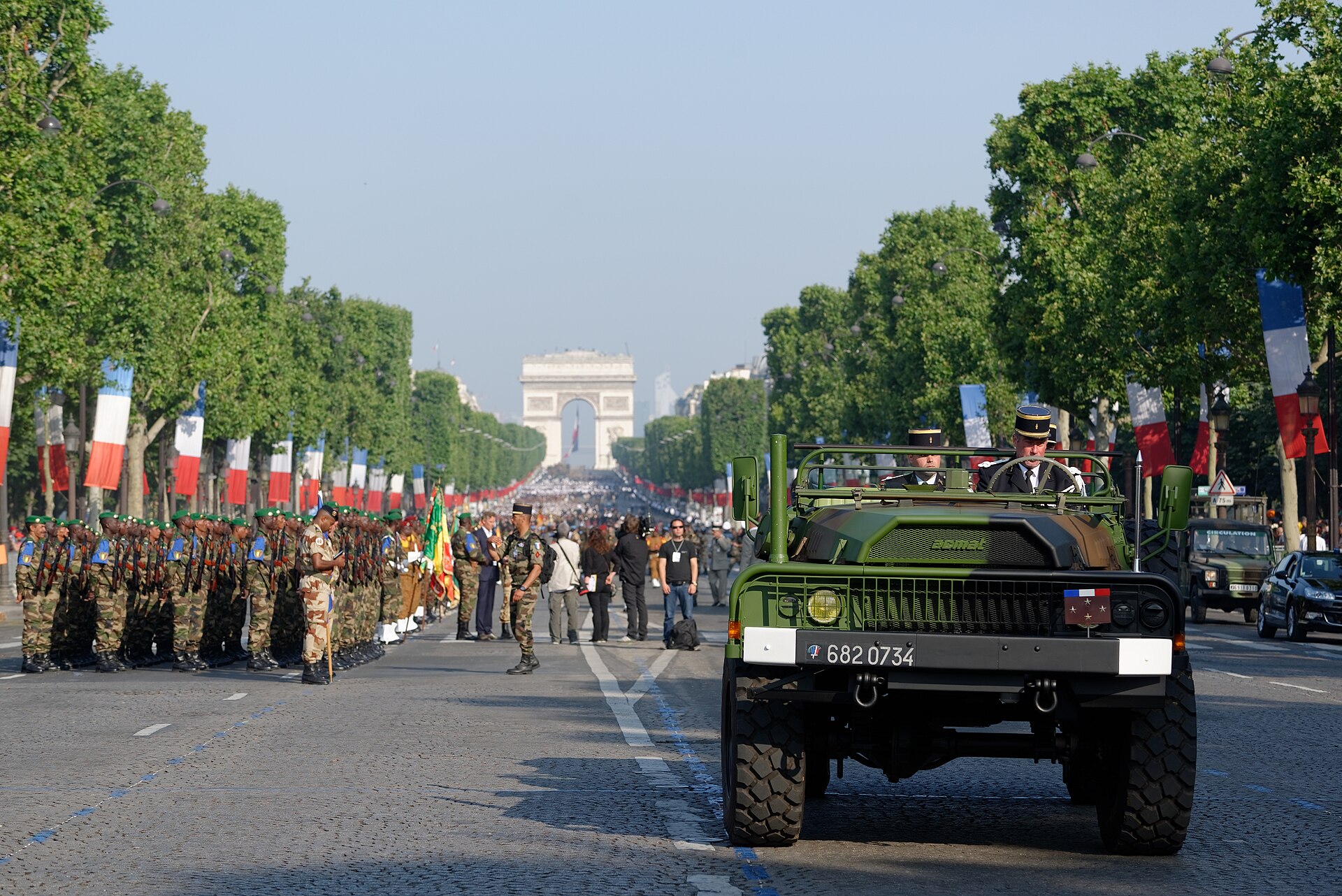
Every year on the morning of July 14th, France holds a military parade down the Champs-Élysées — the oldest and largest regularly held military parade in Europe, dating back to 1880. Troops, cavalry, armored vehicles, and a flypast from the French Air Force pass in front of the President of France, and each year the parade traditionally includes a guest unit or two from allied nations. It is broadcast live and watched by millions across the country.
Fireworks at the Eiffel Tower
On the evening of July 14th, Paris puts on a large fireworks display centered on the Eiffel Tower, drawing crowds along the Seine and the Champ de Mars below it. In recent years the show has grown to include drone displays and synchronized light effects alongside the traditional fireworks, but the core tradition — the entire tower lit up and framed by explosions of color — goes back decades. Towns and cities across the rest of France hold their own smaller firework displays the same night.
Bals des Pompiers — The Firefighters’ Balls
One of the least internationally known Bastille Day traditions is also one of the most genuinely French: on the evening of July 13th and 14th, fire stations across the country open their doors to the public and host dances — the bal des pompiers, or firefighters’ ball. Music, dancing, and drinks continue late into the night, often raising money for the fire brigade, and the tradition has run in Paris in some form since at least the early 20th century. It is a real, still-active custom, not a tourist invention.
Myths Worth Retiring
“The French call it Bastille Day.” They don’t — in France it’s called le 14 juillet or, officially, la Fête Nationale. “Bastille Day” is an English-language name that isn’t used domestically.
“The Bastille was full of political prisoners freed that day.” It held seven ordinary prisoners, not a mass of political detainees — the building’s symbolic and strategic value mattered far more than who was inside it.
“It only commemorates the storming of the Bastille.” The holiday also marks the 1790 Fête de la Fédération, a celebration of national unity a year later — which is closer in spirit to how the day is actually celebrated now.
Frequently Asked Questions
What is Bastille Day actually called in France?
Le 14 juillet, or officially la Fête Nationale (the National Celebration). “Bastille Day” is used in English but not in France itself.
Is the military parade open to the public?
Yes — crowds line the Champs-Élysées to watch in person, and it is also broadcast live on French television nationwide.
Can visitors go to a bal des pompiers?
Generally yes — most are open public events, often with a small entry fee that supports the local fire brigade, though details vary by station and town.
More Love France Guides in this series are linked below as they publish. See you in the next edition.
More Love France Guides
The Love France Guide is a numbered series — one tightly focused subject at a time, each with its own downloadable collectible edition. Guide № 001 is The Croissant. This is Guide № 002. More editions are on the way.
🇫🇷 Join 7,000+ France Lovers
Every week, get hidden villages, seasonal guides, and real French food and wine stories — written by people who live and love it.
Subscribe free — enter your email:
Tours & experiences you might love


Powered by Viator. Some links are affiliate links — we may earn a small commission at no extra cost to you.

Leave a Reply