
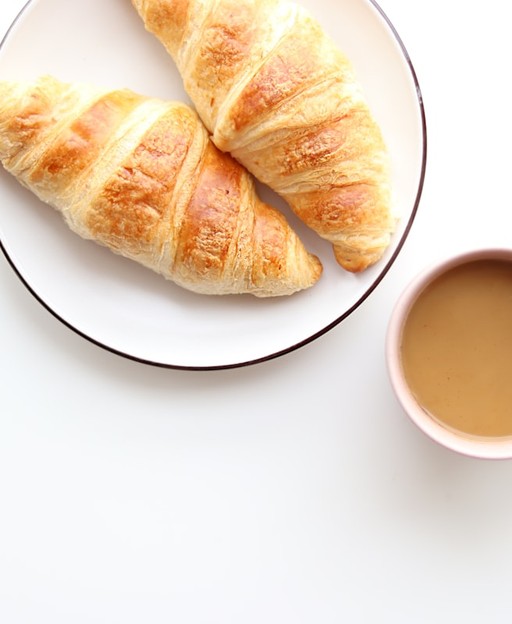
The croissant looks like the most French thing imaginable — but it did not start in France, it is not universally shaped the way you think, and the way it is made tells you more about a bakery than almost anything else on the counter. This is Guide № 001 in a new numbered series: one tightly focused French subject at a time, starting with the pastry everyone assumes they already understand.
Get the Full Collectible Guide (Free PDF)
The real Austrian origin story, the butter-versus-margarine shape law, how lamination actually works, and the etiquette of eating one properly — in a beautifully designed, printable booklet. The Love France Guide № 001.
Not French — Austrian
The croissant’s real ancestor is the kipferl, a crescent-shaped Austrian pastry documented in Vienna long before it ever reached Paris. The popular story crediting Marie Antoinette with bringing it to France is treated by food historians as legend rather than documented fact. The far better-attested origin is August Zang, an Austrian who opened a Viennese bakery — a boulangerie viennoise — on rue de Richelieu in Paris in 1839, introducing Parisians to Austrian breads and pastries, kipferl included.
The kipferl itself was a denser, less laminated bread. What French bakers did afterward — over the following decades, refining it into the light, buttery, yeast-leavened, laminated pastry the world now knows — is what actually created the modern croissant. It is an Austrian idea, perfected in France.
Straight or Curved: The Bakers’ Signal
In French bakeries, the shape is not decoration — it is a signal. By long-standing bakers’ custom (not a law), a straight croissant is made with pure butter (croissant au beurre), while a curved, crescent-shaped one is typically made with margarine. Artisan bakers mostly keep to it; chains and supermarkets don’t always, so if you want to be sure, ask for a croissant au beurre or look for “pur beurre” on the label. The logic: butter dough is stiffer and easier to shape straight; margarine dough is more pliable and holds a curve.
It is a small detail, but a genuinely useful one — glance at the shape before you order, and you already know which one you are getting.
Lamination: Why It Takes Three Days
A proper croissant is built from lamination — folding a slab of butter into yeasted dough, then repeatedly rolling and folding it in a series of “turns” to create dozens of alternating layers of dough and butter. In the oven, the butter’s water content turns to steam, forcing the layers apart, which is what produces the shatteringly flaky, honeycombed interior.
Done properly, the process spans two to three days between mixing, resting, folding, and proofing — which is why a genuinely good croissant from a serious bakery costs more than a supermarket one made on a same-day shortcut.
How the French Actually Eat One
Dunking a croissant into a café au lait or hot chocolate at breakfast is a genuine, common French habit — not a tourist affectation. It is typically eaten plain, torn by hand rather than cut with a knife, and treated as a breakfast food specifically; ordering one in the afternoon is unusual by local convention, though nobody will stop you.
Myths Worth Retiring
“Marie Antoinette brought it from Austria.” A popular legend, not a documented fact — the better-attested history points to August Zang’s Parisian bakery in 1839.
“All croissants are shaped the same.” The shape is usually a signal of butter versus margarine, not a stylistic choice.
“It’s just bread with butter on top.” The butter is folded inside, in dozens of layers, not spread on top — that is the entire point of lamination.
How to Make Croissants at Home
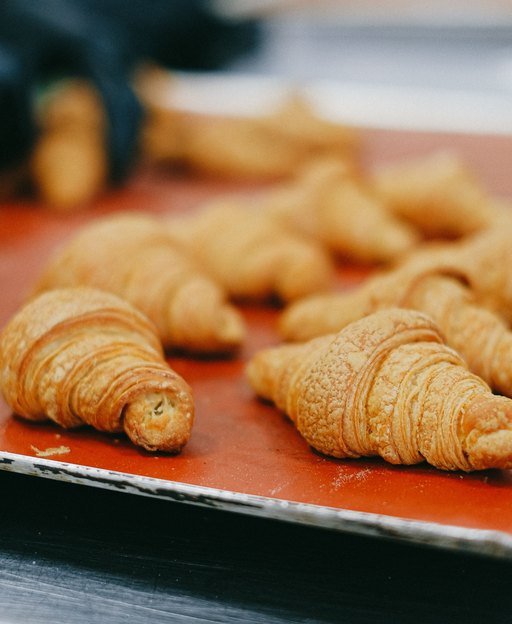
Want to see lamination for yourself? It takes a weekend, not skill: you make the dough on Saturday, fold the butter in three times, and bake on Sunday morning. Use the best butter you can find, keep everything cold, and you will never look at a supermarket croissant the same way.
Homemade French Croissants
Ingredients
Equipment
Method
- Mix the flour, salt and sugar in a large bowl. Stir the yeast into the cold water, pour it into a well in the flour and mix to a dough. Knead on the work surface for 10 minutes until smooth, put it in a lightly oiled bowl, cover and chill for at least 2 hours.
- Put the butter between two sheets of baking parchment and beat and roll it into a 20 x 15 cm (8 x 6 in) slab. Keep it wrapped and chill it.
- Roll the dough on a floured surface to a 40 x 20 cm (16 x 8 in) rectangle. Lay the butter slab over the middle third. Fold one side of the dough over the butter, then the other side over the top, like a letter, and press the edges to seal. Wrap and chill for 30 minutes.
- Roll the folded dough out again to 40 x 20 cm (16 x 8 in), fold it in three the same way, wrap and chill for 30 minutes. Do this once more: three folds in all, never adding more butter. Wrap well and chill overnight.
- Roll the dough on a floured surface to about 60 x 30 cm (24 x 12 in) and trim the edges straight. Cut it in half lengthways into two long strips, then cut each strip into 6 or 7 tall triangles.
- Gently stretch the base of each triangle a little wider, then roll it up from the base to the tip without pressing down, and tuck the tip underneath. Curve the ends in if you like, and set them on lined trays, well apart.
- Cover loosely and leave to rise at room temperature for about 2 hours, until doubled and wobbly when you shake the tray. Keep them away from heat, or the butter melts out.
- Heat the oven to 200°C / 180°C fan / 400°F / gas 6. Brush the croissants with the beaten egg and bake for 15 to 20 minutes, until risen and a deep golden brown. Cool on a wire rack.
Notes
Frequently Asked Questions
Is the croissant actually French?
Its origin is Austrian, via the kipferl — but the laminated, butter-based pastry known worldwide today was developed and refined in France.
How do I know if a croissant is made with real butter?
Look at the shape first — straight generally signals pure butter, curved generally signals margarine — then check the label, as “pur beurre” is often stated outright in serious bakeries.
Why do fresh croissants taste so different from packaged ones?
Time and butter. A proper multi-day lamination process with real butter cannot be replicated by a same-day shortcut recipe using vegetable fat.
More Love France Guides in this series are linked below as they publish. See you in the next edition.
More Love France Guides
The Love France Guide is a numbered series — one tightly focused subject at a time, each with its own downloadable collectible edition. This is Guide № 001. More editions are on the way.
🇫🇷 Join the France Lovers
Every week, get hidden villages, seasonal guides, and real French food and wine stories — written by people who live and love it.
Subscribe free — enter your email:

Leave a Reply